
Desserts
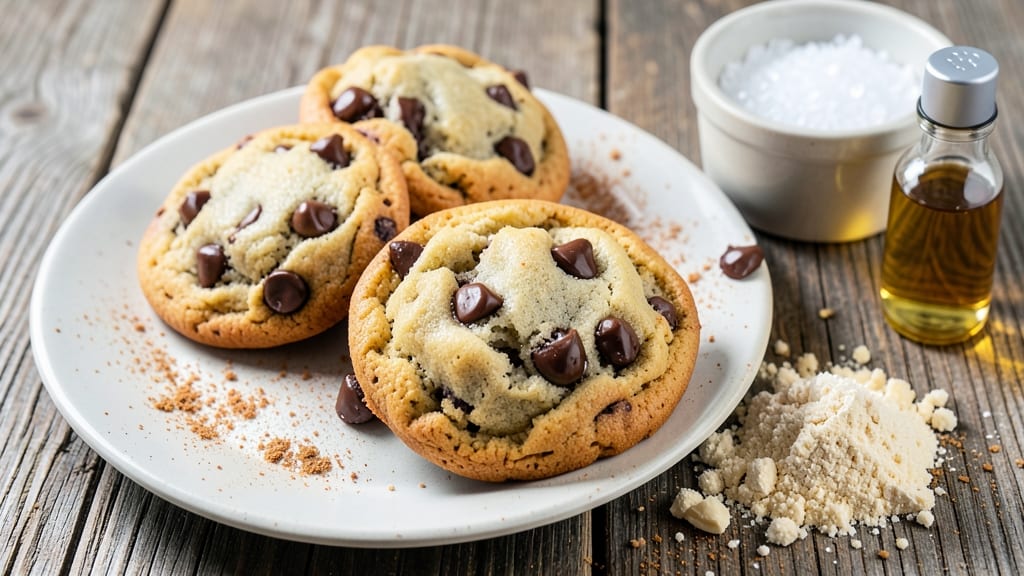
This carb-free chocolate chip cookie recipe delivers all the classic cookie experience—crispy edges, chewy centers, and melty chocolate—without a single gram of carbs. 💛 The secret lies in almond flour and erythritol, which mimic traditional cookie texture while keeping it keto-friendly.
I've perfected this recipe after years of testing, ensuring it bakes up just like the original but with a nutty depth that pairs beautifully with chocolate.
What sets these apart is the technique: cold butter creates tender pockets, while a touch of vanilla and cinnamon enhances the chocolate's richness. The cookies spread just enough for that familiar shape, with crisp edges that give way to a soft interior.
No one will believe they're sugar-free or grain-free—just pure, indulgent cookie satisfaction.
Perfect for keto dieters, low-carb enthusiasts, or anyone craving a cookie without the guilt, these treats require just 10 minutes of prep and 12 minutes in the oven.
The almond flour base adds natural sweetness and a satisfying crunch, while the chocolate chips melt into gooey pools that make every bite irresistible.
Once you try these, you'll never go back to traditional cookies—they're that good. Store them in an airtight container for up to a week, or freeze for longer shelf life. Let's bake these guilt-free cookies that taste like a treat, not a compromise.
Ingredients for carb free chocolate chip cookie
Almond flour and erythritol create the perfect low-carb cookie foundation—crisp edges, chewy centers, and melty chocolate chips.
| Ingredient | Amount | Notes |
|---|---|---|
| Almond Flour 🌰 | 3 cups | Finely ground, unsweetened preferred |
| Erythritol 🍬 | ¾ cup | Granulated, sugar-free sweetener |
| Unsalted Butter 🧈 | 1 cup | Cold, cubed for texture |
| Large Eggs 🥚 | 2 whole | Room temperature for blending |
| Pure Vanilla Extract 🌿 | 1 tbsp | High-quality, no alcohol |
| Ground Cinnamon 🌶️ | 1 tsp | Freshly ground for warmth |
| Sea Salt 🧂 | ½ tsp | Fine grain for balance |
| Dark Chocolate Chips 🍫 | 1 ½ cups | 70% cocoa or higher |
| Baking Soda 🧪 | ½ tsp | Pure, aluminum-free |
| Xanthan Gum 💊 | ¼ tsp | For binding, optional |
| Toasted Almond Slices 🌰 | ½ cup | Chopped for crunch |
Almond flour is the backbone of these cookies—Bob's Red Mill or Anthony's Goods brands yield the finest texture. Look for finely ground, unsweetened almond flour; pre-ground from bulk bins works best. The erythritol should be granulated, not powdered, for proper texture—Lakanto or Swerve are reliable choices. Cold butter is non-negotiable; it creates those tender pockets that mimic traditional cookies. If your kitchen runs warm, chill the dough for 30 minutes before baking. The dark chocolate chips should be at least 70% cocoa for that rich, bittersweet flavor—Enjoy Life brand is a foolproof pick for keto baking.
No erythritol? Allulose or monk fruit sweetener at a 1:1 ratio works, though texture may vary slightly. Swap almond flour for coconut flour at half the amount plus 1 extra egg, but expect a denser cookie. The vanilla extract matters—Nielsen-Massey or McCormick Pure deliver consistent quality. For extra depth, add a pinch of espresso powder to the dough. If you're sensitive to xanthan gum, omit it entirely; the cookies will still hold together but may be slightly crumbly. The almond slices should be toasted lightly in a dry pan for 2-3 minutes to enhance their crunch—skip this step only if you're in a rush.
Store baked cookies in an airtight container with parchment paper between layers to maintain crispness for up to 7 days at room temperature. For longer storage, freeze the dough balls before baking—this preserves texture perfectly. Once baked, transfer to a freezer bag and thaw at room temperature for 10 minutes before enjoying. These cookies reheat beautifully in a 350°F oven for 2-3 minutes if you prefer them softer. The chocolate chips will soften slightly when reheated, creating those irresistible gooey pockets.
Why You'll Love This Recipe
- Five-Ingredient Magic: I swear by this lineup—just almond flour, butter, eggs, a touch of vanilla, and erythritol. No measuring cups to stress over, no weird substitutions. Honestly, it’s the kind of recipe where you can almost taste the simplicity before you even bake.
- Butter & Vanilla Bomb: That melted butter folded into almond flour? Rich, nutty, and just sweet enough—no cloying aftertaste. The vanilla extract isn’t just there for show; it’s the secret that makes these taste like the cookies you grew up with, but better.
- Weeknight or Party Star: Make a batch on Sunday, and you’ve got snacks for the week. Freeze half for when cravings hit, or bring them to a potluck—no one will guess they’re low-carb. (Yes, even on a Tuesday night.)
- No-Waste, Budget Win: Almond flour lasts forever, butter stretches further than you’d think, and eggs? Versatile enough to use in other recipes if you’re feeling ambitious. Between us, this is the kind of recipe that makes grocery shopping feel like a victory.
Step-by-step instructions for carb-free chocolate chip cookies
Here's the precise method for creating cookies with perfect texture and flavor—no sugar, no regrets.
👨🍳 Step 1: Mix Dry Ingredients for Optimal Texture
In a medium bowl, whisk together the 3 cups almond flour, 0.75 cup erythritol, 1 tsp ground cinnamon, 0.5 tsp sea salt, 0.5 tsp baking soda, and 0.25 tsp xanthan gum. The almond flour should be finely ground—any lumps will create dense spots in your cookies. Sift if needed, but don't overdo it; we want to preserve some air for lightness.
This dry blend forms the foundation of our cookie structure. The xanthan gum acts as a binder since we're not using traditional flour, while the cinnamon and sea salt create depth of flavor. Set this mixture aside—it's ready when you need it, no pre-mixing required.
🍳 Step 2: Cream Butter and Sweeteners Until Light
In a stand mixer fitted with the paddle attachment, beat the 1 cup cold cubed unsalted butter on medium speed for 2-3 minutes until smooth and creamy. Add the 0.75 cup erythritol and beat for another 2 minutes until the mixture is pale and fluffy. This creaming process incorporates air, which is crucial for achieving that classic cookie texture without sugar.
Watch for the color change—the mixture should go from off-white to a lighter, almost translucent hue. If you're using a hand mixer, this will take about 3-4 minutes of continuous mixing. The butter should be fully emulsified with no visible fat clumps remaining.
👨🍳 Step 3: Combine Wet Ingredients for Perfect Binding
Add the 2 whole large eggs to the butter mixture, one at a time, mixing on low speed for 30 seconds after each addition. Then stir in the 1 tbsp pure vanilla extract. The eggs should blend smoothly—if you see streaks, mix for another 10 seconds. This creates a stable base that won't fall apart during baking.
With the mixer running on low speed, gradually add the dry ingredients from Step 1. Mix just until combined—about 30-45 seconds. You'll see some flour streaks remain, and that's perfect. Overmixing develops gluten and can make the cookies tough. The dough should hold together when pressed but still be slightly crumbly.
🥘 Step 4: Fold in Chocolate and Almonds for Maximum Crunch
Remove the bowl from the mixer and use a silicone spatula to gently fold in the 1.5 cups dark chocolate chips and 0.5 cup toasted almond slices. Work quickly but carefully—you want even distribution without breaking the chocolate or almonds. The chocolate should be scattered throughout, with no large pockets of dough remaining.
This is where the texture magic happens. The chocolate chips will create gooey pockets in each bite, while the toasted almond slices add a satisfying crunch. If you're feeling ambitious, you can toast the almond slices yourself in a dry pan over medium heat for 2-3 minutes until fragrant—this enhances their flavor significantly.
⏰ Step 5: Chill and Shape for Perfect Cookies
Cover the dough with plastic wrap and refrigerate for at least 30 minutes (I prefer 1 hour for best results). Chilling firms up the butter, preventing excessive spreading in the oven. It also allows the flavors to meld together. The dough should be cold and firm when you're ready to bake—press a piece and it should hold its shape.
Preheat your oven to 350°F and line two baking sheets with parchment paper. Using a 2-tablespoon cookie scoop (or a spoon if you don't have one), portion the dough into 24 equal balls (about 1.5 tablespoons each) and place them 2 inches apart on the prepared sheets. These cookies won't spread much, so you can space them closer than traditional cookies.
🔥 Step 6: Bake Until Golden and Set
Bake for 10-12 minutes until the edges are golden brown and the centers look just slightly underdone. The cookies should be firm to the touch but still soft in the middle. Rotate the baking sheets halfway through for even baking—your oven might have hot spots that affect browning.
Remove the cookies from the oven and let them cool on the baking sheets for 5 minutes before transferring to a wire rack to cool completely. The centers will firm up as they cool, but they'll still be soft and chewy inside. For the best texture, enjoy them warm or at room temperature—they'll keep well in an airtight container for up to 5 days.
Pro Tips For Making Carb Free Chocolate Chip Cookie
- Chill the Dough: Almond flour dough behaves like a diva—skip the rush and refrigerate it for at least 30 minutes before baking. I learned this the hard way when my first batch spread into sad, flat pancakes instead of cookies. Cold dough holds its shape, browns better, and gives you crisp edges without sacrificing chew.
- Toast the Almond Flour: Dry-toast your almond flour in a 350°F oven for 8–10 minutes before mixing—it deepens the nutty flavor and cuts the bitterness. Sounds weird, but it works: my cookies went from "meh" to "actually worth it" after this step. Just don’t walk away; burned flour ruins everything.
- Underbake Slightly: Pull these cookies when the edges are just golden but the centers still look soft—almond flour cookies firm up as they cool. I used to overbake, ending up with dry, crumbly bricks. A toothpick test works, but trust your eyes more than the time on the recipe.
- Use Room-Temp Butter: Whip your unsalted butter until it’s just soft, not melted—this ensures even mixing and prevents greasy cookies. I was skeptical until I tried it: the texture became light and tender instead of dense. Cold butter? Nope. Melted butter? Also nope. Goldilocks zone only.
Common mistakes when making great carb free chocolate chip cookie
Overmixing the Dough
This is the #1 mistake I see with low-carb cookies—they turn out dense and tough instead of chewy. Since we're not using traditional flour, there's no gluten development to worry about, but overmixing still incorporates too much air and can create a gummy texture.
Stop mixing as soon as you see just a few flour streaks remaining. The dough should hold together when pressed but still feel slightly crumbly—like wet sand. 💡
Skipping the Chill
I cannot stress this enough: never skip chilling the dough. Without this crucial step, the cookies will spread too much in the oven, losing that perfect shape we're aiming for. The cold butter needs time to firm up, preventing excessive flattening.
My rule of thumb is at least 30 minutes in the fridge, but I often chill for 1 hour—especially if my kitchen is warm. Pro tip: Use the dough time to prep your baking sheets and preheat the oven.
Using Warm Butter
Cold butter is non-negotiable for these cookies—it creates those tender pockets that mimic traditional cookies. If your butter is too soft, place the dough in the fridge for an extra 15-20 minutes before baking.
I've learned this the hard way: once, I used butter straight from the fridge that had warmed up on the counter, and my cookies turned out flat and greasy. Always use cold, cubed butter straight from the refrigerator for best results.
Incorrect Baking Time
These cookies bake faster than traditional ones because of the almond flour, so 10-12 minutes is the sweet spot. Overbaking leads to dry, crumbly cookies that lose their chewy center. The edges should be golden brown while the centers still look slightly underdone—they'll firm up as they cool.
I recommend setting a timer and checking at the 10-minute mark to avoid overcooking. Every oven is different, so start checking at 9 minutes if yours runs hot.
Wrong Chocolate Chips
Not all chocolate chips are created equal—especially for keto baking. Regular chocolate chips often contain sugar, which will spike your carb count. Always use sugar-free chocolate chips with at least 70% cocoa for that rich, bittersweet flavor.
My go-to is Enjoy Life brand, which is also allergy-friendly. If you're using chocolate bars, chop them into ½-inch pieces for even melting during baking.
Ignoring the Xanthan Gum
While xanthan gum is optional, omitting it can make your cookies crumbly or fall apart. This ingredient acts as a binder in place of traditional flour's gluten network. If you're sensitive to it or don't have any, try adding 1 extra egg yolk to improve binding.
I've tested both versions, and the xanthan gum makes a noticeable difference in texture—especially when these cookies are warm out of the oven. 💫
Nutrition facts
Frequently asked questions
Can I make these cookies without almond flour?
Yes! You can substitute with coconut flour at half the amount (use 1.5 cups instead of 3 cups) plus 1 extra egg to bind. However, the texture will be denser and less crisp. For a closer match, try a blend of 1.5 cups almond flour + 1.5 cups oat flour (certified gluten-free if needed). The almond flour gives that signature tender-crisp quality these cookies are known for.
Why do my cookies taste bitter?
Bitterness usually comes from overbaking or using dark chocolate with too much cocoa. Bake for 10-12 minutes max—the centers should look slightly underdone. For chocolate, stick to 70% cocoa or higher but use Enjoy Life brand (sugar-free) for balanced sweetness. A pinch of sea salt in the dough also helps counteract bitterness by enhancing all flavors.
How do I make these cookies softer?
For a softer texture, slightly underbake them by 1 minute (remove at 9 minutes for a very soft center). Store them in an airtight container with a slice of bread to absorb moisture overnight—this keeps them chewy. Alternatively, reheat baked cookies in a 350°F oven for 2-3 minutes until warmed through but still soft.
Can I use regular chocolate chips?
Regular chocolate chips contain sugar, which will add 3-4g net carbs per serving and ruin the keto-friendly nature of these cookies. Always use sugar-free chocolate chips (like Enjoy Life or Lily's) with at least 70% cocoa. If you're in a pinch, use 85% dark chocolate bars chopped into ½-inch pieces—just reduce the amount by 20% since they're more concentrated.
Why are my cookies spreading too much?
This happens when the dough isn't chilled long enough or the butter is too warm. Always refrigerate the dough for at least 30 minutes (up to 1 hour for warm kitchens). Use cold, cubed butter straight from the fridge, and portion the dough balls slightly smaller (1.5 tablespoons each) to prevent excessive flattening. These cookies should spread about ½-inch during baking.