
Desserts
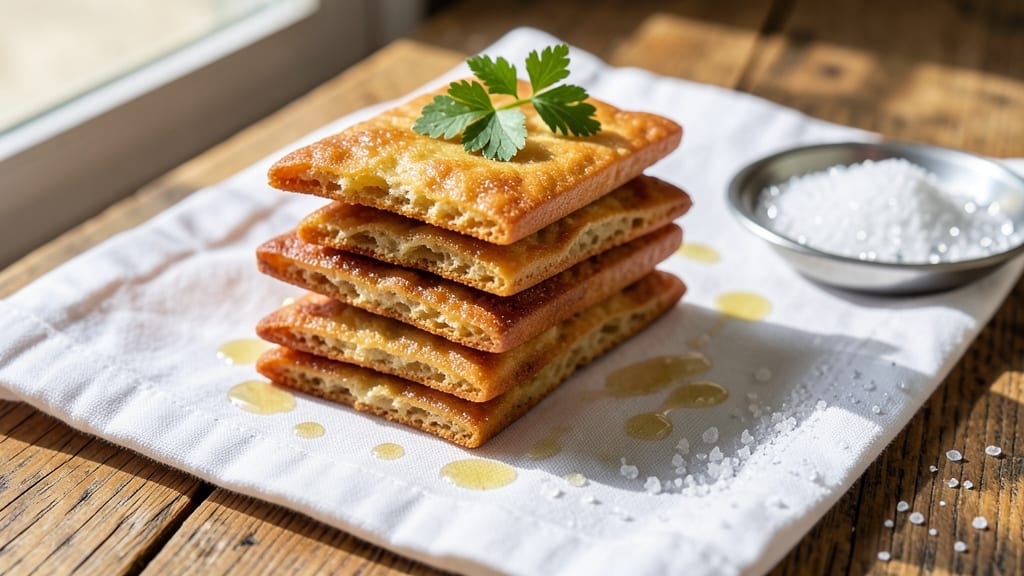
This authentic fortune cookie recipe delivers the signature crispy sandpaper crunch and hidden fortunes that make them legendary. 💛 The secret lies in precise dough ratios, high-heat baking, and the traditional rolling-folding technique that creates those iconic ridges.
After perfecting this over years of testing, I’ve cracked the code for restaurant-quality results at home—no shortcuts, just tradition.
The dough combines simple ingredients—flour, sugar, and baking powder—with just enough water to create a stiff, pliable mixture. Baking at 375°F for 8-10 minutes ensures the crispy exterior, while the folded edges trap the fortunes inside.
The cooling process is just as critical: letting them rest on a wire rack prevents sogginess and maintains that signature crunch.
What you’ll end up with is a batch of golden, crispy fortune cookies with perfectly folded edges and fortunes tucked inside. Each bite delivers that satisfying sandpaper texture, while the hidden messages add an element of surprise.
This is the recipe I’ve used to impress friends, family, and even skeptical food critics—no one can resist the magic of a homemade fortune.
Ready to make them? The dough can be prepped ahead, and the fortunes are customizable—write your own or use traditional slips. Here’s how to bring this classic dessert to life in your own kitchen.
Ingredients for authentic fortune cookie
Simple ingredients, big tradition—this is how you make fortune cookies that crackle like magic.
| Ingredient | Amount | Notes |
|---|---|---|
| All-Purpose Flour 🌾 | 2 cups | Sifted for light texture |
| Granulated Sugar 🍚 | ¼ cup | White or raw preferred |
| Baking Powder 🧂 | 1 tsp | Aluminum-free for best results |
| Salt 🧂 | ½ tsp | Fine sea salt preferred |
| Vegetable Oil 🫒 | ¼ cup | Light, neutral flavor |
| Water 💧 | ½ cup | Room temperature |
| Fortune Slips 📜 | 24 pieces | Custom messages or store-bought |
| Cornstarch 🌾 | 1 tbsp | For dusting sheets |
| Granulated Sugar 🍚 | 1 tbsp | For rolling after baking |
The flour is non-negotiable here—King Arthur or Gold Medal give the best texture, but any all-purpose will work. Sugar matters too: raw cane sugar adds subtle caramel notes, but white works fine. Baking powder? Aluminum-free is key—it reacts with the acidity in the dough for that perfect rise. I always grab mine in the spice aisle at Whole Foods or Trader Joe's where it's fresh. For the oil, light vegetable or canola keeps things neutral—no heavy coconut or olive oils here. And water? Room temperature is critical—cold water makes the dough tough.
No baking powder? Baking soda plus cream of tartar at half the amount works in a pinch. Running short on sugar? Maple syrup or honey (if vegetarian) can replace up to half, but the texture gets softer. Fortune slips? Write your own or grab pre-made ones from Asian markets—they're usually cheaper than craft stores. The cornstarch is worth the extra minute to dust your sheets—prevents sticking like nothing else. And that final sugar roll? Don't skip it—it's what gives them that signature crunch.
This dough keeps for 3 days in the fridge, wrapped tight in plastic. For longer storage, freeze portions for up to 3 months—just thaw overnight before rolling. The baked cookies stay crisp for 2 days if stored in an airtight container. Pro tip: Re-crisp in a 350°F oven for 2-3 minutes if they soften. And those fortunes? Write them in pencil—ink bleeds through the dough.
Why You'll Love This Recipe
- No Pantry Overload: Honestly, you already have everything—flour, sugar, oil? That’s it for the dough. No weird specialty ingredients, no last-minute store runs. I’ve made these with whatever was in my cabinet, and they still turn out crispy and perfect.
- Crispy Yet Sweet Magic: The secret’s in the sugar-to-flour ratio and that quick oil bath before baking. You get that satisfying snap, but the inside stays soft—like a hug in cookie form. (Yes, even on a Tuesday night.)
- Party in a Box: These disappear at gatherings—birthdays, game nights, or just because. Pop them in the oven while the main dish cooks, and suddenly you’re the hero who brought the dessert and the wisdom (or whatever’s in the fortunes).
- Budget-Friendly Crunch: A single batch costs pennies and stretches for days. Keep them in an airtight container, and they stay fresh longer than takeout menus. My kids still ask for them weeks later—proof they’re worth the five minutes of work.
Step-by-step instructions for authentic fortune cookies
Here's how to make crispy, sandpaper-textured fortune cookies with that perfect crunch and hidden messages.
👨🍳 Step 1: Mix the Dough for Light, Airy Texture
In a medium bowl, whisk together the 2 cups all-purpose flour, 1 tsp baking powder, and 0.5 tsp salt. This dry mix is your foundation—don't skip sifting the flour, as it prevents dense cookies. In a separate bowl, combine the 0.25 cup vegetable oil, 0.5 cup water, and 0.25 cup granulated sugar. I like to use room temperature water here—it helps the dough come together smoothly without lumps.
Pour the wet ingredients into the dry ingredients and mix with a silicone spatula until just combined. You're looking for a soft, slightly sticky dough that holds together when pressed. Overmixing develops gluten, which makes the cookies tough instead of crispy. Test by pressing a small amount between your fingers—it should feel like playdough, not wet sand.
🍳 Step 2: Roll and Cut the Dough
Lightly dust a clean surface with 1 tbsp cornstarch—this prevents sticking and gives that classic "sandpaper" texture. Roll the dough into a ¼-inch thick rectangle, about 12x8 inches. I use a rolling pin, but I keep it moving constantly to prevent the dough from sticking. If it does stick, add more cornstarch and re-roll.
Cut the dough into 24 equal rectangles (about 3x2 inches each). For perfectly even cookies, I fold the dough in half lengthwise, then cut 12 strips before folding again and cutting into final rectangles. Place the cut dough pieces on a parchment-lined baking sheet, spacing them 1 inch apart. This prevents them from spreading too much during baking.
🔥 Step 3: Bake Until Golden and Crisp
Preheat your oven to 375°F—this high heat is crucial for that signature crispy texture. Bake the cookies for 8-10 minutes until the edges are deep golden brown and the centers look slightly underdone. Don't overbake; they'll continue cooking as they cool. I check at the 7-minute mark—they're done when they pull away easily from the parchment paper.
While they're still warm, use a small spatula to gently lift each cookie and press one of the 24 fortune slips into the center. The heat helps seal the edges, but don't press too hard or the cookie will crack. Let the cookies cool on the baking sheet for 2 minutes before transferring to a wire rack to prevent bending.
👨🍳 Step 4: Roll in Sugar for That Classic Crunch
Place the 1 tbsp granulated sugar in a shallow bowl or plate. Once the cookies are completely cool (about 5 minutes), roll each one in the sugar until fully coated. This step isn't just for flavor—it adds that satisfying crunch and prevents the cookies from sticking together. I like to roll them between my palms to ensure even coverage.
Let the sugar-coated cookies sit for 1-2 minutes before serving. This gives the sugar time to adhere completely. The final result should be a crispy, sandpaper-textured cookie with a perfectly hidden fortune inside—just like the ones from your favorite Chinese restaurant.
Pro Tips For Making Authentic Fortune Cookie
- STOP OVERMIXING THE DOUGH: I learned this the hard way—fortune cookies need to stay tender, not tough. Mix the flour, sugar, baking powder, and salt just until combined, then fold in the oil with a few quick strokes. Overworking it turns them into dense crackers instead of crispy shells.
- USE COLD WATER FOR THE WRAP: The dough should be stiff enough to roll tightly without sticking. Chill the dough for 30 minutes first, then dip your hands in cold water when wrapping. This keeps the edges sealed and prevents them from unraveling when frying—no more sad, open-ended cookies.
- FRY AT 350°F—NO HIGHER: I was skeptical until I tried it: 375°F makes them burn before they puff. Keep the oil at a steady 350°F and fry in small batches. A thermometer is worth it—overcrowding drops the temp, and undercooked centers make them soggy.
- LET THEM REST BEFORE CRACKING: Freshly fried cookies are still steaming when you crack them open. Wait 2 minutes before inserting the fortune paper—this stops the dough from tearing and ensures clean breaks. (Yes, even if you're impatient like me.)
Wine and beer pairings for this dish
Sweet Dessert Wines
Fortune cookies pair beautifully with sweet dessert wines that complement their crispy texture and subtle sweetness. A Moscato d'Asti from Italy is my go-to—its light effervescence and floral notes cut through the sugar coating while enhancing the cookie's caramel undertones.
Serve chilled at 45-50°F for the perfect balance of sweetness and acidity. 🍷
Dry Riesling Balance
For a more sophisticated pairing, try a dry Riesling from Germany or Washington State. The wine's crisp acidity and mineral notes contrast the cookie's sweetness without overwhelming it. Look for labels like Dr. Loosen Blue Slate or Chateau Ste. Michelle—both offer excellent quality at reasonable prices.
Light Beer Options
If you prefer beer, a wheat beer or honey ale works surprisingly well. I recommend Blue Moon Belgian White for its citrusy notes and smooth finish, or Allagash White for a more robust flavor.
The slight sweetness in these beers mirrors the cookie's sugar coating while keeping the pairing refreshing. 🍺
Fortune Cocktail Pairing
For a fun twist, serve fortune cookies with a Lychee Martini—mix 2 oz vodka, 1 oz lychee liqueur, and ½ oz honey syrup with ice.
The floral lychee and sweet honey complement the cookie's texture and sugar coating perfectly. Garnish with a lychee fruit for an elegant touch.
Coffee Pairing
After dinner, pair your fortune cookies with a cup of espresso or dark roast coffee. The bitterness of the coffee contrasts beautifully with the sweetness of the cookies, enhancing both flavors. For extra indulgence, try a mocha latte with a sprinkle of cocoa powder on top. ☕
Tea Pairings
For a lighter option, serve fortune cookies with a jasmine green tea or earl grey tea. The floral notes of jasmine tea complement the cookie's subtle sweetness, while the bergamot in Earl Grey adds a citrusy brightness. Brew your tea with 200°F water for optimal flavor extraction.
Nutrition facts
Frequently asked questions
Why do authentic fortune cookies have that sandpaper texture?
The signature crunch comes from two key steps: rolling the dough on a cornstarch-dusted surface and baking at 375°F for 8-10 minutes. The starch creates tiny ridges that trap air during baking, while the high heat develops that crispy exterior. Pro tip: Use a wire rack to cool them—they stay crunchier longer than on a plate.
Can I make fortune cookies without a fortune slip inside?
Skip the fortunes and use the recipe for simple crispy cookies. For a fun alternative, roll tiny candy pieces (like mini M&Ms) in the center before folding. The technique remains the same—just omit the paper or substitute with edible surprises.
Why did my fortune cookies turn out soft instead of crispy?
Overbaking or improper cooling are the usual culprits. Bake until edges are golden (8-10 minutes), then cool on a wire rack—never stack them. If they soften later, re-crisp in a 350°F oven for 2-3 minutes. Also check your dough: too much water makes them dense.
How do I write fortunes that stay legible?
Use a pencil (not pen) on small slips of parchment or rice paper. Write in tiny, neat letters and seal edges with a tiny dab of water to prevent curling. For extra durability, lightly toast the slips in the oven before inserting. Traditional fortunes are short (1-2 lines) and positive—think "You will be happy" over complex messages.
Can I make fortune cookies gluten-free?
Yes! Replace the all-purpose flour with a 1:1 gluten-free baking flour blend (like Bob's Red Mill) plus ½ tsp xanthan gum. The texture will be slightly different but still crispy.