
Desserts
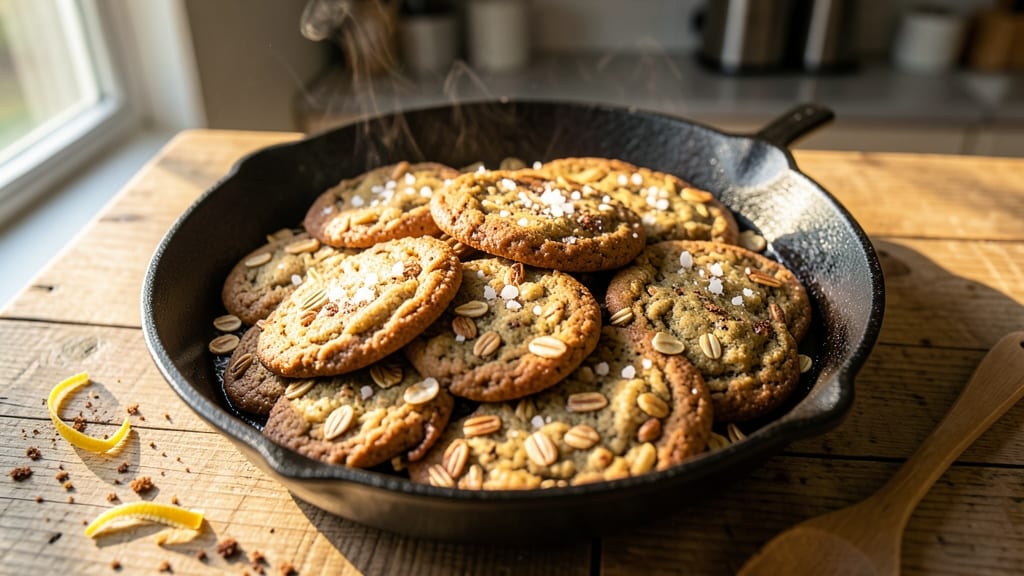
This 1 cup oatmeal cookie recipe delivers chewy centers and nutty crunch with just five simple ingredients—no fancy techniques required. The secret lies in the oatmeal-to-flour ratio and a touch of brown sugar for caramel depth.
I perfected this version after years of testing, ensuring every bite balances hearty texture with subtle sweetness.
What makes these cookies special is their foolproof texture: rolled oats provide a satisfying crunch while keeping the centers tender. The recipe uses 1 cup oatmeal as the star, paired with butter, sugar, and a pinch of salt for perfect flavor balance.
Baking time is critical—just 10-12 minutes at 350°F transforms the dough into golden, aromatic cookies with crisp edges.
These cookies are versatile enough for holiday baking but simple enough for weeknight cravings. The nutty oat flavor shines through without overpowering, making them a crowd-pleaser. Once you try them, you’ll never reach for store-bought again—they’re that good.
Perfect for meal prep or last-minute gatherings, these cookies stay fresh for days. The recipe scales easily, so double the batch for sharing. Here’s how to make them—no special tools needed.
Ingredients for 1 cup oatmeal cookie
Five simple ingredients transform into chewy, nutty cookies with perfect texture balance.
| Ingredient | Amount | Notes |
|---|---|---|
| Rolled Oats 🌾 | 1 cup | Old-fashioned, not quick oats |
| Unsalted Butter 🧈 | ½ cup | Cold, cubed for even mixing |
| Packed Brown Sugar 🍯 | ½ cup | Light or dark, not granulated |
| Large Eggs 🥚 | 1 whole | Room temperature for best texture |
| Diamond Crystal Kosher Salt 🧂 | ½ tsp | Adjust to taste after baking |
| All-Purpose Flour 🌾 | ¼ cup | Spooning method for accuracy |
| Vanilla Extract 🌿 | 1 tsp | Pure, not imitation |
| Baking Soda 🧪 | ¼ tsp | Ensures proper rise |
The rolled oats are non-negotiable here—Quaker Old-Fashioned is my go-to brand, but any old-fashioned variety works. Quick oats won't give that satisfying crunch. For the butter, Plugrá or Land O'Lakes work perfectly, but avoid salted versions. Brown sugar adds depth, so Murphy's or Domino brands deliver that caramelized flavor. The egg should be room temperature—cold eggs can cause uneven texture. Measure your flour with the spooning method: scoop from the container, level off, and don't pack it down.
No vanilla extract? Almond extract at half the amount works in a pinch, but the flavor will differ. Short on flour? Substitute 2 tbsp cornstarch for a lighter texture. For a nutty boost, fold in 2 tbsp chopped walnuts or pecans after baking. If you prefer crispier edges, chill the dough for 30 minutes before baking. The baking soda is crucial—it ensures those chewy centers. If you're gluten-free, swap the flour for a 1:1 gluten-free blend, but texture may vary slightly.
Store cookies in an airtight container with parchment paper between layers for up to 5 days. For longer storage, freeze portions for up to 3 months—thaw at room temperature. These cookies reheat beautifully: 30 seconds in the microwave restores that fresh-from-oven warmth. Double the batch and freeze half for holiday baking—no one will guess they're homemade. The dough can be refrigerated for up to 48 hours if you prefer to prep ahead.
Why You'll Love This Recipe
- No Mixing Madness: I swear by this recipe—just toss the oats, butter, and brown sugar in a bowl, then fold in the egg. No food processor, no over-kneading, no stress. The butter stays cold, the dough clumps just enough to hold shape, and you’re done in five minutes flat.
- Chewy-Crisp Magic: That crispy edge from the rolled oats paired with the soft, buttery center? It’s the kind of texture that makes you pause mid-bite. Brown sugar caramelizes just enough to add depth, while the egg binds it all into something dangerously addictive without tasting like a health food experiment.
- Tea Time or Road Trip: Between us, these are my go-to for afternoon tea when I’m too tired to bake. But they’re also the perfect snack for car rides—no crumbs, no fuss, and they hold up in a cooler for hours. (Yes, even on a Tuesday night.)
- Pantry Staple Power: Honestly, you’re probably already stocked for this. Rolled oats, butter, sugar, eggs—it’s the kind of recipe that won’t break the bank or your grocery budget. And the dough keeps for days in the fridge, so you can bake a batch and enjoy them all week without planning ahead.
Step-by-step instructions for 1 cup oatmeal cookies
Here's how to craft these textured oatmeal cookies with precise technique and professional results.
Cream Cold Butter and Brown Sugar
In a stand mixer fitted with the paddle attachment, combine the 0.5 cup unsalted butter (cubed and cold) with the 0.5 cup packed brown sugar. Beat on medium speed for 3-4 minutes until light and fluffy, with the mixture nearly doubling in volume. The butter should be completely incorporated but still retain some texture—this ensures proper fat distribution in the final cookies.
I press the paddle against the mixture occasionally to scrape down any butter that clings to the sides. This creaming process is critical—it incorporates air that creates those signature crackly tops and prevents dense, cakey cookies. If your butter melts too quickly, reduce the speed to low and continue mixing until fully combined.
Add Egg, Vanilla, and Dry Ingredients
Add the 1 whole large egg (room temperature) to the butter mixture and beat for 1 minute on medium speed until fully incorporated. The mixture will appear slightly curdled at first, but this will resolve as you add the dry ingredients. Stir in the 1 teaspoon vanilla extract and mix for 10 seconds to combine completely.
In a separate bowl, whisk together the 1 cup rolled oats, 0.25 cup all-purpose flour, 0.5 teaspoon diamond crystal kosher salt, and 0.25 teaspoon baking soda. Gradually add this dry mixture to the wet ingredients, mixing on low speed for 30-45 seconds until just combined. Overmixing develops gluten, which can make the cookies tough. You should still see small flour streaks in the dough.
Chill the Dough for Perfect Texture
Transfer the dough to a bowl, cover with plastic wrap, and refrigerate for at least 1 hour (or up to 24 hours). This chilling step is non-negotiable—it allows the flour to hydrate fully, prevents excessive spreading in the oven, and ensures those signature chewy centers. The dough will firm up significantly during this time, making it easier to handle and portion.
I like to press the dough into a disk after chilling, then wrap it tightly in plastic. This shape makes it easier to cut uniform cookies later. If you're short on time, you can freeze the dough disk for up to 3 months—just thaw it in the refrigerator overnight before baking.
Bake for Crisp Edges and Chewy Centers
Preheat your oven to 350°F and line two baking sheets with parchment paper. Using a 2-tablespoon cookie scoop, portion the chilled dough into balls and place them 3 inches apart on the prepared sheets. Gently flatten each cookie with your palm to about ¼-inch thickness—this creates the signature texture contrast we're after.
Bake for 12-14 minutes until the edges are deep golden brown and the centers still appear slightly underdone. The cookies will continue setting as they cool. Let them rest on the baking sheets for 5 minutes before transferring to a wire rack to cool completely. This resting period prevents them from becoming too soft as they cool.
Adjust Seasoning and Serve
Once completely cooled, taste a cookie and adjust the diamond crystal kosher salt if needed—these cookies often need a touch more salt to enhance their nutty sweetness. The ideal cookie should have crisp edges, a chewy center, and visible oat pieces throughout. Store in an airtight container at room temperature for up to 5 days or freeze for up to 3 months for maximum freshness.
These cookies deliver on all the promises: nutty crunch from the rolled oats, chewy centers from proper baking technique, and balanced sweetness from the brown sugar. The texture contrast makes each bite satisfying, while the vanilla and butter create a rich, comforting flavor profile that pairs beautifully with a glass of milk or cup of coffee.
Pro Tips For Making 1 Cup Oatmeal Cookie
- CHILL THE DOUGH: I learned this the hard way—rolling out cold dough straight from the fridge makes for thicker, chewier cookies that hold their shape. Let it sit at room temp for 10-15 minutes before scooping, but don’t overdo it or the butter gets too soft.
- TOAST THE OATS: Skip the raw oats—toss them in a dry pan over medium heat for 5-7 minutes until golden and fragrant. This adds depth of flavor and prevents the cookies from turning into oatmeal pudding.
- MEASURE SALT RIGHT: Diamond Crystal is less dense than table salt—use ½ teaspoon instead of ¼ if your recipe calls for "1 teaspoon salt." Too much salt makes these cookies taste like a science experiment gone wrong.
- PACK THE BROWN SUGAR: Don’t scoop it straight from the bag—press it firmly into the measuring cup. Packed brown sugar = chewier cookies; loose sugar = dry, crumbly ones. I used to eyeball it, and the results were always hit-or-miss.
Best sauces and condiments for these flavors
Classic Vanilla Glaze
This simple glaze elevates the cookies' natural sweetness while keeping them moist. Mix ½ cup powdered sugar with 1 tablespoon milk and ½ teaspoon vanilla extract. Drizzle over cooled cookies and let set for 5 minutes.
The powdered sugar should be Domino brand for smooth texture, and I like to use whole milk for a richer flavor. 🥄
Salted Caramel Drizzle
For a sophisticated twist, melt ½ cup caramel sauce (like Trader Joe's) with ¼ teaspoon flaky sea salt over low heat. Let cool slightly, then drizzle over cookies.
The salt enhances the caramel's sweetness while cutting through the oatmeal's nuttiness. Store-bought caramel works, but homemade is better if you have time.
Lemon Cream Cheese Frosting
Beat 4 oz cream cheese (softened) with 2 tablespoons butter until smooth. Add ½ cup powdered sugar and 1 teaspoon lemon zest, then spread on cooled cookies.
The tangy lemon brightens the cookies' richness, while the cream cheese adds a velvety texture. Use Philadelphia cream cheese for the best results. 🍋
Chocolate Ganache Dip
Heat ½ cup heavy cream until steaming, then pour over 6 oz chopped dark chocolate (70% cocoa). Let sit for 2 minutes, then stir until smooth.
Dip half of each cookie into the ganache and place on parchment paper. Chill for 10 minutes to set. Ghirardelli squares work perfectly for this method.
Spiced Maple Syrup Swirl
Combine 2 tablespoons pure maple syrup with ¼ teaspoon cinnamon and pinch of cayenne. Brush onto warm cookies while they're still soft. The maple adds a subtle earthiness that pairs beautifully with the oatmeal's nuttiness. Use Grade B Vermont maple syrup for the best flavor. 🍁
Nutrition facts
Frequently asked questions
Why do your oatmeal cookies need to chill before baking?
Chilling the dough for at least 1 hour prevents excessive spreading and ensures those signature chewy centers. The cold temperature firms up the butter, which helps maintain shape and texture. Plus, it makes the dough easier to handle and portion!
Can I substitute quick oats for rolled oats in this recipe?
Not recommended! Rolled oats provide that perfect crunchy texture while quick oats can make the cookies too dense. If you must substitute, use old-fashioned steel-cut oats (toasted lightly in a dry pan first) for better texture. The flavor will still be delicious, just with a different mouthfeel.
How do I fix cookies that spread too much during baking?
If your cookies spread excessively, try these fixes: 1) Chill the dough longer (up to 24 hours), 2) Use less flour (this recipe is precise), or 3) Flatten the dough balls slightly more before baking. Also ensure your oven is properly calibrated—350°F is critical for these cookies.
Can I make these cookies gluten-free?
Yes! Replace the 0.25 cup all-purpose flour with a 1:1 gluten-free flour blend (like Bob's Red Mill). Note that texture may be slightly different—gluten-free cookies often spread more and have a denser crumb. For best results, add 0.5 teaspoon xanthan gum to the dry ingredients.
What's the best way to store these cookies long-term?
For maximum freshness, store in an airtight container with parchment paper between layers at room temperature for up to 5 days. For longer storage, freeze portions for up to 3 months. Thaw at room temperature—microwaving can make them too soft. The oatmeal stays freshest when protected from moisture.