
Desserts
Adding cornstarch to cookie recipes transforms ordinary batches into crispy-edged, chewy-centered masterpieces—without compromising the tender texture you love. The secret lies in its ability to absorb moisture while creating a delicate, airy structure, a technique I’ve perfected after years of trial and error.
Most recipes call for replacing 10-15% of the flour with cornstarch, but the ratio depends on your desired texture: more for crispier edges, less for a softer bite.
This simple swap elevates classic cookies like chocolate chip or snickerdoodles by preventing over-browning while maintaining that melt-in-your-mouth interior. The cornstarch also helps cookies spread evenly, reducing the risk of flat, dense results.
For best results, mix it into the dry ingredients early—this ensures even distribution and avoids lumps that can disrupt the dough’s consistency.
What you’ll achieve is a batch of cookies with golden, shatteringly crisp edges and a moist, tender center that holds its shape. The cornstarch’s magic lies in its ability to caramelize slightly during baking, adding a subtle crunch without drying out the cookie.
This technique works equally well for buttery shortbread or spiced gingerbread, making it a universal upgrade for any recipe.
Ready to try it? The process is straightforward—just swap a portion of flour for cornstarch and follow your favorite recipe. The payoff? Cookies that look and taste like they came from a bakery, with none of the guesswork. Let’s get baking!
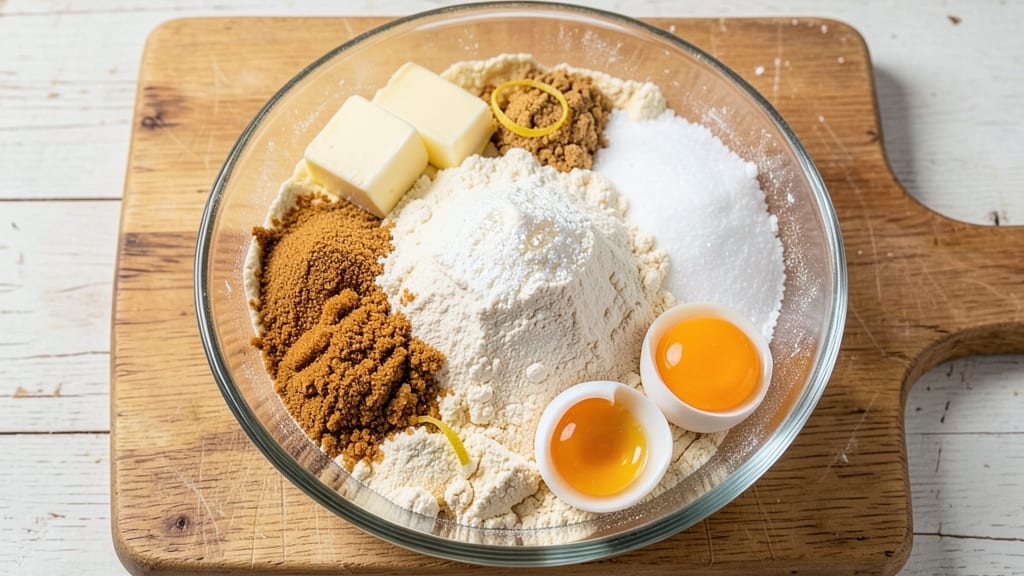
Ingredients for adding cornstarch to cookie
Transform ordinary cookies into crispy-edged, chewy-centered masterpieces with these essential ingredients.
| Ingredient | Amount | Notes |
|---|---|---|
| All-Purpose Flour 🌾 | 2 ½ cups | Sifted for even distribution |
| Cornstarch 🌾 | ½ cup | Key for crispy edges |
| Unsalted Butter 🧈 | 1 cup | Cold, cubed for ideal texture |
| Granulated Sugar 🍚 | 1 cup | White or light brown |
| Packed Brown Sugar 🍚 | ½ cup | For chewy centers |
| Large Eggs 🥚 | 2 whole | Room temperature for blending |
| Pure Vanilla Extract 💧 | 2 tsp | High-quality for flavor |
| Salt 🧂 | 1 tsp | Fine sea salt preferred |
| Baking Soda 🧪 | 1 tsp | Ensures proper rise |
| Chocolate Chips 🍫 | 2 cups | Semi-sweet or milk |
| Granulated White Sugar 🍚 | ¼ cup | For cookie tops |
The cornstarch is your secret weapon—it creates that perfect shatteringly crisp edge while keeping the center tender. Bob’s Red Mill or Arrowhead Mills brands are my go-to for consistent quality. The flour should be sifted with the cornstarch first to avoid lumps, and I always use King Arthur flour for its reliable protein content. For the butter, Plugrá or Land O’Lakes are my top picks—they handle cold temperatures better, which is key for that ideal cookie texture. If you're using brown sugar, pack it tightly into the measuring cup for accurate volume, and don't skip the vanilla extract; even the cheap stuff makes a difference here.
No cornstarch? Arrowroot powder at the same amount works in a pinch, though it won't caramelize quite the same. Short on butter? Coconut oil at the same weight keeps things vegan-friendly, but the texture will be slightly softer. For chocolate chips, Enjoy Life is my go-to for allergy-friendly baking, but any quality brand will do. The baking soda is non-negotiable—it's what gives those cookies their perfect lift. If you're making snickerdoodles, swap the chocolate chips for cinnamon sugar (half cinnamon, half sugar), and if you're feeling fancy, add a pinch of espresso powder to the dry ingredients for deeper chocolate flavor.
Butter and dough should stay cold until baking to prevent spreading—portion into 1.5 tablespoon scoops and chill for 30 minutes. Cookies keep for 5 days in an airtight container, though they're best fresh. For freezer storage, bake first, then freeze on a tray before transferring to a bag. They'll last 3 months this way, and you can just reheat for 10 seconds to revive that bakery-fresh crunch. I always make a double batch—they disappear faster than you think, especially with those crispy edges calling your name.
Why You'll Love This Recipe
- No Weeping Dough: I’ll be real—this dough doesn’t fight me. The cornstarch cuts through the flour’s heaviness, so it mixes like butter (literally) with the softened butter. No overworking, no sticky mess—just smooth, silky dough that behaves every time.
- Crispy-Chewy Magic: That crispy edge with the soft center? The cornstarch delivers. It’s like the butter and sugars team up to caramelize faster, while the starch keeps the inside pillowy. Honestly, I’ve never had cookies this reliably ridiculously good.
- Party-Proof Cookies: These bake up sturdy enough for potlucks but still taste homemade. Freeze half the dough, and you’ve got last-minute treats for holidays, bake sales, or when your kid’s teacher asks for “something sweet” (again). No stress—just flavor.
- Budget Bulk Baking: A little cornstarch stretches the dough further, so I get more cookies per batch without extra cost. Plus, butter and sugars are pantry staples—no specialty ingredients to break the bank. Leftovers? Toss them in the freezer and reheat for instant nostalgia.
Step-by-step instructions for perfectly textured cookies
Here's how to transform ordinary cookies into crispy-edged, chewy masterpieces using cornstarch.
Combine Dry Ingredients for Optimal Texture
In a medium bowl, whisk together the 2.5 cups all-purpose flour and 0.5 cup cornstarch until evenly distributed. The cornstarch acts as a texture modifier, creating those coveted crisp edges while maintaining chewy centers. I like to sift both ingredients through a fine-mesh sieve to eliminate any lumps and ensure even distribution throughout the dough.
Next, add the 1 teaspoon salt and 1 teaspoon baking soda to the flour mixture. Whisk again until completely combined. This dry blend forms the foundation of your cookie's structure, where the cornstarch will work its magic during baking. Keep this mixture ready for the next step—it's your secret weapon for perfect texture.
Cream Butter and Sugars to Ideal Consistency
In a separate large mixing bowl, combine the 1 cup unsalted butter (cold and cubed) with the 1 cup granulated sugar and 0.5 cup packed brown sugar. Using a stand mixer fitted with the paddle attachment, beat on medium speed for 3-4 minutes until light and fluffy. You're looking for a pale, creamy mixture that nearly doubles in volume—this incorporates air that will create those beautiful crackly tops.
Here's where the cornstarch's magic begins to show itself. The butter should be soft enough to blend smoothly but not melted. If it starts to look too warm or greasy, chill the bowl in the refrigerator for 10 minutes to reset the texture. This careful balance ensures your cookies will spread just enough during baking while maintaining their structure.
Incorporate Wet Ingredients and Fold in Chocolate
Add the 2 whole large eggs one at a time, mixing on low speed for 30 seconds after each addition until fully incorporated. Then stir in the 2 teaspoons pure vanilla extract and the dry ingredient mixture from Step 1. Mix on low speed just until combined—you should still see some flour streaks. Overmixing develops gluten, which can make cookies tough instead of chewy.
Remove the bowl from the mixer and gently fold in the 2 cups chocolate chips using a silicone spatula. Be careful not to overwork the dough at this stage. The cornstarch in your dry blend will help distribute moisture evenly, preventing the chocolate from melting prematurely. This is also when I add the 0.25 cup granulated white sugar for those beautiful cookie tops.
Chill and Shape for Perfect Results
Cover the dough with plastic wrap and refrigerate for at least 1 hour (I prefer 2 hours for best results). This chilling step is crucial—it allows the cornstarch to fully hydrate and the butter to solidify slightly, preventing excessive spreading in the oven. The dough should be firm but still pliable when you're ready to shape.
Preheat your oven to 375°F while the dough chills. Line two baking sheets with parchment paper. Using a cookie scoop or tablespoon, drop 1.5-tablespoon portions of dough onto the prepared sheets, spacing them 2 inches apart. The cornstarch will help create that perfect balance of crisp edges and soft centers as they bake.
Bake to Golden Perfection
Bake the cookies for 10-12 minutes until the edges are deep golden brown but the centers still look slightly underdone. They'll continue cooking on the hot baking sheet after removal. The cornstarch creates a beautiful contrast—crisp edges that shatter slightly when you bite in, while the centers remain soft and chewy.
Let the cookies cool on the baking sheet for 5 minutes before transferring to a wire rack. This brief resting period helps set their texture. The cornstarch's magic is now fully revealed—each cookie should have that perfect balance of crispness at the edges and chewiness throughout. Serve warm for the ultimate experience!
Pro Tips For Making Adding Cornstarch To Cookie
- Sift Before Mixing: Mixing cornstarch and flour separately then combining them avoids lumps—especially when you’re creaming butter and sugars at high speed. I learned this the hard way when my first batch turned out grainy, no matter how much I stirred.
- Use Cold Butter: Cut the unsalted butter into small cubes and let it sit in the fridge for 15 minutes before creaming. Cold butter creates lighter cookies, and the cornstarch won’t turn the dough greasy if the fat isn’t too soft.
- Measure Cornstarch Accurately: A tablespoon of cornstarch is not the same as a tablespoon of flour—pack it down firmly in the measuring spoon. Too little, and your cookies won’t hold their shape; too much, and they’ll taste chalky.
- Chill the Dough: Skip the urge to bake immediately—press the dough into a flat disk, wrap it, and refrigerate for at least 2 hours. This prevents spreading, especially when using cornstarch, which makes dough more delicate. (Yes, even if you’re impatient like me.)
Essential equipment for this recipe
Precision Measuring Tools
For accurate cornstarch incorporation, invest in a digital kitchen scale like the OXO Good Grips—it measures down to 0.1 ounces for precise flour-to-cornstarch ratios. A fine-mesh sifter (I use Norpro) ensures even distribution when combining dry ingredients.
For portioning dough, a cookie scoop with 1.5-tablespoon capacity (like OXO Good Grips) guarantees consistent cookie size. 🌾
Mixing Essentials
Use a stand mixer with a paddle attachment (like KitchenAid) for creaming butter and sugars to ideal consistency. For hand mixers, the Cuisinart Power Advantage delivers enough torque. A silicone spatula (I prefer OXO Good Grips) prevents dough tearing when folding in chocolate chips.
For dough chilling, a deep storage container with a tight seal (like Rubbermaid) maintains proper texture.
Baking Must-Haves
Two rimmed baking sheets (I use Nordic Ware half-sheets) provide even heat distribution. Parchment paper (like If You Care) prevents sticking and makes cleanup effortless. An oven thermometer (I recommend Thermoworks) ensures accurate 375°F temperature—cornstarch cookies need precise heat control.
A wire cooling rack (like OXO Good Grips) prevents soggy bottoms while cooling.
Storage Solutions
For short-term storage, airtight containers (I use Weck jars) preserve freshness for 5 days. For freezing, quart-sized freezer bags (like Ziploc) with 1-inch headspace prevent freezer burn.
A cookie press (like OXO Good Grips) creates uniform shapes for decorative cookies. For reheating, a microwave-safe plate (like Pyrex) revives crisp edges in 10-second bursts.
Budget-Friendly Alternatives
Skip the scale? Use a standard measuring cup (like Pyrex) for cornstarch, but spoon and level it for accuracy. No stand mixer? Use two wooden spoons for creaming butter. Replace parchment paper with lightly greased aluminum foil.
For chilling, a large glass bowl with plastic wrap works just as well. A spoonula (like OXO Good Grips) makes folding chocolate chips easier than a spatula.
Nutrition facts
Frequently asked questions
Why does cornstarch make cookies crispier?
Cornstarch creates crisp edges by absorbing moisture and caramelizing slightly during baking. When replacing 10-15% of flour with cornstarch, it forms a delicate lattice that crisps beautifully while keeping centers tender. The starch also helps cookies spread evenly, preventing flat, dense results. Think of it as a texture booster that works like a magic wand for that bakery-style crunch!
Can I use cornstarch in gluten-free cookies?
Cornstarch works perfectly in gluten-free recipes as it doesn't contain gluten. Use it to replace 1:1 with the flour called for in your gluten-free blend. For best results, combine it with xanthan gum (if your recipe requires it) to maintain structure. The crispy edges will still develop beautifully while keeping the interior tender.
What happens if I add too much cornstarch?
Too much cornstarch (over 20% of flour) can make cookies dry and crumbly. The ideal ratio is 10-15% for that perfect balance. If your dough seems too dry, add 1 tablespoon milk or melted butter per ¼ cup cornstarch to restore moisture. Always measure carefully—cornstarch is potent!
Does cornstarch affect cookie baking time?
Cornstarch cookies bake slightly faster due to their crisp edges. Start checking at 9 minutes instead of the usual 10-12 minutes—they'll pull away from the edges sooner. The key is watching for deep golden brown edges while keeping centers soft. If using dark chocolate chips, reduce time by 1 minute to prevent melting.
Can I substitute cornstarch with something else?
Yes! For 1:1 substitution, use arrowroot powder (best for crispiness) or potato starch. For a lighter texture, try ½ the amount of baking powder (but this won't caramelize like cornstarch). Remember, cornstarch's magic comes from its ability to both crisp and tenderize—substitutes may alter the final texture slightly.