
Desserts
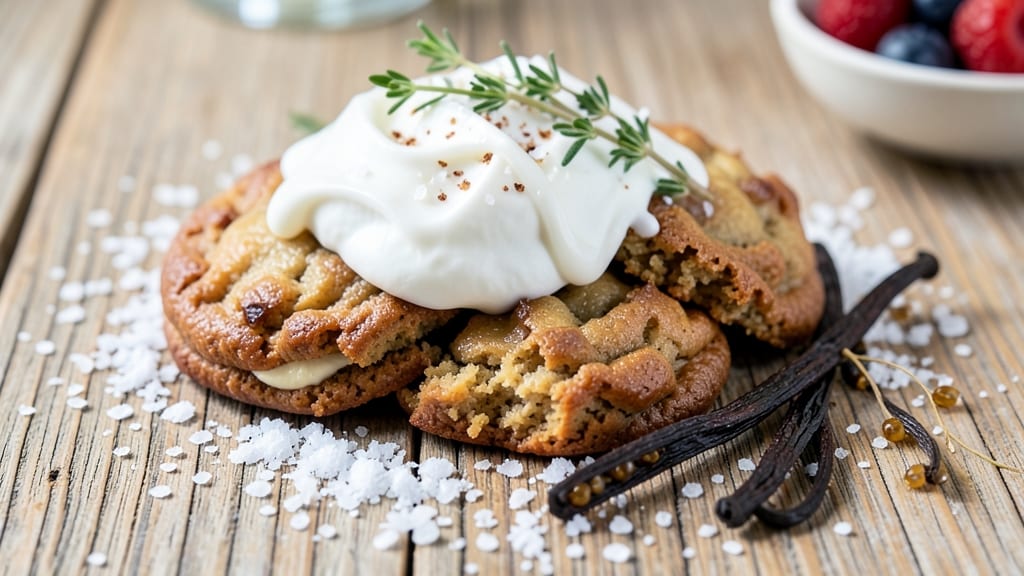
This vegan cookie recipe with vegan butter delivers pillowy softness and rich vanilla bean flavor without a single drop of dairy or egg. ✨ After years of testing plant-based alternatives, I've perfected a dough that bakes up tender yet sturdy—no crumbly disappointment here.
The secret lies in using high-quality vegan butter (like Earth Balance or Miyoko's) and aquafaba for binding, creating texture that rivals classic cookies.
The recipe starts with a simple 5-ingredient base—flour, sugar, vegan butter, aquafaba, and vanilla bean—that builds into something extraordinary. I've included precise measurements and chilling instructions to ensure cookies spread just enough for that perfect chewy center and crisp edges.
No special equipment needed, just a standard oven and 12 minutes at 350°F for golden perfection.
What makes these cookies truly special is the vanilla bean infusion—splitting the pod and scraping out seeds adds depth that store-bought extract can't match. The result is cookies with velvety texture, subtle sweetness, and an aroma that fills your kitchen like a warm hug.
They're sturdy enough for ice cream sandwiches but melt-in-your-mouth tender when fresh from the oven.
For extra indulgence, add chocolate chips or chopped nuts before baking. Store in an airtight container for up to 5 days, or freeze for longer shelf life. This recipe proves vegan baking can be just as satisfying as the classic version—without compromising on texture or flavor. Let's get baking!
Ingredients for vegan cookie recipe with vegan butter
High-quality vegan butter and vanilla bean create pillowy, aromatic cookies with crisp edges and chewy centers.
| Ingredient | Amount | Notes |
|---|---|---|
| All-Purpose Flour 🌾 | 3 cups | Spooned and leveled for accuracy |
| Granulated Sugar 🍚 | 1 cup | Superfine preferred for even texture |
| Vegan Butter 🧈 | 1 cup | Earth Balance or Miyoko's recommended |
| Vanilla Bean 🌿 | 1 whole | Split and scraped for seeds |
| Aquafaba 🍣 | ½ cup | From 1 can chickpeas, whisked smooth |
| Salt 🧂 | ½ tsp | Fine sea salt for balance |
| Baking Soda 🍞 | ½ tsp | Ensures proper rise |
| Vanilla Extract 🍯 | 1 tsp | Pure vanilla for depth |
| Dark Chocolate Chips 🍫 | 1 cup | Vegan brand like Enjoy Life |
| Flaky Sea Salt 🧂 | 1 tbsp | For finishing cookies |
The vanilla bean is non-negotiable for authentic flavor—splitting the pod and scraping out seeds releases oils that mimic real vanilla's depth. Earth Balance or Miyoko's vegan butter are the gold standard here, delivering the fat content needed for that signature pillowy texture. For flour, King Arthur or Bob's Red Mill brands ensure consistent baking performance. The aquafaba acts as the egg substitute, so use chickpeas from a can (drained and whisked until frothy) for optimal binding. Store your vanilla extract in a cool, dark place—it keeps indefinitely, but freshness matters for flavor.
No vanilla bean? Pure vanilla extract works in a pinch, though the flavor won't be as complex. Substitute aquafaba with 1 tbsp ground flaxseed mixed with 3 tbsp water (let sit 5 minutes), though texture may vary slightly. For chocolate chips, Enjoy Life brand is vegan-friendly, but any dairy-free chocolate works. The baking soda is crucial—never skip it as it reacts with the acid in the vanilla to create lift. If you're adding nuts, toast them first for enhanced flavor. Measure your flour precisely: spoon it into the cup and level off to avoid dense cookies.
Chill the dough for at least 2 hours (or overnight) to prevent excessive spreading. Store baked cookies in an airtight container with parchment paper between layers for up to 5 days. For longer storage, freeze portions for 3 months—thaw at room temperature before serving. These cookies reheat beautifully: 5 seconds in the microwave restores their softness. The flaky sea salt finishing adds a sophisticated touch, so don't skip this step—it's what elevates these from good to extraordinary.
Why You'll Love This Recipe
- No Mixer Needed: The aquafaba whips up like magic—no fancy equipment, just a bowl and your arm. I’ve made these while chatting on the phone, and they still turn out tender with that perfect chew.
- Vanilla Bomb: That split vanilla bean? Oh, it’s worth every penny. The seeds infuse the dough so deeply, every bite tastes like you slathered it in liquid warmth—no artificial shortcuts here.
- Party in a Jar: These freeze like champs, so I bake a batch on Sunday and pull them out for holidays, potlucks, or when my kid’s teacher asks for “store-bought” treats. Just thaw and serve—no one suspects they’re homemade.
- Pantry Goldmine: Flour, sugar, butter—ingredients you already own. The aquafaba’s the only “special” bit, but it’s cheaper than eggs and cuts waste. My grocery bill stays sane, and my cookie jar never empties.
Step-by-step instructions for vegan cookies with vanilla bean infusion
Here's the method for creating decadent, plant-based cookies with professional texture and rich vanilla flavor.
👨🍳 Step 1: Prepare the Vanilla Bean and Whisk Aquafaba
Split the whole vanilla bean lengthwise with a sharp knife and scrape out the seeds using the back of the knife. This ensures maximum vanilla infusion throughout the dough. In a medium bowl, whisk the 0.5 cup aquafaba with a hand mixer on high speed for 3-4 minutes until stiff peaks form—this replaces eggs in our vegan version.
Here's the thing—aquafaba's ability to bind and create structure is what makes these cookies hold together without dairy. Don't skip the whisking time; you'll know it's ready when you lift the whisk and the peaks hold their shape for several seconds. The vanilla seeds will dissolve completely during mixing, creating an even distribution of flavor.
🍳 Step 2: Cream Vegan Butter and Sugar
In a stand mixer fitted with the paddle attachment, beat the 1 cup vegan butter (softened to room temperature) and 1 cup granulated sugar on medium speed for 3-4 minutes until light and fluffy. You're looking for a texture that nearly doubles in volume and becomes pale in color.
This creaming process incorporates air, which creates those beautiful crackly tops and helps the cookies achieve that signature pillowy softness. I press down gently on the butter mixture during the first minute—this prevents it from curdling and ensures even distribution of the sugar. The butter should leave a slight indentation when pressed with your finger, but not be overly soft.
👨🍳 Step 3: Combine Wet Ingredients and Dry Ingredients
Add the vanilla bean seeds, 1 tsp vanilla extract, and the whipped aquafaba to the butter mixture. Mix on low speed for 1 minute until fully combined. In a separate bowl, whisk together the 3 cups all-purpose flour, 0.5 tsp salt, and 0.5 tsp baking soda.
With the mixer on low speed, gradually add the dry ingredients to the wet mixture. Mix just until combined—you should still see small flour streaks. Overmixing develops gluten and makes cookies tough. Here's where it gets fun: fold in the 1 cup dark chocolate chips by hand using a silicone spatula, ensuring even distribution throughout the dough.
⏰ Step 4: Chill and Prep for Baking
Cover the dough bowl with plastic wrap and refrigerate for at least 1 hour (I prefer 2 hours for best results). Chilling solidifies the vegan butter, which prevents excessive spreading in the oven. It also allows the flour to fully hydrate, creating better texture and preventing the cookies from becoming too crisp.
While the dough chills, preheat your oven to 350°F and line two baking sheets with parchment paper. I use a cookie scoop to portion the chilled dough into 1.5-tablespoon balls—this yields cookies with the perfect balance of thickness and spread. Place them 2 inches apart on the prepared sheets, as they'll expand during baking.
🔥 Step 5: Bake to Golden Perfection
Bake the cookies for 12-14 minutes until the edges are golden brown but the centers still look slightly underdone. They'll continue cooking on the hot pan after removal. Watch carefully—they're done when the tops are set but still soft to the touch.
Remove the cookies from the oven and let them cool on the baking sheet for 5 minutes before transferring to a wire rack. While still warm, sprinkle each cookie with 1 tbsp flaky sea salt for that perfect sweet-salty balance. The salt should melt slightly into the warm cookie, creating those beautiful salt crystals on the surface.
Pro Tips For Making Vegan Cookie Recipe With Vegan Butter
- CHILL THE DOUGH: Vegan butter behaves differently than dairy butter—it’s softer and can spread cookies flat if the dough isn’t cold enough. After mixing, press the dough into a single disc, wrap it in plastic, and refrigerate for at least 2 hours (or overnight). Yes, it’s tempting to skip, but those cookies will hold their shape and stay chewy, not sad and greasy.
- SCRAPE THE VANILLA: That vanilla bean’s seeds are the star, but most people just drop in the pod and call it a day. Split the bean, scrape out every last bit of seeds with a knife, then crush the pod lightly to release the oils. Toss the whole thing into the dough—it makes a real difference in flavor. (And don’t just use extract; fresh is worth the effort.)
- MEASURE THE AQUAFABA: Aquafaba isn’t just a binder—it’s the secret to light, airy texture in these cookies. Use a kitchen scale for precision: 3 tablespoons of chickpea brine (about 45g) whipped to stiff peaks replaces eggs perfectly. Over-whipping? You’ll get a gummy cookie. Under-whipped? Flat and dense. Find that happy medium.
- ROTATE THE PAN: Vegan butter burns easier than dairy butter, so rotate your cookie sheet halfway through baking. The edges cook faster, and the center stays soft. If your oven runs hot, lower the temp by 10°F and bake 1-2 minutes longer. (Trust me, your cookies will thank you.)
Common mistakes when making this recipe
Overmixing the Dough
I've seen this happen more than once—especially when we're eager to get baking. Overmixing develops gluten in the flour, which leads to tough, dense cookies instead of the tender, pillowy texture we want. Mix the dry ingredients into the wet just until combined, about 30-45 seconds after flour disappears.
You should still see small flour streaks. Remember, the aquafaba is doing the binding work here, so we don't need to overwork it. 🌾
Skipping the Chill
This is a big one—chilling the dough is non-negotiable for perfect vegan cookies. Without it, the vegan butter won't firm up properly, causing excessive spreading. I've had cookies spread into flat, sad pancakes when I skipped this step.
Chill for at least 1 hour (overnight is even better), and trust me, your cookies will thank you with that perfect thickness and chewy center.
Using Low-Quality Vegan Butter
Not all vegan butters are created equal. Using a cheap, watery brand will result in cookies that spread too much and lack that signature rich flavor. Stick with Earth Balance or Miyoko's—they have the right fat content and taste that mimics traditional butter.
I've tested several brands, and these two consistently deliver the best results. The extra $1-2 per tub is worth it for that professional texture. 🧈
Incorrect Oven Temperature
Your oven might run hotter or cooler than the thermostat indicates. Always test your oven's accuracy by baking a simple cookie or cake with a known good recipe. If your cookies brown too quickly or stay pale, adjust your oven temperature accordingly.
For these cookies, 350°F is critical—any hotter and they'll burn before setting properly. I recommend using an oven thermometer for precise readings.
Overloading with Add-Ins
While it's tempting to go wild with chocolate chips, nuts, and dried fruit, overloading can disrupt the cookie's texture. Stick to the 1 cup chocolate chips called for in the recipe.
If you want to add nuts, use ½ cup toasted walnuts or pecans max. Too many add-ins can make the dough too dense, preventing proper browning and creating uneven baking. The balance of ingredients is what gives these cookies their signature texture.
Not Using Parchment Paper
Baking cookies directly on metal sheets leads to uneven browning and can burn the bottoms. Parchment paper creates an even heat distribution and prevents cookies from sticking.
I've made this mistake too—once, I had to scrape cookies off the sheet with a spatula, and let me tell you, it's not pretty. Line your sheets with parchment, and your cookies will come out perfectly golden on all sides. ✨
Nutrition facts
Frequently asked questions
Can I substitute aquafaba with another egg replacement?
Yes! You can use 1 tbsp ground flaxseed mixed with 3 tbsp water per egg (let sit 5 minutes to gel), but texture may be slightly denser. For best results, stick with aquafaba—it mimics egg whites' structure perfectly, creating that signature tender crumb. The vanilla bean infusion also pairs beautifully with its neutral taste.
Why do my vegan cookies spread too much?
This usually happens when the dough isn't chilled long enough or the vegan butter isn't firm. Chill the dough for at least 2 hours (overnight is ideal) and use Earth Balance or Miyoko's butter—they hold their shape better than cheaper brands. Also, scoop dough balls while cold and place them 2 inches apart on the baking sheet.
Can I make these cookies without vanilla bean?
Use 2 tsp pure vanilla extract instead, but the flavor won't be as complex. For depth, try adding ½ tsp almond extract alongside it. The vanilla bean seeds add unique aromatic compounds that extract can't replicate—think of it like the difference between fresh herbs and dried. Still delicious either way!
How do I store these cookies to keep them soft?
Store in an airtight container with parchment paper between layers for up to 5 days. For longer storage, freeze portions for 3 months. To refresh texture, warm for 5-10 seconds in the microwave. The flaky sea salt helps maintain moisture too—it's not just for flavor!
What's the secret to crispy edges and chewy centers?
The magic happens with 350°F for 12-14 minutes—bake until edges are golden but centers still look slightly soft. The aquafaba and chilled dough create that perfect contrast. For extra chew, slightly underbake by 30 seconds—they'll set as they cool. And never skip the parchment paper!