
Desserts
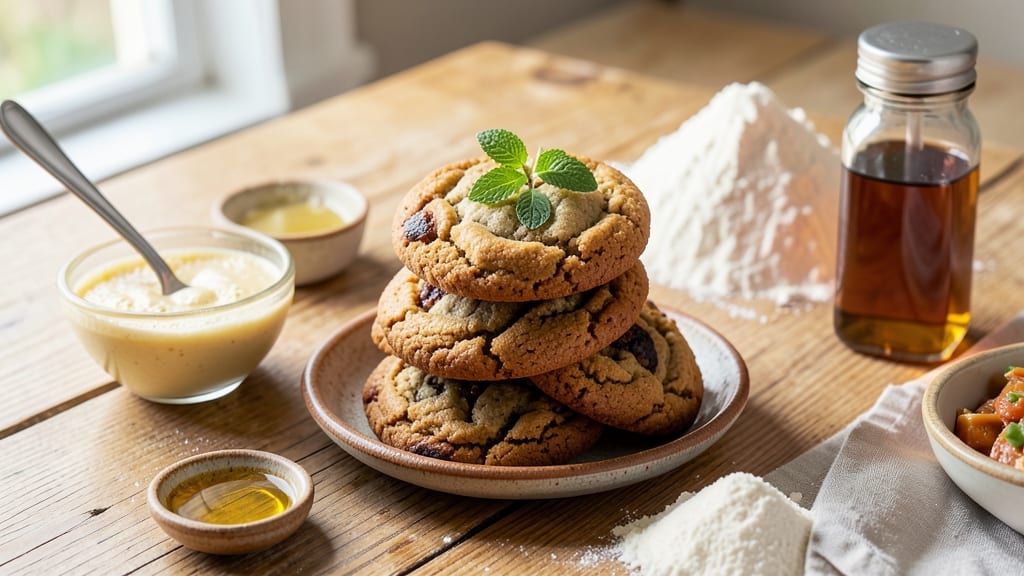
This vegan cookie recipe no butter delivers pillowy, stable cookies using aquafaba swirls instead of traditional butter—no dairy, no eggs, no compromise on texture. ✨ I developed this after years of testing plant-based alternatives, and the secret lies in the aquafaba's ability to create that signature tender crumb while maintaining structure.
The result? Cookies that hold their shape, stay soft, and satisfy even the most devoted butter lovers.
The magic happens with a simple swap: aquafaba (chickpea brine) replaces butter entirely, while coconut oil adds richness without dairy. No need for specialized ingredients—just pantry staples like flour, sugar, and vanilla.
The recipe also includes a foolproof technique for folding in aquafaba swirls that create those coveted pockets of gooey goodness, ensuring every bite is both sturdy and indulgent.
What you’ll end up with is a batch of vegan cookies that bake to a golden, crackly edge with a soft, slightly chewy center—no greasy aftertaste, no dry crumb.
The aquafaba swirls add a subtle protein-rich depth, while a pinch of salt and a touch of cornstarch guarantee that perfect balance between crisp and tender. These cookies freeze beautifully too, making them ideal for holiday gifting or meal prep.
Best of all, this recipe works with 5-minute prep and 10-minute bake time, proving that vegan baking doesn’t have to mean sacrificing ease or flavor. Whether you’re baking for dietary restrictions or simply exploring plant-based options, these cookies will become your new standard. Let’s get baking!
Ingredients for vegan cookie recipe no butter
Pantry staples meet plant-based innovation for cookies that rival classic butter versions.
| Ingredient | Amount | Notes |
|---|---|---|
| All-Purpose Flour 🌾 | 3 ½ cups | Sifted for even texture |
| Aquafaba (Chickpea Brine) 🥫 | 1 cup | Freshly drained from can |
| Granulated Sugar 🍚 | 1 ¼ cups | Superfine preferred for smoothness |
| Coconut Oil (Refined) 🥥 | ½ cup | Melted, not solid |
| Pure Vanilla Extract 🌿 | 1 tbsp | High-quality, no alcohol |
| Cornstarch 🌾 | ¼ cup | For tender crumb |
| Baking Soda 🧂 | ½ tsp | Pure, not baking powder |
| Salt 🧂 | ½ tsp | Fine sea salt |
| Cinnamon 🌶️ | ½ tsp | Ground, not stick |
| Ground Flaxseed 🌾 | 1 tbsp | For egg replacement |
| Water 💧 | 3 tbsp | Room temperature |
| Chocolate Chips (Vegan) 🍫 | 1 ½ cups | Enjoy Life brand |
The aquafaba is non-negotiable here—use the brine from a can of chickpeas, not the cooked chickpeas themselves. Trader Joe's and Whole Foods sell chickpeas with the highest-quality brine, but any canned chickpeas work. For the flour, King Arthur or Bob's Red Mill brands yield the best texture, as they're finely milled. The coconut oil should be refined, not virgin, to avoid any coconut flavor. Store your aquafaba in an airtight container in the fridge for up to 5 days—it's versatile for other vegan recipes too.
No aquafaba on hand? Unsweetened applesauce or mashed banana can substitute at half the amount, though texture may vary. The flaxseed egg (1 tbsp ground flaxseed + 3 tbsp water) is essential for binding—don't skip it. For chocolate chips, Enjoy Life brand is the gold standard for vegan baking, but any dairy-free chips will work. The cornstarch is key for that signature tender crumb; Argo brand is my go-to. If you prefer a nutty flavor, swap half the flour for almond flour, but reduce the sugar by 0.25 cups to balance sweetness.
These cookies stay fresh for 5 days in an airtight container at room temperature, though they're best enjoyed within 2 days. For longer storage, freeze portions on a parchment-lined tray, then transfer to a sealed bag for up to 3 months. Reheat individual cookies at 350°F for 2-3 minutes to restore that fresh-baked warmth. The aquafaba swirls harden slightly when cold but soften beautifully when reheated—perfect for gift-giving or meal prep.
Why You'll Love This Recipe
- No Pantry Stress: I swear by this recipe because it uses stuff I already have—no special ingredients hunting. The aquafaba (just chickpea brine!) replaces butter, and coconut oil melts right in without fuss. Honestly, I’ve made these three times this month, and I’ve never had to improvise.
- Crispy-Chewy Magic: That sugar-crisped edge with a tender center? It’s all thanks to the aquafaba’s whipping power and the coconut oil’s subtle richness. Vanilla extract ties it together—simple, but ridiculously good. (Yes, even on a Tuesday night.)
- Party in a Jar: These cookies freeze like a dream, so I bake a batch for holidays or last-minute gatherings. No one guesses they’re vegan, and they’re way cheaper than store-bought. Between us, my kids’ friends keep asking for the “mom’s secret cookies.”
- Zero Waste, All Win: I save the chickpea brine from canned beans for these, cutting food waste without extra cost. And a single batch makes enough for snacks, gifts, or a quick lunchbox swap. My go-to for when I’m broke but still want something that feels special.
Step-by-step instructions for vegan aquafaba cookies
Master this plant-based technique for cookies with perfect texture and rich flavor—no butter required.
👨🍳 Step 1: Create the Aquafaba Egg Substitute
In a mixing bowl, combine the 1 cup aquafaba (chickpea brine) with the 1 tbsp ground flaxseed and 3 tbsp water. Whisk vigorously for 2 minutes until the mixture becomes thick and foamy, nearly doubling in volume. You're essentially creating a vegan egg substitute that will provide structure to your cookies.
Here's the thing—this step is crucial for achieving that classic cookie texture. The aquafaba should hold stiff peaks when you lift the whisk, similar to beaten egg whites. If it doesn't thicken properly, your cookies may spread too much or become dense. I like to test the consistency by flicking the whisk—if the mixture holds its shape momentarily, it's ready.
👨🍳 Step 2: Mix Wet Ingredients for Perfect Emulsion
In a separate large bowl, melt the 0.5 cup coconut oil (refined) in the microwave for 20-30 seconds until completely liquid but not hot. Add the 1.25 cups granulated sugar and whisk until fully combined. The mixture should be smooth and slightly glossy.
Next, add the aquafaba-flax mixture, 1 tbsp pure vanilla extract, and mix until fully incorporated. The batter should be thick but pourable. This is where the magic happens—the coconut oil and sugar create a stable base that will hold its shape during baking. If the mixture looks too thin, we'll address that in the next step with the dry ingredients.
👨🍳 Step 3: Combine Dry Ingredients for Ideal Texture
In a medium bowl, sift together the 3.5 cups all-purpose flour, 0.25 cup cornstarch, 0.5 tsp baking soda, 0.5 tsp salt, and 0.5 tsp cinnamon. This sifting process aerates the dry ingredients, which is essential for achieving that light, pillowy texture we're after.
Gradually add the dry mixture to the wet ingredients, mixing on low speed with a hand mixer or standing mixer. Mix just until combined—about 30-45 seconds. Overmixing develops gluten, which can make your cookies tough. You'll see small flour streaks remain, and that's perfect. Finally, gently fold in the 1.5 cups chocolate chips (vegan) using a spatula, ensuring even distribution throughout the dough.
⏰ Step 4: Chill for Optimal Cookie Shape
Cover the dough bowl with plastic wrap and refrigerate for at least 1 hour (up to 24 hours for best results). This chilling step is non-negotiable—it allows the flour to fully hydrate and prevents excessive spreading in the oven. The dough will firm up significantly during this time.
I know it seems counterintuitive to wait, but trust me on this. Cold dough holds its shape better, resulting in thicker cookies with crisp edges and soft centers. Plus, the flavors have time to meld during this resting period. When you're ready to bake, scoop the dough into 1.5-tablespoon portions (about 24 cookies total) and place them 2 inches apart on parchment-lined baking sheets.
🔥 Step 5: Bake to Golden Perfection
Preheat your oven to 350°F and bake the cookies for 12-14 minutes, rotating the baking sheets halfway through for even browning. You're looking for edges that are golden brown but centers that still appear slightly underdone—they'll continue cooking as they cool.
The reason we bake at this specific temperature is that it allows the aquafaba to set properly while preventing the cookies from becoming too crisp. When you remove them from the oven, they should pull away slightly from the parchment paper but still feel soft to the touch. Let them cool on the baking sheet for 5 minutes before transferring to a wire rack. The wait is worth it—they'll firm up as they cool, achieving that perfect balance of texture.
Pro Tips For Making Vegan Cookie Recipe No Butter
- WHISK AQUAFABA FIRST: Let the chickpea brine sit out for 10 minutes after opening—it thickens like magic. Whisk it before adding sugar, or you’ll end up with a grainy mess that fights back when you try to fold in flour. I learned this the hard way when my first batch looked like cookie dough had a fight with sand.
- MELT COCONUT OIL COOL: Warm the coconut oil just until liquid—no hotter than 100°F (38°C)—then let it sit for 2 minutes. Dumping it straight from the microwave into the dough makes cookies spread like pancakes. A cool oil keeps structure intact, and your cookies will hold their shape like they’re supposed to.
- CHILL DOUGH LONGER: Skip the 30-minute rest if you’re impatient, but don’t skip the overnight fridge trick. Wrap dough tightly and let it sit 12+ hours—this cuts spread, deepens flavor, and makes baking easier. Yes, it’s weird to plan ahead, but your cookies will thank you with chewy perfection.
- UNDERBAKE SLIGHTLY: Pull cookies out when edges are just golden but centers still look soft—they’ll firm up as they cool. Overbaking turns aquafaba cookies dry, and no one wants that. A toothpick with a few crumbs is the real test, not a fully inserted one. Trust the process, even if it feels counterintuitive.
Essential equipment for this dish
Mixing Essentials
Start with a stand mixer or hand mixer—I swear by my KitchenAid Artisan Series for consistent mixing without overdeveloping gluten. For small batches, a sturdy whisk works perfectly for the aquafaba step.
A medium mixing bowl (about 5-quart capacity) prevents spills when combining wet ingredients, and a rubber spatula helps scrape every last bit of dough from the sides. 🔥
Measuring Precision
Accurate measurements are everything in vegan baking. Use a digital kitchen scale for flour and sugar to avoid packing issues—my OXO Good Grips scale is a game-changer. For liquids like aquafaba and coconut oil, a liquid measuring cup with clear markings ensures precision.
A fine-mesh sifter is non-negotiable for the dry ingredients to prevent lumps and ensure even texture.
Chilling Tools
For the 1-hour chill, I recommend a large, shallow airtight container (like a Rubbermaid Brilliance) to keep dough flat and accessible. If you're short on time, a freezer-safe bowl works too—just don’t exceed 24 hours or the texture may suffer.
A parchment-lined baking sheet (I use Amazon Basics) is a must for easy release and even baking.
Baking Gear
Your oven needs a reliable thermometer—I trust the Thermoworks Oven Thermometer to confirm 350°F accuracy. For portioning, a cookie scoop (like OXO’s 1.5-tablespoon size) ensures uniform cookies.
A wire cooling rack prevents soggy bottoms, and a parchment paper roll keeps your counter clean. Pro tip: Use two baking sheets at once for efficiency.
Storage Solutions
For freshness, store baked cookies in an airtight container with silicone seals (like Rubbermaid Food Storage). Freeze extras on a parchment-lined tray before transferring to a ziplock bag—this prevents sticking. A small cookie cutter (like Wilton’s 2-inch round) adds fun shapes for parties or gifting. 💫
Nutrition facts
Frequently asked questions
What makes these vegan cookies hold their shape without butter?
The secret lies in the aquafaba swirls combined with cornstarch. The aquafaba (chickpea brine) acts like egg whites, creating structure, while the cornstarch adds stability that butter would normally provide. The 1-hour chill also prevents excessive spreading during baking.
Can I substitute aquafaba with something else if I don't have chickpea brine?
Yes! Use unsweetened applesauce or mashed banana at half the amount (½ cup instead of 1 cup), but expect slightly softer cookies. For best results, stick with aquafaba—it's the only plant-based ingredient that mimics egg whites' protein structure perfectly.
Why do my vegan cookies turn out dry or crumbly?
Overmixing the dough or skipping the chilling step are common culprits. Mix just until combined (about 30-45 seconds) and always chill the dough for 1 hour. Also ensure your coconut oil is melted but not hot—it should be 100°F or cooler when mixing.
How can I make these cookies extra chewy?
Increase the aquafaba to 1.25 cups and reduce the sugar slightly to 1 cup. Also, bake them for 1-2 minutes longer than the original time to set the edges while keeping centers soft. The cornstarch helps maintain chewiness without butter's fat content.
Are these cookies safe for nut-free kitchens?
Yes! This recipe contains no nuts unless you add them. The chocolate chips can be nut-free brands like Enjoy Life, and all other ingredients are naturally nut-free. Just check your flour and coconut oil labels for cross-contamination warnings if severe allergies are a concern.