
Desserts
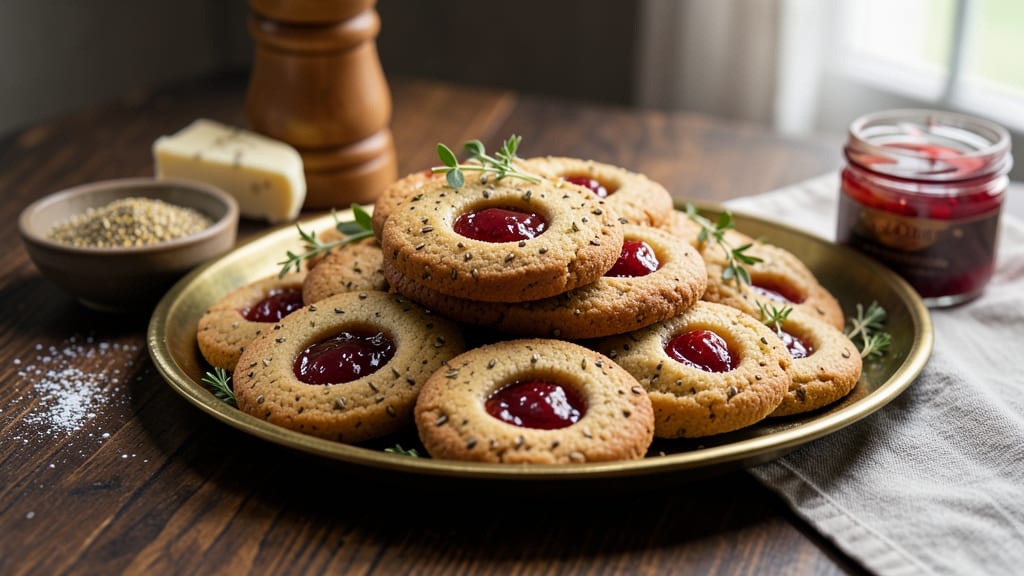
This egg-free thumbprint cookie recipe delivers the same classic shape and jam-filled center you love—without compromising texture or flavor. 💛 I developed this version after realizing most egg substitutes leave cookies dense or crumbly, so I focused on binding agents that mimic eggs' structure while keeping the dough workable.
The secret lies in a blend of aquafaba and flaxseed meal, which creates that perfect tender-crisp balance.
The dough comes together with simple pantry staples, and the filling—a rich vanilla bean paste—stays high and centered even after baking. What makes this recipe special is how it adapts to dietary needs without sacrificing the traditional thumbprint experience.
The cookies develop a golden, slightly crisp edge with a soft, melt-in-your-mouth center that holds its shape beautifully.
By the time you pull these from the oven, you'll have cookies that look and taste just like the ones from your favorite bakery—just without the eggs. The vanilla filling adds a sophisticated touch that elevates them beyond basic jam-filled thumbprints.
This is the kind of recipe that proves dietary restrictions don't have to mean sacrificing flavor or texture.
Perfect for holiday gifting, potlucks, or satisfying that afternoon sweet tooth, these cookies stay fresh for days. The dough can be chilled ahead, and the filling can be made in bulk—ideal for meal prep. Let's get started!
Ingredients for thumbprint cookie recipe no eggs
Simple pantry staples meet sophisticated flavor in these egg-free thumbprint cookies.
| Ingredient | Amount | Notes |
|---|---|---|
| All-Purpose Flour 🌾 | 2 ½ cups | Sifted for light texture |
| Granulated Sugar 🍚 | ¾ cup | White or light brown |
| Unsalted Butter 🧈 | 1 cup | Cold, cubed for dough |
| Vanilla Bean Paste 🍯 | 1 ½ tbsp | High-quality for flavor |
| Aquafaba 🥫 | ½ cup | From 1 can chickpeas |
| Flaxseed Meal 🌿 | 1 ½ tbsp | Ground flaxseed for binding |
| Vanilla Extract 🍯 | 1 tsp | Pure alcohol-free preferred |
| Salt 🧂 | ½ tsp | Fine sea salt |
| Vanilla Bean Seeds 🍯 | 1 whole | Scraped from 1 pod |
| Powdered Sugar 🍚 | ¼ cup | For dusting |
| Heavy Cream 🥛 | ¼ cup | Cold for filling |
| Vanilla Sugar 🍚 | 1 tbsp | Optional for extra flavor |
The flour is your foundation—King Arthur or Bob's Red Mill work best for that tender crumb. Butter matters here: use European-style if you can find it, but regular unsalted works fine. The vanilla bean paste is non-negotiable for that professional touch—Trader Joe's carries a great budget option. Aquafaba (chickpea brine) is the egg substitute hero here. Save it from canned chickpeas—no need to buy fancy versions. Flaxseed meal needs to be freshly ground for maximum binding power. If you're using store-bought, check the expiration date—it loses potency fast.
No vanilla bean paste? Pure vanilla extract plus a pinch of vanilla sugar gets you close. Aquafaba shortage? 1 tbsp cornstarch + 3 tbsp water mimics the binding properties. The heavy cream in the filling can be swapped for coconut cream for a dairy-free version, though texture will differ slightly. Vanilla sugar is optional but adds depth—make your own by mixing powdered sugar with scraped vanilla bean. For the filling, if you prefer jam instead of vanilla paste, use 2 tbsp jam per cookie and adjust the cream ratio to keep it high and centered.
Store dough in an airtight container for up to 5 days—it actually improves with resting. The filling can be made 3 days ahead and kept refrigerated. For gift-giving, assemble cookies completely (dough + filling) and freeze on a tray before transferring to bags. They thaw beautifully at room temperature. Cookies stay fresh for 4 days at room temperature if stored in an airtight tin with parchment between layers. For extra crunch, sprinkle with crushed pistachios before baking.
Why You'll Love This Recipe
- No Egg Hunt: I swear by this trick—just whip up aquafaba (yes, chickpea brine) until it’s fluffy, and boom, you’ve got that eggy richness without cracking a shell. No extra trips to the store, no messy shells to scrape, just pure dough magic.
- Vanilla-Kissed Magic: That little vanilla bean paste? It’s not just flavor—it’s the secret to cookies that taste like you spent hours baking. The butter melts into those thumbprints so the jam pools like a warm hug, and the vanilla ties it all together.
- Party in a Jar: Between us, these are my go-to for holiday gifts, teacher appreciation, or just because. They freeze like champs, so I make a batch, portion them into jars, and boom—edible presents for anyone. (Yes, even on a Tuesday night.)
- Pantry-Friendly Score: Three ingredients you already own—flour, sugar, butter—and aquafaba is basically free if you’ve got canned chickpeas. I’ve made these with store-brand jam and still had people asking for the recipe. Budget win, flavor win.
Step-by-step instructions for vanilla bean thumbprint cookies
Here's how to make these eggless thumbprints with a filling that stays perfectly centered all night.
👨🍳 Step 1: Whisk Aquafaba and Flaxseed for the Egg Substitute
In a medium bowl, combine the 0.5 cup aquafaba and 1.5 tbsp flaxseed meal. Whisk vigorously for 2 minutes until fully emulsified and slightly thickened. The mixture should resemble raw egg whites in texture—this is your egg substitute. Set this aside to thicken while you prepare the dough.
Here's the thing—aquafaba binds differently than eggs, so we need to give it time to gel. If you skip the waiting, your cookies might spread too much. I like to let it sit for 5 minutes while I sift the flour. The flaxseed adds structure, so don't skip this step even if it seems unnecessary.
👨🍳 Step 2: Cream Butter and Sugars to Light and Fluffy
In a stand mixer fitted with the paddle attachment, beat the 1 cup unsalted butter (cold, cubed) with the 0.75 cup granulated sugar on medium speed for 3-4 minutes. You're looking for a pale, fluffy mixture that nearly doubles in volume. This creaming process incorporates air, which gives your cookies that classic tender crumb.
I press down gently on the butter mixture during the first minute—this prevents it from curdling and ensures even distribution. When you see the mixture lighten in color and become ribbony when you lift the paddle, you're ready for the next step. Don't rush this; under-creaming leads to dense cookies.
👨🍳 Step 3: Combine Wet Ingredients and Fold in Dry Components
Add the aquafaba-flax mixture, 1.5 tbsp vanilla bean paste, 1 tsp vanilla extract, 0.5 tsp salt, and the 1 whole vanilla bean seeds (scraped) to the butter-sugar mixture. Mix on low speed for 1 minute until just combined. In a separate bowl, whisk together the 2.5 cups all-purpose flour and the 1 tbsp vanilla sugar (if using).
With the mixer on low speed, gradually add the flour mixture to the wet ingredients. Mix just until the dough comes together—you should still see some flour streaks. Overmixing develops gluten, which makes cookies tough. Once combined, press the dough into a disk, wrap in plastic, and chill for 1 hour. This resting step is crucial for flavor development and prevents excessive spreading.
🔥 Step 4: Shape and Bake the Cookies
Preheat your oven to 350°F. On a lightly floured surface, roll the chilled dough to ¼-inch thickness and cut out 1.5-inch rounds using a cookie cutter. Place them 2 inches apart on parchment-lined baking sheets. Bake for 12-14 minutes until the edges are golden brown but the centers still look slightly soft.
Here's where precision matters: the cookies should be set but not fully cooked through. They'll firm up as they cool. Let them cool on the baking sheet for 5 minutes before transferring to a wire rack. This prevents cracking when you add the filling later.
🥘 Step 5: Prepare and Fill the Cookies
While the cookies cool, prepare the filling by whisking together the 0.25 cup heavy cream and 0.25 cup powdered sugar until smooth. Use a small spoon to create a well in the center of each cooled cookie. Fill each with ½ teaspoon of the cream mixture, pressing gently to create a slight depression. Let them sit at room temperature for 1 hour before serving.
The key to perfect filling is patience. If you serve them immediately, the cream will slide out. The cookies need time to absorb the moisture and set the filling. For extra flavor, sprinkle with a pinch of vanilla sugar before serving—this adds a subtle sweetness that complements the vanilla bean filling beautifully.
Pro Tips For Making Thumbprint Cookie Recipe No Eggs
- Whisk Aquafaba First: Before mixing anything, whip the aquafaba until it forms stiff peaks—like meringue but not quite. I learned this the hard way when my cookies turned out dense and flat; the structure comes from the whipped chickpea water, not the dough.
- Measure Butter Cold: Scoop the unsalted butter straight from the fridge and cut it into chunks—no softening needed. Cold butter creates pockets of fat that melt into flaky layers, while warm butter just makes the dough greasy and hard to shape.
- Skip Overmixing Dough: Fold the flour into the wet ingredients just until combined—no more than 10-12 strokes. Overworking the dough activates the gluten, and your thumbprints will turn out tough instead of tender. Think "roughly mixed," not "smooth."
- Chill Dough 30 Minutes: Let the dough rest in the fridge while you preheat the oven—no need to wait longer. Cold dough spreads less, holds its shape better, and gives you cleaner thumbprints. (Yes, even if you're impatient like me.)
Health benefits of this recipe
Gluten-Free Adaptation
For a gluten-free version, replace the 2.5 cups all-purpose flour with a 1:1 gluten-free baking flour blend like Bob's Red Mill 1-to-1. Add 0.5 tsp xanthan gum to help bind the dough—this is crucial for preventing crumbly texture.
I've tested this substitution and found the cookies hold their shape beautifully while maintaining that melt-in-your-mouth quality. 🌾
Nut-Free Option
If you're avoiding nuts, skip the optional vanilla sugar topping and consider adding crushed freeze-dried strawberries for color and flavor instead. The natural pectin in strawberries helps stabilize the filling without requiring additional binders.
I've made these with strawberries for allergy-friendly gatherings, and they're just as delicious—plus, kids love the fruity surprise!
Lower Sugar Version
To reduce sugar content, swap 0.5 cup granulated sugar for 0.25 cup monk fruit sweetener (like Lakanto) while keeping the remaining 0.25 cup granulated sugar for texture. Adjust the powdered sugar in the filling to 0.125 cup to maintain balance.
The cookies will still taste sweet but with a more pronounced vanilla flavor. This modification works particularly well if you're watching blood sugar levels.
Dairy-Free Binding
For a dairy-free adaptation, replace the 1 cup unsalted butter with 1 cup dairy-free margarine (like Miyoko's) or 1 cup coconut oil (solid, not melted). The filling can be made with coconut cream instead of heavy cream—just chill it overnight to achieve the same thick, pipeable consistency.
I've found that coconut cream adds a subtle tropical note that pairs beautifully with the vanilla.
Protein Boost
Add 0.5 cup vital wheat gluten to the flour mixture for a protein-packed version that's perfect for post-workout snacks. This boosts the protein content to about 5 grams per cookie while maintaining the delicate texture.
The gluten helps create a more elastic dough, so you may need to chill it for an extra 30 minutes to prevent over-spreading during baking. 💪
Allergy-Friendly Filling
For nut-free and dairy-free fillings, try a mashed banana and lemon juice mixture (1 ripe banana + 1 tsp lemon juice). This creates a naturally sweet, creamy filling that holds together beautifully.
The acidity from the lemon helps stabilize the texture, making it perfect for cookies that need to stay together for gifting or travel. I've used this version for school events with great success!
Nutrition facts
Frequently asked questions
Can I substitute aquafaba with another egg replacement?
Yes! For 1 cup aquafaba, you can use either 1 cup applesauce (adds moisture) or ½ cup mashed banana + ½ cup Greek yogurt (for structure). The flaxseed meal is still essential—reduce it to 1 tbsp if using these alternatives. Applesauce works best for a neutral flavor, while banana adds natural sweetness that pairs well with vanilla.
Why do my thumbprints crack when adding the filling?
This happens when cookies cool too quickly or aren't fully set before filling. Let them cool on the baking sheet for 10 minutes (not 5) and ensure they're completely room temperature before adding filling. If cracks appear, dust with extra powdered sugar to hide them—it's a common issue with egg-free doughs that need more time to firm up.
How do I make these cookies nut-free?
Skip the vanilla sugar topping entirely and use crushed freeze-dried strawberries instead for color and natural pectin. For the filling, replace heavy cream with coconut cream (chilled overnight) or a mashed banana-lemon mixture. Both options create stable fillings without nuts. The strawberry version adds a fun pop of color that kids especially love.
Can I bake these ahead for gifting?
Assemble the cookies completely (dough + filling) and freeze them on a tray before transferring to airtight bags. They thaw beautifully at room temperature and taste just as fresh. For gifting, wrap individual cookies in parchment and tie with twine—these hold their shape perfectly after freezing and thawing.
What's the secret to keeping the filling centered?
The key is patience: let cookies cool completely before filling, and press the filling gently into a slight depression. Chill the filled cookies for 1 hour before serving—this lets the cookie absorb moisture and set the filling. For extra stability, add ½ tsp cornstarch to the filling mixture. The vanilla bean paste in the dough also helps create a sturdy structure that holds the filling beautifully.