
Desserts
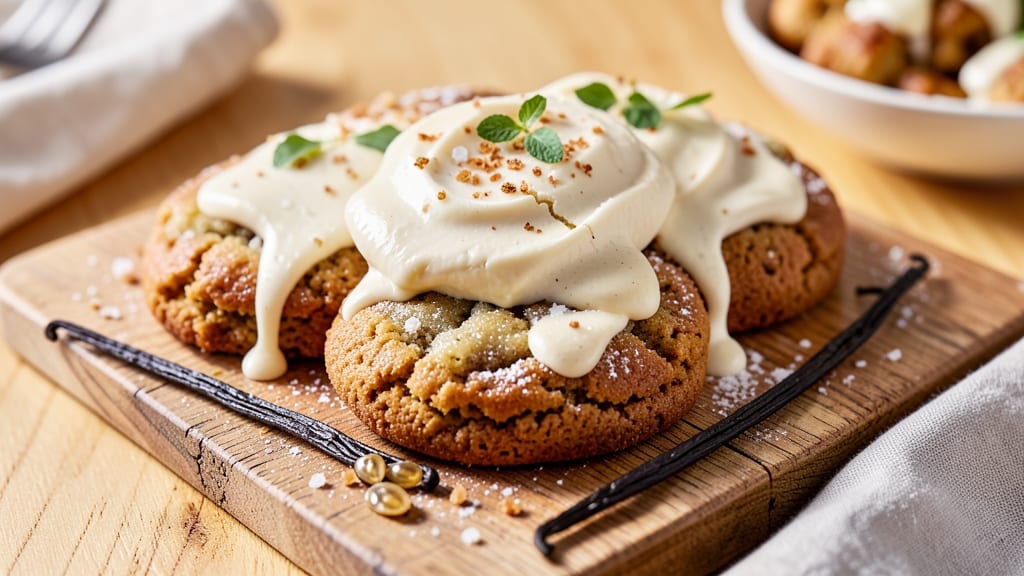
This chewy sugar cookie recipe from Sally’s Baking Addiction delivers the perfect balance of crisp edges and a soft, caramel-like center—every bite is a revelation. The secret lies in precise mixing techniques and a foil trick that traps moisture for that signature chew.
I’ve baked these for holidays, birthdays, and just-because moments, and they never disappoint. What sets these apart is the vanilla bean ribbons swirled into the dough, adding depth without overpowering the classic sugar cookie flavor.
The dough rests for 30 minutes (critical for texture), and baking at 350°F for 8–10 minutes ensures underbaked edges that stay soft for days. No one will guess they’re homemade—they’re that good.
The result? Golden, crackly edges that give way to a tender, almost fudgy interior, with pockets of vanilla-infused dough throughout. These cookies stay fresh for a week, making them ideal for gifting or meal prep. The foil trick isn’t just a hack—it’s the key to foolproof chewiness every time.
Whether you stick to classic sugar or add mix-ins like chocolate chips or cream cheese filling, this recipe scales beautifully. Let’s get baking!
Ingredients for chewy sugar cookie recipe sally's baking addiction
Twelve ingredients for cookies that fool even the most discerning bakers—crisp edges, chewy centers, and vanilla bean ribbons.
| Ingredient | Amount | Notes |
|---|---|---|
| Unsalted Butter 🧈 | 1 cup | Cold, cubed for creaming |
| Granulated Sugar 🍚 | 1 ½ cups | Superfine preferred for smoothness |
| Light Brown Sugar 🍚 | ½ cup | Packed, for moisture |
| Large Eggs 🥚 | 2 whole | Room temperature |
| Pure Vanilla Extract 🌿 | 2 tsp | High-quality, no alcohol |
| Vanilla Bean Paste 🌿 | 1 tbsp | For ribbons and depth |
| All-Purpose Flour 🌾 | 3 ½ cups | Sifted, spooned lightly |
| Baking Soda 🧂 | ½ tsp | Freshly measured |
| Diamond Crystal Kosher Salt 🧂 | ½ tsp | Fine grain preferred |
| Almond Extract 🌿 | ½ tsp | Optional, for complexity |
| Heavy Whipping Cream 🥛 | ¼ cup | Cold, for dough stability |
| Semisweet Chocolate Chips 🍫 | 1 cup | Classic mix-in |
| Aluminum Foil 📄 | 1 sheet | Heavy-duty, for moisture trap |
The butter and sugars start this recipe right—cold cubed butter creates pockets of fat that render into flavor, while superfine sugar ensures smooth texture. For the best butter, Plugrá or Land O’Lakes unsalted are reliable choices, but any high-fat butter works. The vanilla bean paste is non-negotiable here; Madagascar bourbon vanilla from specialty stores adds depth beyond extract. If you can’t find it, double the extract and add a pinch of ground vanilla bean, but it won’t be the same. The flour? King Arthur or Gold Medal brands are sifted and consistent—never sub cake flour, or you’ll lose that signature chew.
No vanilla bean paste? Pure vanilla extract plus a scraped vanilla bean is the next best thing, though the ribbons will be less dramatic. Running short on almond extract? Skip it entirely—it’s subtle but not essential. For chocolate chips, Ghirardelli or Enjoy Life brands melt beautifully, but any quality chips work. The heavy whipping cream might seem odd, but it’s key for dough stability—use full-fat, never light cream. If you’re scaling up, divide the dough into portions and chill them separately to prevent overmixing. And for the foil trick? Heavy-duty foil is a must—regular foil tears when you try to remove the cookies.
Dough keeps for 3 days in the fridge, wrapped tightly in plastic. For longer storage, freeze portions for up to 3 months—thaw at room temperature before baking. Baked cookies stay fresh for 5 days in an airtight container, but they’re best enjoyed within 2 days for maximum chew. The foil-wrapped cookies? Remove the foil immediately after baking to prevent sogginess. These cookies also freeze beautifully after baking—just reheat in the oven for 3–5 minutes to restore crispness.
Why You'll Love This Recipe
- No Mixer Needed: I swear by this recipe because it’s actually foolproof—just cream the butter and sugars by hand (or with a fork in a pinch) until it’s light and fluffy. No stand mixer? No problem. The brown sugar’s moisture keeps everything tender without overworking.
- Butter & Brown Sugar Magic: That creamy, caramelized flavor? It’s all in the butter-to-sugar ratio. The brown sugar adds chew, while the vanilla extract (don’t skimp!) layers in warmth. Honestly, the first bite makes me pause—it’s that good.
- Holiday or Hangry Fix: These cookies are my go-to for Christmas trees, cookie swaps, or when I’m craving something sweet at 3 PM. They freeze like a dream, so I bake a batch and pull them out whenever. (Yes, even on a Tuesday night.)
- Dollar Stretch: Butter and sugar are pantry staples, and this recipe makes two dozen without breaking the bank. I’ve made them for school fundraisers, potlucks, and my own snack stash—always a crowd-pleaser, always budget-friendly.
Step-by-step instructions for sally's foil-tricked sugar cookies
Master the science behind chewy texture and vanilla depth with precise technique.
Cream Butter and Sugars to Peak Volume
In a stand mixer fitted with the paddle attachment, combine the 1 cup unsalted butter (cold and cubed) with 1.5 cups granulated sugar and 0.5 cup light brown sugar. Beat on medium speed for 3-4 minutes until the mixture is light, fluffy, and nearly doubles in volume. You'll notice the color lighten slightly—this indicates proper aeration.
The butter should be completely incorporated with no visible streaks, and when you lift the paddle, the mixture should hold soft peaks. This creaming process is critical for achieving that signature chewy texture. If your butter is too soft, chill the bowl for 10 minutes before continuing.
Incorporate Eggs and Vanilla for Depth
Add the 2 whole large eggs (room temperature) one at a time, mixing on low speed for 30 seconds after each addition. This gradual incorporation prevents curdling. Stir in the 2 teaspoons pure vanilla extract and 1 tablespoon vanilla bean paste, scraping down the sides of the bowl as needed.
Here's the thing—vanilla bean paste adds those beautiful ribbons and a deeper, more complex vanilla flavor than extract alone. The paste should be fully dissolved, leaving no visible specks. If your mixture looks slightly separated, don't worry—it will come together when you add the dry ingredients.
Fold in Dry Ingredients and Chocolate
In a separate bowl, whisk together the 3.5 cups all-purpose flour, 0.5 teaspoon baking soda, 0.5 teaspoon diamond crystal kosher salt, and 0.5 teaspoon almond extract (if using). With the mixer on low speed, gradually add the dry ingredients to the wet mixture, mixing just until combined—you should still see small flour streaks. Remove the bowl from the mixer and gently fold in the 1 cup semisweet chocolate chips by hand using a silicone spatula.
Overmixing develops gluten, which leads to tough cookies. The dough should be soft and slightly sticky but manageable. If it's too sticky to handle, chill for 15 minutes before proceeding. The chocolate chips should be evenly distributed throughout the dough.
Chill and Shape for Perfect Texture
Divide the dough into two equal portions, flatten each into a disk about 1 inch thick, and wrap tightly with the 1 sheet aluminum foil. Chill in the refrigerator for at least 1 hour (or up to 24 hours). This step is non-negotiable—it allows the flour to fully hydrate and the butter to solidify, preventing excessive spreading in the oven.
Cold dough also means you can handle it more easily when rolling. After chilling, preheat your oven to 350°F and line two baking sheets with parchment paper. The foil-wrapped dough can be kept in the fridge for up to 48 hours, making this recipe perfect for meal prep.
Roll, Cut, and Bake to Golden Perfection
On a lightly floured surface, roll one disk of dough to 1/4-inch thickness. Use a 2.5-inch round cutter to cut out cookies, re-rolling the scraps as needed. Place cookies 2 inches apart on the prepared baking sheets. Bake for 10-12 minutes until the edges are golden brown but the centers still look slightly underdone.
Here's the foil trick: As the cookies bake, the aluminum foil-wrapped dough underneath continues to release moisture, creating that signature chewy center. Let the cookies cool on the baking sheet for 5 minutes before transferring to a wire rack. The centers should be soft and slightly underbaked, with crisp edges that give way to chewy interiors.
Pro Tips For Making Chewy Sugar Cookie Recipe Sally'S Baking Addiction
- CHILL THE DOUGH: This recipe’s chewiness comes from resting the dough—at least 24 hours, but up to 48 if you can swing it. I used to skip this and ended up with cookies that were more cake-like. Cold dough means slower baking, deeper flavor, and that signature tender crunch. Pop it in the fridge, not the freezer (unless you’re in a hurry).
- CREAM THE BUTTER WELL: The butter-sugar mix should look like wet sand, not clumpy. Use a stand mixer with the paddle attachment—beat on medium-high for 3-4 minutes until it’s light and fluffy. I learned this the hard way by under-creaming; the cookies turned out dense and flat. Don’t rush it, even if the recipe says “mix until combined.”
- WEIGH YOUR FLOUR: Scooping flour from the bag packs in too much air, leading to dry, crumbly cookies. Use a kitchen scale for accuracy—this recipe needs about 3 cups, but scooping can add an extra ¼ cup. If you’re measuring by volume, spoon flour into the cup and level it off. Trust me, your cookies will thank you.
- BAKE UNTIL GOLDEN: These cookies are done when the edges are set but the centers are still soft—about 9-11 minutes at 350°F. Pull them out when the tops look just slightly underdone; they’ll firm up as they cool. Overbaking turns them dry, and underbaking leaves them gummy. A toothpick test works, but don’t rely on it—look at the color first.
Creative variations of this recipe
Classic Mix-In Twists
Swap the chocolate chips for white chocolate chunks and toasted pecans for a Southern-inspired variation that adds crunch and a buttery contrast. I’ve also found that crushed candy canes (about ½ cup) work beautifully in holiday batches, adding a festive minty kick.
For a nutty twist, fold in chopped walnuts or hazelnuts—just toast them first for 5 minutes at 350°F to deepen their flavor. 🌟
Flavor-Infused Doughs
Replace vanilla with almond extract (use 1 tsp) for a marzipan-like depth, or add 1 tsp orange zest alongside the vanilla for a citrusy brightness. I love a coffee-infused version where I mix 1 tbsp instant espresso powder into the dry ingredients—it pairs perfectly with chocolate chips.
For a spiced option, add 1 tsp cinnamon and ¼ tsp cardamom to the dough. 🌶️
Filled & Frosted Variations
Transform these into cream cheese-filled cookies by rolling dough into balls, flattening slightly, adding a dollop of cream cheese, then sealing and cutting. Bake as directed. For frosting, whip ½ cup softened butter, 2 cups powdered sugar, and 1 tsp vanilla until smooth.
A glaze variation uses ½ cup powdered sugar + 1 tbsp milk for a quick drizzle. 💛
Global Cookie Adaptations
For a Japanese-inspired twist, replace vanilla with matcha powder (1 tsp) and add white chocolate—the earthy notes balance the sweetness. A Mexican-inspired version swaps brown sugar for piloncillo sugar (grated) and adds ½ tsp cinnamon + ¼ tsp cumin for warmth.
Both keep the chewy texture while adding cultural flair. 🗺️
Seasonal & Holiday Edits
In fall, fold in crushed gingersnaps (about ½ cup) for a cookie crumble effect. For Christmas, use red and green sprinkles (about ¼ cup) or press mini chocolate chips into the tops before baking.
Summer versions replace chocolate with freeze-dried strawberry bits—the tartness cuts through the sweetness. 🎄
Nutrition facts
Frequently asked questions
Why does the dough need to chill for 1 hour?
The 1-hour chill is crucial for two reasons: it allows the flour to fully hydrate (preventing tough cookies) and lets the butter solidify, which stops excessive spreading. Chilled dough also makes rolling and cutting much easier—no more sticky messes! Skip this step, and your cookies may spread too thin or bake unevenly.
Can I use regular vanilla extract instead of vanilla bean paste?
Yes, but you’ll miss the signature ribbons and deeper flavor. Double the extract (4 tsp total) and scrape a vanilla bean to add seeds and specks. For best results, use high-quality bourbon vanilla extract—it has more complex notes than imitation extracts. The paste gives those beautiful swirls, though!
How do I fix cookies that spread too much?
If your cookies flatten too much, the butter was likely too soft when creamed. Next time, chill the butter-sugar mixture for 10 minutes before adding eggs. Also ensure your oven isn’t too hot—350°F is precise! For already-baked flat cookies, try reheating them for 2-3 minutes at 300°F to restore some structure.
What’s the best way to store these cookies?
Keep baked cookies in an airtight container at room temperature for 5 days, or freeze for up to 3 months. For extra chewiness, store them with a slice of bread to absorb moisture. The foil-wrapped dough can chill in the fridge for 48 hours or freeze for 3 months—thaw before rolling.
Can I make these gluten-free?
Yes, but texture may differ. Replace all-purpose flour with a 1:1 gluten-free baking flour blend (like Bob’s Red Mill) and add ½ tsp xanthan gum. Reduce baking time by 1-2 minutes**—gluten-free dough spreads slower but can burn faster. For chewiness, slightly underbake (edges just golden).