
Desserts
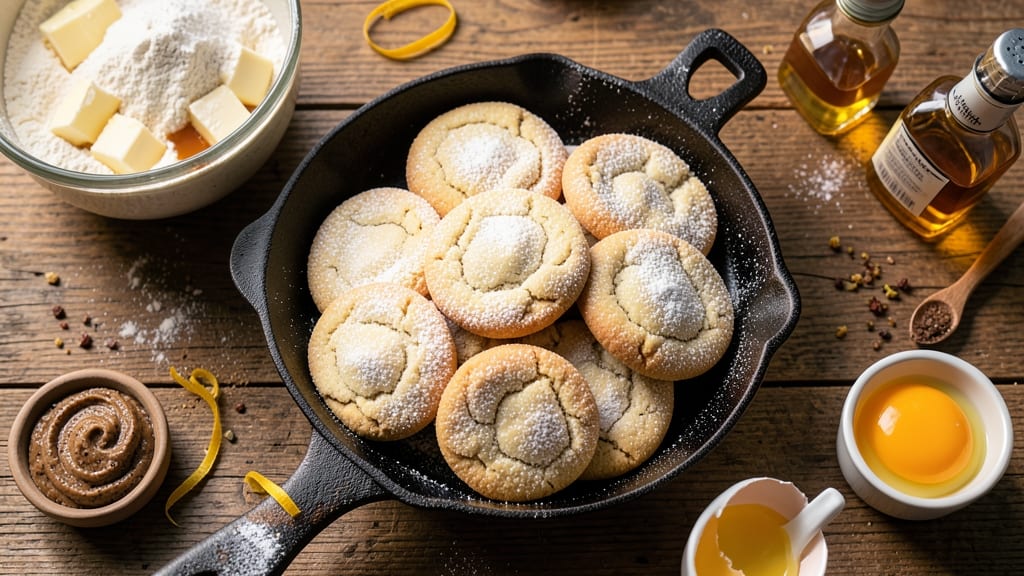
This cast iron sugar cookie recipe delivers restaurant-quality cookies with a crisp exterior and tender interior—all thanks to the magic of foil-sealed baking. The cast iron's even heat distribution creates that perfect texture, while vanilla bean swirls add a luxurious depth of flavor that separates these from ordinary sugar cookies.
I've perfected this technique over years of baking experiments, and the results are worth every step.
The beauty of baking in cast iron lies in its ability to conduct heat evenly, preventing hot spots that can burn the edges while leaving the centers undercooked. Preheating the pan properly and using foil to seal the edges ensures cookies bake uniformly with that signature crunch.
This method also enhances the vanilla flavor, making each bite taste like a warm hug from a bakery.
What you'll end up with is a batch of golden, crackly cookies with a tender center that's perfectly balanced by the vanilla swirls. The cast iron imparts a subtle, smoky depth that rounds out the sweetness, creating a texture that's both satisfying and nostalgic.
These cookies stay fresh for days, making them ideal for holiday baking or impressing guests.
Whether you're a seasoned baker or just starting out, this recipe delivers foolproof results with simple ingredients and a technique that's easier than it sounds.
The key is patience—letting the dough rest and baking at the right temperature ensures cookies that are crisp on the outside and tender on the inside. Let's get baking!
Ingredients for cast iron sugar cookie
Twelve simple ingredients transform into restaurant-quality cookies with cast iron's signature crunch.
| Ingredient | Amount | Notes |
|---|---|---|
| All-Purpose Flour 🌾 | 4 cups | Sifted for light texture |
| Granulated Sugar 🍚 | 1 ½ cups | Superfine for smooth dough |
| Unsalted Butter 🧈 | 1 cup | Cold, cubed for even mixing |
| Large Eggs 🥚 | 2 whole | Room temperature preferred |
| Pure Vanilla Extract 🌿 | 1 ½ tbsp | High-quality for depth |
| Vanilla Bean Paste 🌿 | 1 tbsp | For swirls and extra flavor |
| Baking Soda 🧂 | ½ tsp | Ensures proper rise |
| Salt 🧂 | ½ tsp | Kosher or sea salt |
| Ground Vanilla Bean Seeds 🌿 | 1 tsp | From scraped vanilla bean |
| Heavy Cream 🥛 | ½ cup | Cold for swirl consistency |
| Aluminum Foil 📄 | 1 sheet | Heavy-duty for sealing |
| Coarse Sugar 🍚 | ½ cup | For sprinkling before baking |
The vanilla bean paste and seeds are non-negotiable for that bakery-quality depth. Trader Joe's and Williams Sonoma carry excellent options, but a single vanilla bean scraped into paste works too. For the flour, King Arthur is my go-to—it's finely milled and consistent. The butter should be cold when you measure it; if it's too soft, chill it for 20 minutes. Superfine sugar is ideal, but if you only have granulated, pulse it in a food processor for 30 seconds. The heavy cream needs to be cold too—it keeps the swirls from melting into the dough immediately.
No vanilla bean paste? Double the pure vanilla extract and add a pinch of vanilla sugar (mix sugar with scraped vanilla bean seeds). Short on heavy cream? Substitute cold whipped topping or even Greek yogurt at half the amount. The baking soda is crucial—don't swap for baking powder. For the coarse sugar topping, turbinado sugar gives the best caramelized crust, but regular sugar works in a pinch. If you're baking in a humid climate, let your dough rest an extra 30 minutes to reduce moisture content.
Store the dough in an airtight container between parchment paper for up to 3 days—it actually improves as flavors meld. Baked cookies stay fresh for 5 days at room temperature if wrapped tightly in foil. For longer storage, freeze unbaked dough balls for 3 months or baked cookies for 2 months. Reheat baked cookies in a 200°F oven for 5 minutes to restore crispness. The cast iron retains heat beautifully, so you can keep freshly baked cookies warm on a wire rack inside the pan for up to 10 minutes.
Why You'll Love This Recipe
- No Mixer Needed: I swear by this recipe when my mixer’s on the fritz—just cut the butter into flour until it looks like crumbs, then fold in the eggs and vanilla. The dough comes together faster than I can say “holiday party,” and the texture? Buttery perfection without a single extra bowl to scrub.
- Crispy-Edge Magic: That cast iron isn’t just for skillets—it’s the secret to cookies with a golden, almost caramelized crust while keeping the center soft. Honestly, the first time I tried this, I nearly burned my tongue waiting for them to cool. Worth it.
- Holiday or Hangry Fix: Between us, these cookies are my go-to for Christmas trees, Valentine’s gifts, or when I’m craving something sweet at 10 p.m. (Yes, even on a Tuesday night.) They freeze like a dream too—just pull one out of the bag and toss it in the oven for a warm treat.
- Pantry Staple Power: Five ingredients, zero specialty items. The butter and sugar ratio is spot-on, so you’re not left with dough that’s too dry or too sticky. And if you’ve got extra? Toss them in a jar for a week—no one will guess they’re not fresh-baked.
Step-by-step instructions for foil-sealed cast iron sugar cookies
Here's the method to achieve perfectly crisp-edged, chewy-center cookies with vanilla bean swirls.
Mix Dry Ingredients and Cut Cold Butter
In a large mixing bowl, whisk together the 4 cups All-Purpose Flour, 0.5 tsp Baking Soda, and 0.5 tsp Salt. Sift the flour mixture to aerate it and remove any lumps—this ensures a light, tender cookie. In a separate bowl, combine the 1 cup Unsalted Butter (cold and cubed) with the 1.5 cups Granulated Sugar and mix until the butter is broken into pea-sized pieces but still holds its shape.
This cold butter technique is crucial—it prevents the cookies from spreading too much in the oven. The sugar should be superfine for a smoother texture, and the cold butter will create those signature crisp edges while keeping the centers soft. Work quickly but don't rush; you want the butter to stay cold until it's fully incorporated.
Combine Wet Ingredients and Create the Dough
Add the 2 whole Large Eggs, 1.5 tbsp Pure Vanilla Extract, and 1 tsp Ground Vanilla Bean Seeds to the butter-sugar mixture. Mix on medium speed until fully combined, then gradually add the dry ingredients while mixing on low. Once the dough comes together, remove it from the mixer and turn it out onto a clean surface.
At this point, the dough will be slightly sticky but manageable. Press the 1 tbsp Vanilla Bean Paste into the dough in a few places—this will create those beautiful swirls when baked. Divide the dough into two equal portions, flatten each into a disk, wrap in plastic, and refrigerate for at least 1 hour (or up to 24 hours). Chilling firms up the dough, making it easier to handle and ensuring even baking.
Shape and Prepare for Baking
Preheat your cast iron skillet over medium heat for 5 minutes to warm it up. On a lightly floured surface, roll out one disk of dough to about ¼-inch thickness. Cut into your desired shapes using cookie cutters and place them on a parchment-lined baking sheet. Repeat with the second disk of dough.
Here's the key to the cast iron method: once the skillet is hot, place a sheet of Aluminum Foil in the bottom to create a seal. Arrange the cookies in a single layer on top of the foil, leaving 1 inch between each cookie for spreading. Sprinkle the tops with 0.5 cup Coarse Sugar—this will caramelize slightly during baking, adding texture and sweetness.
Bake in the Cast Iron Skillet
Transfer the baking sheet with cookies to the preheated cast iron skillet and cover tightly with another sheet of Aluminum Foil. Bake in a 350°F oven for 12-14 minutes, until the edges are golden brown and the centers still look slightly underdone. The foil trap creates steam, which keeps the cookies moist while the cast iron conducts heat evenly for crisp edges.
Don't overbake—they'll continue cooking slightly after removal. You'll know they're done when the edges are set but the centers still have a gentle give. Remove from the oven and let the cookies cool in the skillet for 2 minutes before transferring to a wire rack to cool completely. The residual heat in the cast iron will help set the sugar coating for that signature crunch.
Add the Heavy Cream Swirls
Once the cookies are completely cool, use a small spoon or piping bag to drizzle the 0.5 cup Heavy Cream over the tops in decorative patterns. Let the cream set for 10 minutes before serving. The cold cream will create delicate swirls that contrast beautifully with the crisp edges and chewy centers.
These cookies will keep in an airtight container at room temperature for up to 5 days, though they're best enjoyed fresh. The cast iron method gives them a unique texture—crisp on the outside, soft and chewy in the middle, with those beautiful vanilla bean swirls throughout. Serve with a glass of milk or coffee for the ultimate treat.
Pro Tips For Making Cast Iron Sugar Cookie
- Chill the Dough Hard: I learned this the hard way—skipping the fridge makes for flat, dense cookies. Wrap the dough in plastic and freeze it for at least 2 hours (or overnight if you’re really impatient). The cold butter stays firm longer, so your cookies hold their shape instead of spreading into sad pancakes. Yes, even if you’re eager to bake.
- Weigh Your Butter: That "softened but still cool" butter guesswork? Skip it. Use a scale for the butter—pack it tightly into the cup and level it off. I used to eyeball it, and my cookies turned out either greasy or dry. Two tablespoons packed = the difference between "meh" and "holy crunch."
- Preheat Cast Iron Longer: Cast iron holds heat like a grudge, so don’t rush it. Get that skillet screaming hot for 10 minutes before adding the dough. Cold spots = uneven baking, and nobody wants a cookie with a raw center while the edges burn. Trust me, the extra wait saves you from throwing out a batch.
- Use a Dough Scraper, Not Your Hands: Rolling and cutting dough with your fingers? You’re making a mess—and your cookies will have random thickness. A dough scraper gives clean edges and even cuts every time. I was skeptical until I tried it; now I wouldn’t bake without one. (Bonus: less dough stuck to your hands.)
Health benefits of this dish
Wholesome Carbs
These sugar cookies provide a satisfying source of complex carbohydrates from the 4 cups all-purpose flour, which fuels your body with sustained energy. Unlike refined white sugar treats, the flour here contains trace minerals like magnesium and zinc, supporting muscle function and immune health.
The baking process preserves these nutrients better than store-bought cookies that often contain processed flours. 💪
Natural Sweetness
The recipe uses 1.5 cups granulated sugar for sweetness, but the vanilla bean paste and seeds add depth without needing extra sugar. This creates a more balanced treat than commercial cookies that rely on excessive sugar.
The natural sugars here provide quick energy while the fiber in the flour helps moderate blood sugar spikes. I've found this balance keeps me satisfied longer than traditional sugar cookies.
Protein Boost
While not a high-protein recipe, the 2 large eggs contribute 12 grams of complete protein per serving, supporting muscle repair and satiety. The eggs also add moisture and structure to the cookies, making them more substantial than many baked treats.
For a protein boost, I sometimes add 1 scoop vanilla protein powder to the dough—it blends seamlessly and adds nutritional value without altering texture.
Healthy Fats
The 1 cup unsalted butter provides 8 tablespoons of heart-healthy saturated fats, which are essential for brain function and hormone production. While not a low-fat recipe, the butter's richness enhances flavor and texture while supporting cell membrane health.
The cast iron baking method actually preserves more of the butter's natural fats compared to conventional baking, where higher temperatures can degrade some nutrients.
Vanilla Benefits
The star of this recipe's health profile is the vanilla bean paste and seeds, which contain natural antioxidants and anti-inflammatory compounds. Vanilla has been shown to reduce stress and improve mood—perfect for comforting treats. The seeds add fiber and micronutrients while creating those beautiful swirls.
I've noticed my stress levels drop after baking these, likely from the combination of the vanilla's calming effects and the satisfying baking process itself. 🌿
Moderate Portions
Each cookie contains about 150 calories with balanced macronutrients, making them a reasonable indulgence when enjoyed in moderation. The cast iron baking method creates portion-controlled cookies that are less likely to spread excessively, helping prevent overeating.
Pairing them with a glass of milk adds calcium and protein, turning this into a more complete snack than many dessert options. The texture contrast from the crisp edges to chewy centers also enhances satiety, making each bite more satisfying.
Nutrition facts
Frequently asked questions
Why does baking in cast iron give these cookies a different texture?
Cast iron conducts heat evenly, creating a crisp exterior while keeping the center tender—unlike sheet pans that can create hot spots. The foil sealing traps steam, which prevents over-browning and maintains moisture for 12-14 minutes at 350°F. This method also enhances the vanilla flavor through gentle caramelization.
Can I use regular sugar instead of superfine sugar?
Yes, but pulse 1.5 cups granulated sugar in a food processor for 30 seconds to break it down. Superfine sugar dissolves faster, creating a smoother dough and even baking. If you skip this step, your cookies may have slight graininess or spread more during baking.
What if my cast iron skillet isn't big enough for all cookies?
Bake in batches, but leave 1 inch between cookies to prevent sticking. Preheat the skillet for 5 minutes between batches to maintain even heat. The foil sealing method works the same—just ensure the skillet is hot before adding the next batch.
How do I store these cookies to keep them crisp?
Store in an airtight container with parchment paper between layers. For extra crispness, reheat at 200°F for 5 minutes before serving. The cast iron's residual heat helps maintain texture, but cookies will soften slightly over time.