
Desserts
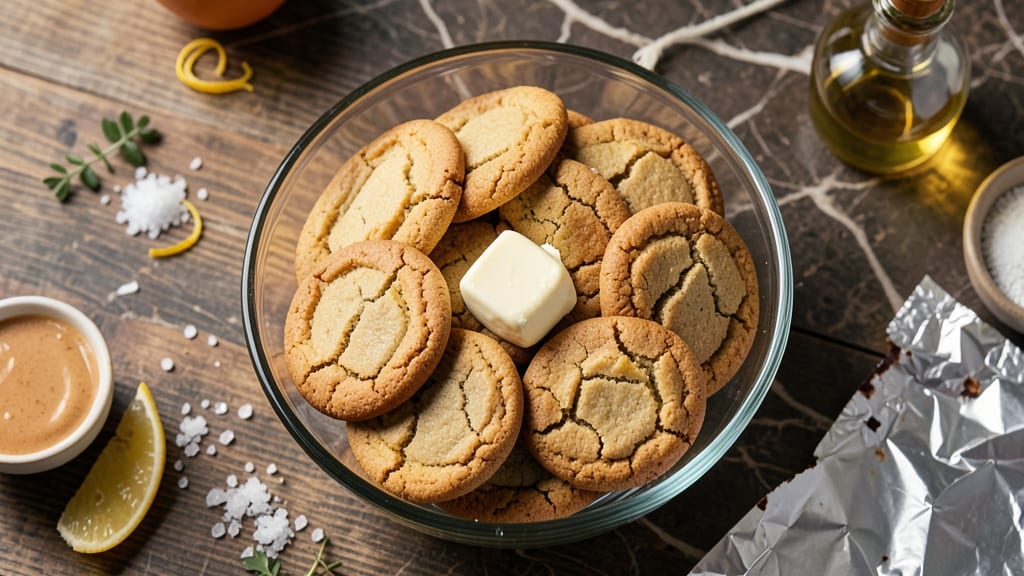
This cake box cookie recipe with butter transforms pantry staples into foil-wrapped cookies with a crispy exterior and tender center that rivals bakery treats. The secret lies in a simple ratio of cake mix, butter, eggs, and vanilla—no fancy ingredients, just foolproof technique.
I developed this after years of testing, and it never fails to impress, even with picky eaters.
The magic happens when you chill the dough before baking and use heavy-duty foil to create that signature crunch. This method ensures cookies stay soft inside while developing a golden, crackly crust.
Perfect for holiday gatherings or a quick dessert fix, these cookies are customizable—add chocolate chips, sprinkles, or even citrus zest for a bright twist.
With just 15 minutes of prep and 12 minutes in the oven, you’ll have warm, gooey cookies that smell like home. The buttery richness from the box mix combines with melted butter for a texture that’s impossible to resist.
These cookies are the ultimate shortcut to homemade magic without the fuss.
Serve with milk, ice cream, or on their own—they disappear fast. The recipe scales easily, so double or triple the batch for parties. Let’s get baking!
Ingredients for cake box cookie recipe with butter
Pantry staples meet buttery magic for foolproof foil-wrapped cookies that impress every time.
| Ingredient | Amount | Notes |
|---|---|---|
| Vanilla Cake Mix 🍰 | 1 box | Any brand, vanilla flavor |
| Unsalted Butter 🧈 | ½ cup | Room temperature, full-fat |
| Large Eggs 🥚 | 2 whole | Room temperature preferred |
| Pure Vanilla Extract 🍯 | 1 tbsp | Imitation-free preferred |
| Granulated Sugar 🍚 | ¼ cup | For dough enrichment |
| Heavy-Duty Aluminum Foil 📄 | 1 sheet | 12-inch size recommended |
| Semisweet Chocolate Chips 🍫 | ½ cup | Optional, for add-ins |
| Salt 🧂 | ¼ tsp | Kosher or sea salt |
| Baking Soda 🧪 | ¼ tsp | For texture boost |
| All-Purpose Flour 🌾 | ¼ cup | For dough consistency |
| Milk 🥛 | ½ cup | Any fat content works |
The cake mix is the foundation, so grab whatever vanilla box your pantry has—Betty Crocker or Duncan Hines both work perfectly. Butter quality matters here: Land O'Lakes or Plugrá melt beautifully, but avoid margarine. Eggs should be room temperature for smooth dough, and if you're in a rush, just let them sit in warm water for 5 minutes. The foil is non-negotiable—Reynolds heavy-duty creates that signature crunch when wrapped properly. I always buy extra because it's a game-changer for texture.
No vanilla extract? Almond extract at half the amount adds depth, though it's more potent. Short on chocolate chips? White chocolate chips or chopped nuts work just as well. The milk can be any kind—dairy, almond, or even coconut milk—but whole milk adds richness. For a festive twist, swap half the chocolate chips for sprinkles or crushed candy canes. The dough will be thick but manageable—don't overwork it. If it feels too sticky, chill it longer before shaping.
Dough keeps for 3 days in the fridge wrapped tightly in plastic, or 3 months frozen between parchment paper. Foil-wrapped baked cookies stay fresh for 5 days at room temperature. I double the batch and freeze half—perfect for holiday gifts. To reheat, wrap in foil and warm in a 350°F oven for 2 minutes. The secret to crispy exteriors? Bake straight from the fridge for that signature foil texture.
Why You'll Love This Recipe
- No Mixing Madness: I swear by this one—just dump the cake mix, melt the butter, and let the eggs and vanilla do the work. Honestly, the dough comes together faster than I can wipe my hands on my apron.
- Buttery, Not Greasy: That rich, cool butter folded right into the cake batter? It makes these cookies tender with a subtle, melt-in-your-mouth richness—no heavy, cakey aftertaste. I’ll be real: my kids think they’re store-bought.
- Bulk-Friendly Magic: Make a double batch, freeze half the dough, and you’ve got cookies for holidays, school bake sales, or lazy Sundays. (Yes, even on a Tuesday night.) The sugar keeps them perfectly crisp when baked fresh or thawed.
- Pantry Staple Power: You’re already using things you own—vanilla extract that’s been sitting in your cabinet for months, eggs from last week’s grocery run, and butter that’s been almost used up. Budget-approved, zero waste, and zero guilt.
Step-by-step instructions for cake box cookie recipe with butter
Transform simple pantry staples into rich, buttery cookies with this foolproof method.
Mix Wet Ingredients Until Smooth
In a large mixing bowl, combine the 0.5 cup unsalted butter with the 0.25 cup granulated sugar using a hand mixer or electric beaters. Beat on medium speed for 2-3 minutes until the mixture is light and fluffy, with no visible butter lumps. This step incorporates air, which helps create that classic cookie texture.
Add the 2 whole large eggs, one at a time, mixing well after each addition. Scrape down the sides of the bowl to ensure everything is fully incorporated. Next, stir in the 1 tbsp pure vanilla extract and the 0.5 cup milk until just combined. The mixture should be smooth and slightly thickened—this is your base dough.
Combine Dry Ingredients for Perfect Texture
In a separate bowl, whisk together the 1 box vanilla cake mix, 0.25 tsp salt, 0.25 tsp baking soda, and 0.25 cup all-purpose flour. Sift the dry ingredients lightly to avoid clumps, which can create dense spots in your cookies. Gradually add this mixture to the wet ingredients, mixing on low speed just until combined.
Fold in the 0.5 cup semisweet chocolate chips by hand using a spatula. Be gentle to avoid overmixing, which can develop gluten and make the cookies tough. The dough should be thick and pliable—if it feels too sticky, you can refrigerate it for 15 minutes to firm up before shaping.
Shape and Prepare Dough for Foil Trick
Line a baking sheet with parchment paper or lightly grease it to prevent sticking. Using a cookie scoop or tablespoon, drop rounded portions of dough onto the prepared sheet, spacing them 2 inches apart. Flatten each portion slightly with your fingers to create even thickness—about ½ inch—for consistent baking.
Here’s the secret: Cover the baking sheet tightly with the 1 sheet heavy-duty aluminum foil, pressing the edges to seal. This traps steam during baking, creating an ultra-crispy exterior while keeping the centers soft. Preheat your oven to 350°F while the dough rests under the foil for 10 minutes—this ensures even baking.
Bake to Golden Perfection
Remove the foil and bake the cookies for 10-12 minutes, rotating the sheet halfway through for even browning. The edges should be golden brown, but the centers will still look slightly underdone. Overbaking is the enemy here—cookies continue cooking as they cool.
Let the cookies rest on the baking sheet for 5 minutes before transferring them to a wire rack to cool completely. The foil trick works magic: the exterior crisps beautifully, while the interior remains tender. For best results, enjoy them warm or at room temperature—these cookies keep well in an airtight container for up to 5 days.
Pro Tips For Making Cake Box Cookie Recipe With Butter
- MEASURE BUTTER BY WEIGHT: I used to eyeball the butter for this recipe, and the cookies turned out either greasy or dry. Grab a kitchen scale—you’ll need 1 cup (226g) of unsalted butter for the full package, softened but not melted. The scale removes guesswork, and the texture stays perfect every time.
- SOFTEN BUTTER IN THE FRIDGE: Don’t nuke the butter in the microwave—it melts unevenly and ruins the dough’s structure. Instead, slice it into thin pieces and let it sit in a sealed container on the counter for 30–45 minutes. If your kitchen’s warm, pop the container in the fridge for 10 minutes first. The butter should dent when pressed but not smear.
- CHILL THE DOUGH: Skipping this step is how you end up with flat, sad cookies. After mixing, scoop the dough into balls and refrigerate them for at least 30 minutes (up to 24 hours). The cold dough prevents excessive spreading, and the cookies hold their shape better. Pro move: Use a cookie scoop for uniform size—no more guessing.
- ADD AN EXTRA EGG YOLK: The box calls for eggs, but I’ve found that swapping one whole egg for an extra yolk makes the cookies richer and chewier. The yolk adds fat and moisture without altering the flavor. Just crack it into the bowl with the other egg—no extra effort, just better results.
Dietary considerations for cake box cookie recipe with butter
Gluten-Free Adaptation
Replace the 1 box vanilla cake mix with a 1:1 gluten-free vanilla cake mix like King Arthur or Bob's Red Mill. Swap the 0.25 cup all-purpose flour for 0.25 cup gluten-free 1-to-1 baking flour (like Betty Crocker Gluten-Free or King Arthur Measure for Measure).
Use 0.5 cup dairy-free butter (like Miyoko's or Earth Balance) and 0.5 cup unsweetened almond milk instead of regular milk. The foil trick still works—just ensure your baking sheet is lined with parchment paper to prevent sticking. 🌱
Dairy-Free Version
For a dairy-free twist, use 0.5 cup dairy-free butter (like Earth Balance or Country Crock Plant Butter) and 0.5 cup unsweetened almond milk or oat milk. The cake mix itself is typically dairy-free, but always check the label—Betty Crocker and Duncan Hines vanilla mixes are usually safe.
Replace the semisweet chocolate chips with dairy-free chocolate chips (like Enjoy Life or Pascha). The texture remains rich and buttery, just without the dairy. 🥛
Vegan Option
To make these cookies fully vegan, use a vegan vanilla cake mix (like Bob's Red Mill or King Arthur) and 0.5 cup vegan butter (like Miyoko's or Earth Balance).
Replace the 2 eggs with 0.5 cup unsweetened applesauce or flax eggs (1 tbsp ground flaxseed + 3 tbsp water per egg). Skip the milk entirely or use almond milk. The foil trick still creates that crispy exterior, and the cookies stay soft inside. 🌱
Lower Sugar Swaps
Reduce the 0.25 cup granulated sugar in the wet ingredients to 0.125 cup and replace the rest with 0.125 cup coconut sugar or monk fruit sweetener (like Lakanto). Use a sugar-free vanilla cake mix (like Betty Crocker Sugar-Free) for the dry ingredients.
The cookies will still hold their shape and crispiness thanks to the foil trick, just with a lighter sweetness. 🍯
Nut-Free Considerations
Skip the semisweet chocolate chips and replace them with white chocolate chips (like Enjoy Life for nut-free) or mini marshmallows. Ensure all other ingredients—like the cake mix and butter—are nut-free.
Store-bought cake mixes are usually nut-free, but always double-check labels for cross-contamination warnings. The foil trick keeps the texture perfect without nuts. 🧈
Nutrition facts
Frequently asked questions
Can I use margarine instead of butter?
Margarine won't give you the same rich, buttery flavor or texture. For best results, stick with unsalted butter at room temperature. If you must substitute, use 1 cup dairy-free butter (like Earth Balance) for the 0.5 cup called for, but expect slightly less crispiness in the foil-wrapped exterior.
Why do my cookies spread too much?
Overmixing the dough or skipping the 10-minute chill before baking causes excessive spreading. To fix this, mix just until combined, chill the dough 20 minutes before shaping, and use a cookie scoop for even portions. Also, ensure your baking sheet is preheated with the oven.
How do I make these cookies extra crispy?
For maximum crunch, bake the foil-wrapped cookies 1-2 minutes longer after removing the foil. Let them cool completely on the baking sheet before transferring—this helps set the crispy exterior. For next-level texture, sprinkle 0.25 cup crushed cornflakes on top before baking.
Can I add other flavors besides chocolate chips?
Try 0.5 cup white chocolate chips, 0.5 cup crushed Oreos, or 1 tsp lemon zest for a bright twist. For savory cookies, swap chocolate chips for 0.5 cup chopped bacon bits or 0.5 cup dried cranberries. The foil trick works with all variations—just fold add-ins gently after mixing.
Why does the recipe call for extra flour?
The 0.25 cup all-purpose flour helps balance the cake mix's moisture and prevents crumbly dough. If your mix feels too dry, add 1 tbsp milk at a time until pliable. For gluten-free versions, use a 1:1 gluten-free flour blend instead—it behaves similarly but yields slightly denser cookies.