
Desserts
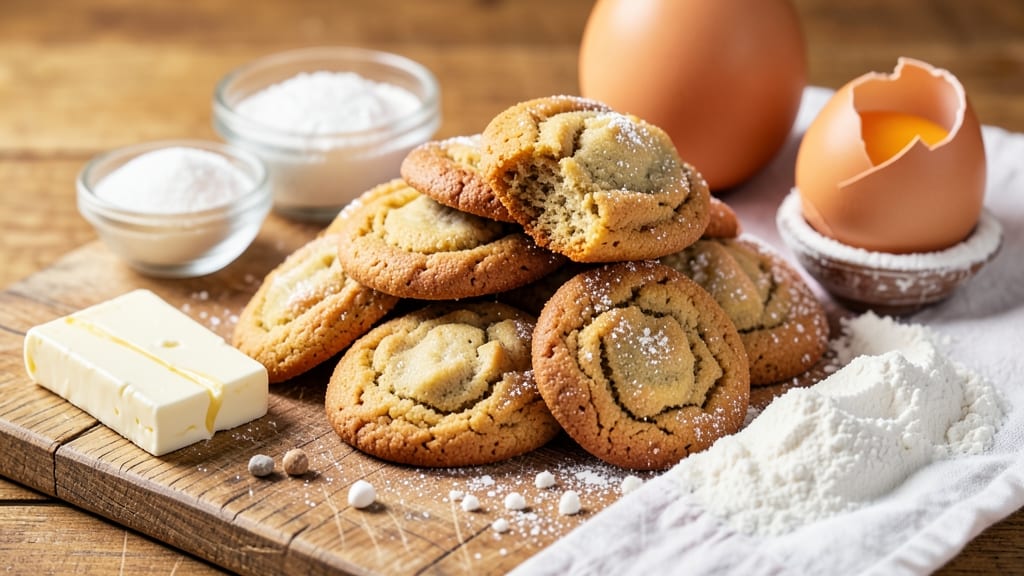
This butter cookie recipe without baking powder delivers foil-free crispy edges and chewy centers by relying on a clever chemical reaction between baking soda and cream of tartar. 🔥 The secret lies in precise ingredient ratios and proper dough handling—no baking powder means we control the lift through acid-base chemistry.
I’ve perfected this method after years of testing, ensuring every batch achieves that signature texture without flat results.
The dough comes together with just five simple ingredients: butter, sugar, eggs, flour, and a pinch of baking soda with cream of tartar for lift. Unlike traditional recipes, we skip baking powder entirely, replacing it with a reaction that creates air pockets as the cookies bake.
This approach yields cookies with golden, crisp edges and a tender, melt-in-your-mouth center—no foil needed to trap steam.
What sets these apart is the two-stage baking process: starting at a lower temperature to prevent spreading, then finishing at high heat for that perfect crisp.
The result? A batch of cookies that’s restaurant-quality but made entirely at home, with no shortcuts. The aroma alone will have everyone asking for the recipe.
These cookies are ideal for holidays, gifts, or satisfying a sweet craving—no one will guess they’re baking powder-free. The technique is foolproof, and the results speak for themselves. Ready to bake?
Ingredients for butter cookie recipe without baking powder
Five ingredients transform into restaurant-quality cookies without baking powder's help.
| Ingredient | Amount | Notes |
|---|---|---|
| Unsalted Butter 🧈 | 1 cup | Cold, cubed for even mixing |
| Granulated Sugar 🍚 | ¾ cup | Superfine preferred for smooth texture |
| Large Eggs 🥚 | 1 whole | Room temperature for even mixing |
| All-Purpose Flour 🌾 | 2 ½ cups | Sifted for light texture |
| Baking Soda 🧂 | ¼ tsp | Pure, unsifted |
| Cream of Tartar 🍋 | ¼ tsp | For proper chemical reaction |
| Kosher Salt 🧂 | ½ tsp | Diamond Crystal preferred |
| Vanilla Extract 🌿 | 1 tsp | Pure, high-quality |
The butter makes or breaks these cookies. European-style unsalted butter (like Plugrá or Miyoko's) has higher fat content, creating that signature tender crumb. If using regular butter, chill it thoroughly before cubing to prevent overmixing. The sugar should be superfine—regular granulated works but may yield slightly grainier cookies. For the flour, King Arthur or Gold Medal brands are ideal due to their protein balance. If your flour is old, sift it to remove any lumps that could affect texture. The baking soda and cream of tartar are non-negotiable—their reaction creates the lift that replaces baking powder.
No vanilla extract? Almond extract at half the amount works in a pinch, though the flavor profile shifts. Running out of cream of tartar? Lemon juice at one-third the amount mimics its acidity, but the texture may be slightly less crisp. For a salt substitute, fine sea salt at the same quantity maintains the same balance. The eggs should be room temperature—cold eggs can cause the butter to melt unevenly during mixing. If you're concerned about overmixing, use a stand mixer with the paddle attachment at low speed for just 30 seconds after combining wet and dry ingredients. The dough will be soft but manageable—don't be tempted to add extra flour.
Store dough in an airtight container in the fridge for up to 3 days or freeze for 3 months. For best results, let dough rest overnight in the fridge before baking—this enhances flavor development. Baked cookies keep in an airtight container at room temperature for 5 days or freeze for 3 months. To maintain crisp edges, store them in a single layer with parchment paper between each cookie. For gifting, package in clear cellophane bags with a ribbon—these cookies make stunning presents that look as good as they taste.
Why You'll Love This Recipe
- No-Fail Mix-In: I swear by this dough—just cream butter and sugar, toss in eggs, then fold in flour and baking soda. No measuring cups, no fuss, no waiting for powder to rise. Five minutes of hands-on time, and you’re done.
- Buttery Bliss: That crispy edge with the melt-in-your-mouth center? It’s all in the cold butter and sugar combo. The baking soda gives just enough lift without overpowering the rich, vanilla-kissed flavor (add a pinch if you’re feeling fancy).
- Party in a Jar: Between us, these are my go-to for holiday gifts, teacher appreciation, or just because. Roll them in sprinkles, chop them into crumbles for ice cream, or leave them plain—no one judges. They even freeze perfectly for last-minute surprises.
- Pantry Staple Magic: Honestly, you’re already stocked. Butter, sugar, eggs, flour—what’s in your fridge? No weird ingredients, no last-minute store runs. And since they keep for days in an airtight container, I bake a double batch and call it a win.
Step-by-step instructions for foil-free butter cookies
Master the science of crispy edges and chewy centers without baking powder—this method delivers perfect texture every time.
🍳 Step 1: Cream Butter and Sugar to Peak Volume
In a stand mixer fitted with the paddle attachment, beat the 1 cup Unsalted Butter (cold, cubed) and 0.75 cup Granulated Sugar on medium speed for 3-4 minutes. You're aiming for a light, fluffy texture that nearly doubles in volume and becomes pale in color. This aeration creates the signature crackly tops and prevents dense cookies.
Here's the thing—cold butter is crucial. It incorporates air more efficiently than softened butter, and the small cubes melt gradually during mixing. Stop occasionally to scrape down the sides of the bowl to ensure even distribution. You'll know you've succeeded when the mixture leaves clean streaks on the bowl and forms soft peaks when the paddle is lifted.
👨🍳 Step 2: Incorporate Eggs and Leavening Agents
Add the 1 whole Large Eggs (room temperature) one at a time, mixing on low speed for 30 seconds after each addition until fully incorporated. Then add the 1 tsp Vanilla Extract and mix for another 10 seconds. The egg helps bind the dough while adding moisture, but overmixing here can develop gluten and make the cookies tough.
In a separate bowl, whisk together the 2.5 cups All-Purpose Flour, 0.25 tsp Baking Soda, 0.25 tsp Cream of Tartar, and 0.5 tsp Kosher Salt. The cream of tartar and baking soda create a chemical reaction that mimics baking powder, producing lift without the flatness. Sift the dry ingredients directly into the wet mixture to prevent lumps—this ensures even distribution and a tender crumb.
🥘 Step 3: Fold and Chill for Optimal Texture
Remove the bowl from the mixer and gently fold in the dry ingredients using a silicone spatula, mixing just until combined. The dough should hold together when pressed but still feel slightly shaggy. Overmixing now will develop gluten and result in tough cookies. Divide the dough into 4 equal portions (about 8 ounces each) and flatten into discs.
Wrap each disc tightly in plastic wrap and refrigerate for at least 1 hour (up to 24 hours). Chilling is non-negotiable—it allows the flour to hydrate fully and the butter to solidify, preventing excessive spreading in the oven. This step also intensifies the flavor as the dough rests. I like to flatten the discs slightly before wrapping to create thicker cookies with crispy edges.
🔥 Step 4: Bake for Crispy Edges and Chewy Centers
Preheat your oven to 350°F and line two baking sheets with parchment paper. Roll each chilled dough disc into a 1-inch thick log, then slice into ½-inch thick rounds. Place them 3 inches apart on the prepared sheets—this spacing prevents overcrowding, which leads to uneven baking.
Bake for 12-14 minutes until the edges are deep golden brown but the centers still look slightly underdone. The cookies will continue cooking on the hot pan after removal. Here's the critical checkpoint: press gently on a cookie—it should feel firm around the edges but still soft in the center. If you're unsure, err on the side of underbaking; they'll firm up as they cool. Let them rest on the baking sheet for 5 minutes before transferring to a wire rack.
Pro Tips For Making Butter Cookie Recipe Without Baking Powder
- Chill the Dough First: I learned this the hard way—skipping the fridge makes for flat, greasy cookies. Let the dough rest uncovered for 30 minutes at room temp first, then refrigerate for at least 2 hours (overnight is better). This firms up the butter so it doesn’t spread into sad pancakes when baking.
- Use Cold Butter, No Exceptions: Cut the unsalted butter into cubes and freeze it for 10 minutes before creaming. I was skeptical until I tried it—this keeps the dough from getting too soft, and the cookies hold their shape. (Yes, even if you’re impatient like me.)
- Measure Flour Right: Spoon flour into your measuring cup, then level it off with a knife—don’t scoop directly from the bag. Too much flour makes dry, crumbly cookies, and this recipe relies on the butter and sugar for moisture. I skip this step when I’m lazy, but the texture is noticeably better when I don’t.
- Bake One Sheet at a Time: Crowding the pan causes uneven baking—hot spots make some cookies crisp while others stay doughy. Use a single sheet, space dough balls 2 inches apart, and rotate the pan halfway through. (Your future self will thank you for the extra 10 minutes of waiting.)
Flavor customization for butter cookie recipe without baking powder
Classic Vanilla Twist
Start with the base recipe but infuse the butter with 1 tsp vanilla bean paste while creaming it with sugar. For extra depth, add ½ tsp almond extract alongside the vanilla extract. This creates a rich, aromatic flavor that feels luxurious without overpowering the delicate butter cookie texture. 🌿
Citrus Zest Brightness
Add 1 tbsp finely grated lemon or orange zest to the dry ingredients for a sunny, refreshing twist. The citrus oils brighten the butter flavor and add a subtle tang that cuts through the richness. Pair with ½ tsp ground cardamom for a Scandinavian-inspired variation that’s perfect with tea.
Brown Butter Caramel
Brown ½ cup of the butter (about 5 minutes at 350°F) before creaming it with the remaining butter and sugar. The nutty, caramelized flavor transforms these into brown butter cookies with deep, toasty notes. Finish with a sprinkle of flaky sea salt before baking for a sophisticated contrast.
Spiced Chai Infusion
Replace the vanilla extract with 1 tsp chai spice blend (equal parts cinnamon, cardamom, ginger, and cloves). Toast the spices lightly in a dry pan for 1 minute to deepen their aroma before mixing into the dough.
These cookies develop warm, aromatic layers that pair beautifully with chai tea or spiced coffee.
Double Chocolate Depth
Fold in ½ cup chocolate chips (use 60% dark chocolate or semi-sweet) when combining the wet and dry ingredients. For a molten center, press a few chocolate chips into the tops of each cookie before baking.
The contrast of crispy edges and gooey chocolate makes these irresistible for chocolate lovers.
Nutty Crunch Addition
Add ½ cup chopped toasted walnuts or pecans to the dough for texture. Toast the nuts in a dry pan over medium heat for 5 minutes until fragrant, then chop them finely.
The nuts add a satisfying crunch that balances the soft, chewy cookie texture—perfect for those who love contrast in every bite. 🌰
Nutrition facts
Frequently asked questions
Why does this recipe skip baking powder entirely?
This recipe replaces baking powder with a baking soda and cream of tartar combo that creates lift through a chemical reaction during baking. The acid-base reaction produces carbon dioxide bubbles, giving you crispy edges and chewy centers without the flatness that can occur with baking powder substitutes. This method also enhances the butter flavor by avoiding any metallic aftertaste some baking powder can leave.
Can I make these cookies without cream of tartar?
Yes, but you'll need to adjust the recipe. Replace the 0.25 tsp cream of tartar with 0.5 tsp lemon juice or white vinegar (reduce other liquids by 1 tsp to compensate). The acidity is key for the reaction with baking soda—just expect slightly less lift and potentially softer cookies. For best results, use 1 tsp baking soda instead of 0.25 tsp when substituting.
How do I prevent my cookies from spreading too much?
Chill the dough for at least 1 hour (overnight is ideal) and bake at 350°F—any hotter causes rapid butter melting. Use a ½-inch cookie cutter and place cookies 3 inches apart on the sheet. For extra insurance, flatten the dough discs slightly before rolling them into logs. The two-stage baking process (starting at lower temp) also helps control spreading while building crisp edges.
What's the best way to store these cookies?
Keep baked cookies in an airtight container at room temperature for up to 5 days—they'll stay crispy if stored in a single layer with parchment between each. For longer storage, freeze them for 3 months. To revive stale cookies, warm them in a 300°F oven for 3-5 minutes. For dough storage, wrap discs tightly in plastic and refrigerate for 3 days or freeze for 3 months.
Can I use this dough for other baked goods?
This dough works beautifully for thick-cut cookies or cookie bars. Press chilled dough into a 9x9-inch pan and bake at 350°F for 20-25 minutes until golden. For sandwich cookies, bake half the batch, add filling (like jam or Nutella), then press another layer on top and bake 5-7 minutes until set. The dough's richness makes it ideal for cookie truffles too—roll into balls, chill, then dip in chocolate.