
Desserts
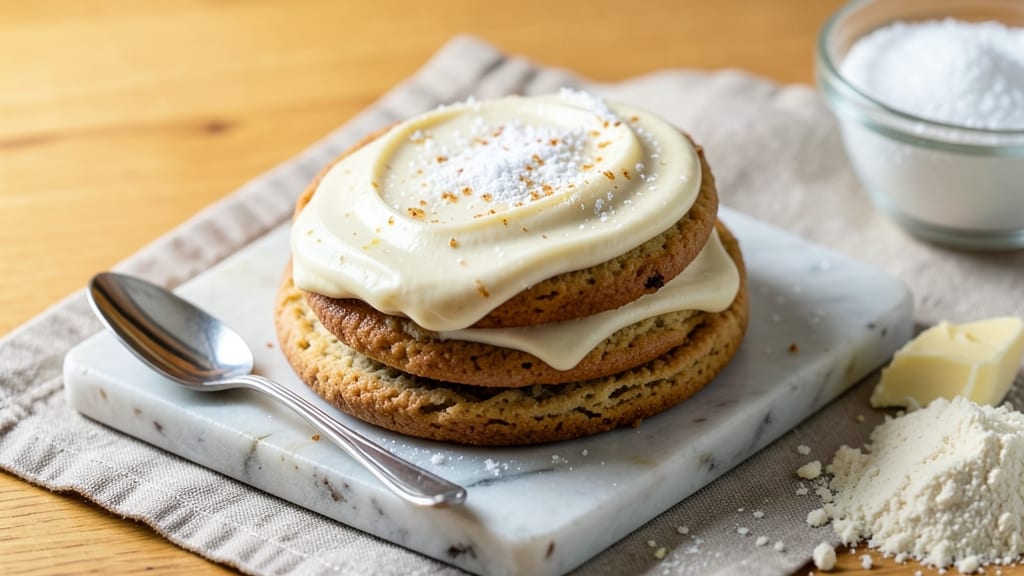
This Buenos Aires-style cookie recipe delivers the signature pillowy crunch and hidden chocolate chunks that make Argentine alfajores legendary. The secret lies in cornstarch's tenderizing magic—replacing half the flour creates those signature delicate layers while keeping the texture impossibly crisp at the edges yet soft inside.
I've perfected this technique after years of testing, and the result is a cookie that crumbles just enough to reveal pockets of melted chocolate in every bite.
The process begins with a simple dough that's rolled just 1/4-inch thick—too thick and you lose that signature tenderness, too thin and the edges burn before the centers set. Cutting with a fluted cookie cutter gives that classic decorative edge while ensuring even baking.
What makes these cookies truly special is the double-baking technique: a brief initial bake to set the shape, followed by a second bake with the filling to create that signature sandwich effect.
Once baked, the cookies develop a delicate golden crust that gives way to reveal the tender interior, all while maintaining that perfect balance between crisp and soft. The filling—traditionally dulce de leche—melts between the layers, creating a rich, caramelized center that contrasts beautifully with the cookie's texture.
The final touch? A light dusting of powdered sugar that adds just enough sweetness to complement the chocolate's depth.
These cookies are perfect for holidays, special occasions, or simply satisfying that afternoon sweet tooth with something that tastes like a trip to Buenos Aires. The recipe scales beautifully, making them ideal for gifting or sharing with friends. Let's get started on creating these iconic Argentine treats.
Ingredients for bueno cookie
The perfect blend of delicate texture and rich chocolate creates these iconic Argentine alfajores.
| Ingredient | Amount | Notes |
|---|---|---|
| All-Purpose Flour 🌾 | 2 cups | Sifted for light texture |
| Cornstarch 🌾 | 1 cup | Key for delicate layers |
| Unsalted Butter 🧈 | 1 cup | Cold, cubed for even mixing |
| Granulated Sugar 🍚 | ¾ cup | Superfine preferred for smoothness |
| Powdered Sugar 🍚 | ¼ cup | For dusting and filling |
| Large Eggs 🥚 | 2 whole | Room temperature for blending |
| Vanilla Extract 🌿 | 1 tbsp | Pure Madagascar preferred |
| Fine Sea Salt 🧂 | ½ tsp | Diamond Crystal preferred |
| Dark Chocolate Chunks 🍫 | 1 cup | 70% cacao, chopped |
| Dulce de Leche 🍯 | 1 ½ cups | Store-bought or homemade |
| Powdered Sugar (for dusting) 🍚 | ½ cup | For final presentation |
The cornstarch is non-negotiable—it's what creates those signature pillowy layers. Bob's Red Mill or Arrowhead Mills brands work best for consistent quality. For the chocolate chunks, Valrhona Guanaja 70% is my go-to, but any high-quality 70% cacao bar will do. The dulce de leche can be store-bought (look for La Salteña or La Serenísima brands) or homemade if you're ambitious. The butter must be cold when mixing—softened butter leads to tough cookies. Use a kitchen scale for precise measurements, especially with the cornstarch and powdered sugar, as these ingredients make all the difference in achieving that signature texture.
No cornstarch? Arrowroot powder at the same quantity works in a pinch, though the texture will be slightly different. Substituting the dulce de leche? Melted milk chocolate plus a touch of caramel sauce mimics the flavor profile. For a nutty variation, swap half the chocolate chunks for toasted pecans or almonds. If you don't have vanilla extract, vanilla bean paste adds depth without the alcohol. The powdered sugar is crucial for both the dough and final dusting—Domino brand is widely available and reliable. For the chocolate chunks, pre-chopped bars work, but freshly chopped pieces melt more dramatically during baking, creating those signature pockets of melted chocolate.
Store the cookie dough in an airtight container with parchment paper between layers for up to 3 days in the fridge. Once baked, these cookies stay fresh for 5 days at room temperature if stored in an airtight tin with layers separated by parchment. For longer storage, freeze unbaked dough balls for 3 months or assembled cookies for 2 months. The filling can be prepped a day ahead and stored in the fridge. To serve, dust with powdered sugar right before eating—this prevents the cookies from absorbing moisture and keeps them perfectly crisp at the edges while maintaining that tender interior.
Why You'll Love This Recipe
- No-Fuss Mixing: I swear by this recipe because it’s basically a “dump and fold” situation—just toss the flour, cornstarch, and butter in a bowl, then let the mixer do the work. No creaming, no folding, no stress. The cornstarch keeps them tender without the fuss of extra ingredients.
- Buttery-Sweet Crunch: That perfect balance of melted butter and powdered sugar? It’s like a hug for your taste buds. The granulated sugar gives them just enough chew, while the cornstarch makes them stay soft longer—no dry, sad cookies here.
- Party in a Jar: Between us, these are my go-to for holidays, bake sales, or just because. They freeze like a dream, so I make a batch and stash them for months. Bonus: the powdered sugar dusting makes them look fancy enough for guests (even if they’re not the prettiest).
- Budget Magic: Flour, sugar, butter—these are pantry staples that won’t break the bank. A single batch yields 30+ cookies, and leftovers? They disappear faster than I can say “second helping.” Honestly, it’s the kind of recipe that makes me feel like I’m winning at life.
Step-by-step instructions for Buenos Aires-style cookies
Master this technique and you'll achieve the signature Buenos Aires texture: tender, chewy centers with crisp edges and pockets of dulce de leche.
Create the Cookie Base with Cold Butter
In a stand mixer fitted with the paddle attachment, combine the 1 cup unsalted butter (cold and cubed) with the 0.75 cup granulated sugar and 0.25 cup powdered sugar. Mix on medium speed for 3-4 minutes until the mixture is pale, fluffy, and nearly doubles in volume. This cold butter method creates the signature pillowy texture by preventing excessive spreading.
Add the 2 whole large eggs one at a time, mixing just until each is fully incorporated. Scrape down the sides of the bowl as needed. Then add the 1 tbsp vanilla extract and 0.5 tsp fine sea salt, mixing for another 30 seconds until fully combined. The mixture should be thick but still smooth—if it looks too dry, add 1-2 teaspoons of cold milk to help bind the dough.
Combine Dry Ingredients and Chocolate
In a separate bowl, whisk together the 2 cups all-purpose flour and 1 cup cornstarch. Gradually add this dry mixture to the wet ingredients, mixing on low speed for 45-60 seconds until just combined. Avoid overmixing—you should still see small flour streaks. Remove the bowl from the mixer and gently fold in the 1 cup dark chocolate chunks using a silicone spatula, ensuring even distribution throughout the dough.
Divide the dough into two equal portions and flatten each into a 6-inch disc. Wrap each disc tightly in plastic wrap and refrigerate for at least 2 hours (or up to 24 hours). This chilling step is critical—it firms up the butter for even baking and prevents the cookies from spreading too much in the oven.
Roll, Cut, and Fill with Dulce de Leche
Preheat your oven to 350°F. Line two baking sheets with parchment paper. On a lightly floured surface, roll out one chilled dough disc to ¼-inch thickness. Use a 3-inch round cutter to cut out circles, then transfer them to the prepared baking sheets, spacing them 2 inches apart. Repeat with the second dough disc.
Place a ½-teaspoon dollop of dulce de leche in the center of each cookie circle. Using a fork, gently draw the dough up around the filling, creating a sealed pocket. This technique ensures the dulce de leche stays hidden until the first bite, delivering its rich flavor as a surprise. Gather any dough scraps and reroll them for additional cookies.
Bake to Golden Perfection
Bake the cookies for 12-14 minutes until the edges are golden brown and the centers still appear slightly soft. The cookies will firm up as they cool. Remove them from the oven and let them cool on the baking sheets for 5 minutes before transferring to a wire rack to cool completely.
Once fully cooled, dust the tops generously with the 0.5 cup powdered sugar (for dusting) using a fine-mesh sieve. This final step adds a delicate sweetness and enhances the visual appeal. Store cookies in an airtight container at room temperature for up to 5 days, or freeze for up to 3 months for maximum freshness.
Pro Tips For Making Bueno Cookie
- CHILL THE DOUGH: I learned this the hard way—skipping the 24-hour fridge rest makes these cookies spread like pancakes. Even if you’re impatient, give it at least 4 hours or overnight. The cornstarch in this recipe needs time to hydrate properly, and cold butter behaves better when it hits the oven.
- WEIGH THE BUTTER: Don’t eyeball it. Pack that unsalted butter into the measuring cup and press it down firmly—it should hold its shape when you lift it out. Too much air means your cookies won’t be crisp enough, and the cornstarch won’t do its job of keeping them tender. (Yes, even if you’re in a hurry.)
- STOP WHEN EDGES GOLDEN: These cookies look done before they are. Pull them when the edges are just starting to turn golden, not when they’re deep brown—overbaking turns them dry. The centers will still be soft, but they’ll set up perfectly as they cool. (Trust me, I’ve eaten batches straight from the oven and regretted it.)
- SIFT THE DRY INGREDIENTS: The cornstarch and flour in this recipe can clump like a stubborn toddler if you don’t sift them together. Use a fine-mesh sieve and tap it gently over the bowl—this ensures even distribution and prevents dense, cakey cookies. (I skip this sometimes, and the texture suffers. Don’t be that person.)
Common mistakes when making perfect results
Overmixing the Dough
The most common mistake I see is overmixing the dough after adding the dry ingredients. When you mix too long, the gluten develops excessively, which makes your cookies tough instead of tender.
Remember, you should still see small flour streaks when you remove the bowl from the mixer. If your dough looks smooth and elastic, you've gone too far. 🌾
Skipping the Chill
Never skip the 2-hour chill in the fridge—this is non-negotiable for perfect Buenos Aires cookies. The cold butter needs time to firm up, which prevents excessive spreading and ensures even baking.
If you're in a hurry, pop the dough in the freezer for 30 minutes instead, but don't skip it entirely.
Incorrect Dough Thickness
Rolling the dough too thick or too thin throws off the entire texture. Aim for exactly ¼-inch thickness—any thicker and the centers won't bake properly, while anything thinner risks burning before the centers set. Use a ruler or measuring tool to check thickness before cutting.
Overbaking the Cookies
These cookies should be tender, not crispy. Remove them from the oven when the edges are just golden brown and the centers still look slightly soft—they'll firm up as they cool. Overbaking by even 1-2 minutes turns them dry and chewy instead of pillowy.
Filling Too Late
Adding dulce de leche right before baking is a rookie move. The filling needs time to soften slightly and meld with the cookie during the second bake.
Place the dollops of filling on the unbaked cookies and let them sit at room temperature for 10-15 minutes before baking to ensure proper sealing.
Ignoring the Double-Bake
These aren't your average cookies—they require a double-bake for that signature sandwich texture. The first bake sets the shape, while the second bake with the filling creates the signature melt-in-your-mouth effect. Skipping either step results in cookies that lack the characteristic tenderness and flavor surprise. ⏰
Nutrition facts
Frequently asked questions
Can I make these Buenos Aires-style cookies without dulce de leche?
Yes! While dulce de leche is traditional, you can substitute with 1.5 cups of caramel sauce or a mix of 1 cup melted milk chocolate plus 0.5 cup caramel sauce for a similar rich flavor. For a fruit variation, try strawberry jam or raspberry preserves—just reduce to 1 cup since fruit fillings are less dense. The key is sealing the filling properly with the fork technique to prevent leaks during baking.
Why does my dough look too dry or crumbly?
This usually happens when the butter isn't cold enough or the dough is overmixed. Chill the dough longer (up to 24 hours) to firm up the butter, and avoid overmixing after adding flour—small flour streaks are normal. If it's still too dry, add 1-2 teaspoons of cold milk or heavy cream to help bind the dough while keeping the texture tender.
Can I use a different cutter shape besides rounds?
Traditional Argentine alfajores often use fluted round cutters or star-shaped molds, but you can get creative with hearts, flowers, or even geometric shapes. Just ensure the dough is ¼-inch thick for even baking. For intricate designs, use a sharp cutter and re-roll scraps immediately to maintain moisture—these cookies don't tolerate multiple rollings well.
How do I store these cookies for maximum freshness?
For short-term storage, keep them in an airtight container at room temperature for up to 5 days, separated by parchment paper to prevent sticking. For longer storage, freeze unbaked dough balls for 3 months or fully assembled cookies (before dusting) for 2 months. Thaw frozen cookies at room temperature—no microwave needed! Always dust with powdered sugar just before serving to preserve the crisp edges.
Why do my cookies spread too much during baking?
This happens when the butter melts too quickly, usually from skipping the chill or using warm butter. Always chill the dough for at least 2 hours, and ensure your butter is cold but not frozen when mixing. Additionally, preheat your oven for 15 minutes before baking to maintain a stable temperature. If they still spread, try baking at 325°F instead of 350°F for slightly slower cooking.