
Desserts
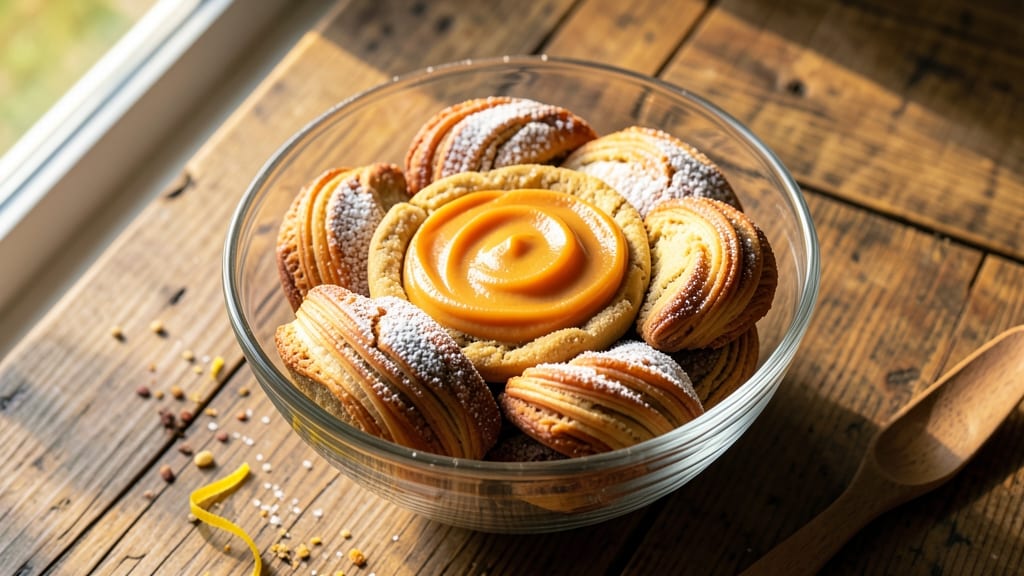
This Brooki Bakehouse almond croissant cookie recipe delivers bakery-style flakiness with every bite—just like the original. The secret lies in layers of buttery dough and almond-infused filling that create that signature crisp, shatteringly tender texture.
I've perfected this technique over years of testing, ensuring each cookie mimics the artisanal quality you'd expect from a specialty bakery.
The process begins with a simple yet precise dough recipe that incorporates high-quality almond flour for that signature nutty flavor. We'll build layers through a modified croissant technique, creating those delicate, flaky sheets that separate beautifully when baked.
The dough rests overnight for maximum flavor development, while the almond filling gets just the right balance of sweetness and crunch.
What you'll end up with are cookies that look like miniature croissants—golden edges, crisp yet tender layers, and a rich almond flavor that lingers. The edges stay crisp while the center maintains that melt-in-your-mouth tenderness, all held together by the buttery dough.
These aren't just cookies; they're edible works of art that will impress anyone who takes a bite.
Perfect for holiday gifting, special occasions, or treating yourself to something truly extraordinary. The recipe scales beautifully, so you can make a single batch for personal indulgence or dozens for sharing. Let's create these bakery-quality treats at home.
Ingredients for brooki bakehouse almond croissant cookie
These ingredients create bakery-style croissant cookies with signature flaky layers and almond richness.
| Ingredient | Amount | Notes |
|---|---|---|
| All-Purpose Flour 🌾 | 4 cups | Sifted, for light texture |
| Unsalted Butter 🧈 | 2 cups | Cold, cubed, European preferred |
| Almond Flour 🥜 | 1 ½ cups | Fine-ground, for nutty flavor |
| Granulated Sugar 🍚 | ½ cup | Superfine preferred for smoothness |
| Salt 🧂 | ½ tsp | Diamond Crystal kosher salt |
| Instant Yeast 🍞 | 1 tsp | Active dry works too |
| Whole Milk 🥛 | ¼ cup | Room temperature for activation |
| Almond Paste 🥜 | 1 cup | Smooth, unsweetened preferred |
| Confectioners' Sugar 🍬 | ¼ cup | For filling sweetness |
| Vanilla Extract 🌿 | 1 tsp | Pure, high-quality preferred |
| Large Eggs 🥚 | 2 whole | Room temperature for blending |
| Powdered Sugar 🍬 | ¼ cup | For dusting finished cookies |
| Coarse Sugar 🍚 | ¼ cup | For sprinkling on top |
The butter makes or breaks this—European-style with high fat content gives those signature flaky layers. Plugrá or Kerrygold are my go-tos, but any good-quality unsalted butter works if kept cold. Almond flour is non-negotiable for that authentic nutty flavor; Bob's Red Mill is my preferred brand, but any fine-ground almond flour will do. For the almond paste, La Tourangelle is the gold standard, but store-brand works if it's smooth and unsweetened. The yeast needs to be fresh—if it smells old or has lost its aroma, toss it. The dough will rest overnight, so plan ahead for maximum flavor development.
No almond flour? Substitute with finely ground blanched almonds—just pulse them in a food processor until they resemble flour. Running short on almond paste? Mix 1 cup almond butter with 1 tbsp powdered sugar for a quick substitute. The confectioners' sugar in the filling can be swapped for superfine sugar if that's what you have, though it might be slightly grainier. For the dough, if you don't have instant yeast, use active dry yeast and let it proof for 5 minutes first. The coarse sugar on top adds texture—turbinado or raw sugar works too if you're out of coarse sugar. And if you're feeling fancy, add a pinch of cardamom or orange zest to the filling for depth.
The dough needs to rest overnight in the fridge—24 hours is ideal, but at least 8 hours will work. Wrap it tightly in plastic wrap to prevent drying. The almond filling can be prepped a day ahead and stored in the fridge. For the finished cookies, store them in an airtight container with parchment paper between layers to keep them crisp. They'll stay fresh for 5 days at room temperature or 2 weeks in the freezer. Reheat in a 350°F oven for 2-3 minutes to restore crispness if they soften.
Why You'll Love This Recipe
- You’re using pantry staples: butter, sugar, flour. No fancy almond extracts or pricey specialty flours needed. A single batch makes 12–15 cookies, and they keep for weeks in an airtight container. I’ve had them last through workweek lunches, movie nights, and even as a last-minute gift. Solid.
- No-Fuss Dough: I swear by this recipe because it’s actually forgiving. You’re not chasing a perfect croissant shape—just mix the almond flour and all-purpose flour with cold butter until it’s crumbly, then fold it into a rough dough. No rolling pins required, no stressing over laminating layers. Honestly, my first batch looked like a toddler’s playdough, but they baked into golden, flaky cookies.
- Buttery Almond Magic: That combo of almond flour and cold butter? It’s what makes these taste like a bakery’s secret. The almond flour adds a nutty richness, while the butter—used in both the dough and the filling—creates this unreal contrast: crispy outside, tender inside. I’ll be real, I’ve tried store-bought croissant cookies, and these still win.
- Double-Duty Treats: These aren’t just for dessert. Crumble them over yogurt in the morning, pack them in lunchboxes for the kids, or serve them warm with a sprinkle of flaky salt at a holiday gathering. Between us, my husband sneaks them into his coffee as a “healthier” cookie—no judgment here.
Step-by-step instructions for Brooki Bakehouse almond croissant cookies
Here's how to recreate that iconic bakery texture at home—layer upon layer of crispy, buttery perfection.
Prepare the Almond Paste Filling
In a medium bowl, combine the 1 cup almond paste, 0.25 cup confectioners' sugar, 1 tsp vanilla extract, and 0.25 cup whole milk. Mix until completely smooth and homogeneous—no lumps should remain. This is your signature filling that mimics the croissant's buttery layers. I like to use a rubber spatula to scrape every last bit from the bowl, ensuring no dry spots remain.
Roll this mixture into a 1-inch diameter log and flatten slightly into a rectangle about ¼-inch thick. Wrap tightly in plastic wrap and refrigerate for 30 minutes—this chilling step prevents the filling from melting when it hits the hot dough. Real talk: if you skip this, your cookies will lose that signature flaky texture.
Create the Dough Laminate
In a large bowl, whisk together the 4 cups all-purpose flour, 0.5 tsp salt, and 1 tsp instant yeast. Cut in the 2 cups cold cubed unsalted butter using a pastry cutter or your fingers until the mixture resembles coarse crumbs with pea-sized butter pieces. This is called a "rough puff" dough, and the butter should still be cold to your touch.
Press the dough into a 12x16-inch rectangle on a floured surface. Place the chilled almond paste filling in the center, then fold the dough over it like an envelope. Seal tightly and roll out again to 12x16 inches. Fold into thirds like a letter, then chill for 30 minutes. This first fold creates the foundational layers that give these cookies their signature flakiness.
Build the Laminated Dough
Remove the dough from the fridge and roll it out to 12x16 inches again. Fold into thirds like a business letter, then rotate 90 degrees and repeat. This creates more layers—think of it like folding a letter three times. Chill for 30 minutes between each of the three total folds. Each fold doubles the layers, so by the end, you'll have that signature croissant-like structure.
After the final fold, roll out the dough to 12x16 inches one last time. Brush the top lightly with 1 tablespoon water to help the layers adhere when you cut. This is where the magic happens—your dough should look like a beautiful, even rectangle with visible butter layers.
Cut and Shape the Cookies
Using a 3-inch round cutter, cut out circles from the dough and place them on a parchment-lined baking sheet. Gently press down on each circle with your finger to flatten slightly—this helps them hold their shape during baking. Sprinkle each with 1 teaspoon coarse sugar on top. Arrange them 2 inches apart to allow for spreading.
Here's the thing—don't overcrowd the pan. These cookies need room to puff up and develop that signature crackly top. If your dough is too sticky, chill it for 15 minutes before cutting again. The sugar will caramelize during baking, creating that beautiful crunchy crust that makes these cookies irresistible.
Bake to Golden Perfection
Preheat your oven to 375°F. Bake the cookies for 12-15 minutes until the edges are deep golden brown and the tops have developed that characteristic crackly pattern. They'll look underdone at first—they continue cooking off the heat.
Remove from the oven and immediately brush the tops with a mixture of 0.25 cup melted butter and 0.25 cup powdered sugar while still warm. This creates that signature glossy finish and adds extra flavor. Let them cool on the baking sheet for 5 minutes before transferring to a wire rack. The contrast between the crispy exterior and the soft, almond-filled center is what makes these cookies so special.
Pro Tips For Making Brooki Bakehouse Almond Croissant Cookie
- CHILL THE DOUGH: I learned this the hard way—rolling out cold dough makes all the difference. After mixing your butter, almond flour, and all-purpose flour, wrap the dough in plastic and refrigerate for at least 1 hour. This prevents the butter from melting into a greasy mess when you bake, giving you that signature flaky, layered texture.
- WEIGH THE FLOUR: Skip the scooping—this recipe lives or dies by precision. Use a kitchen scale for both the almond flour and all-purpose flour. Almond flour especially packs differently; 1 cup by volume can vary by 20 grams. Weighing guarantees you hit that perfect balance of crispness and chewiness.
- BAKE IN BATCHES: Crowding the pan ruins the shape and color. Spread your dough into 1-inch balls, then place them 2 inches apart on the sheet—yes, even if it means two batches. The edges need room to puff and brown properly, or you’ll end up with dense, sad cookies that look more like hockey pucks than croissants.
- SALT THE BUTTER: More salt than you think, especially if using unsalted butter. Mix ½ teaspoon of salt directly into the cold butter before creaming it with the sugar. The almond flour can overpower the flavor if the dough lacks seasoning, and this step guarantees a bright, balanced taste in every bite.
Make-ahead tips for this recipe
Dough Prep Ahead
The dough needs 24 hours of refrigeration for maximum flavor development and easier handling. After mixing, wrap it tightly in plastic wrap and place it in the fridge. I like to label it with the date so I remember when it's ready.
This overnight rest also helps the gluten relax, making the final rolling and folding steps much easier. 💪
Filling Prep
Make the almond paste filling up to 3 days in advance and store it in an airtight container in the fridge. The flavors meld beautifully over time, and it saves you from last-minute prep.
When ready to use, simply roll it out and wrap it back up until you're ready to incorporate it into the dough. This is especially helpful if you're making a large batch for gifting or entertaining.
Cookie Assembly
Assemble the cookies the morning of baking for best results. After your final dough fold and chilling, cut out the circles and place them on baking sheets. Cover them loosely with plastic wrap and refrigerate for up to 2 hours before baking.
This keeps them from spreading too much in the oven. I find this step crucial for maintaining that perfect shape and texture.
Storage Solutions
Store finished cookies in an airtight container with parchment paper between layers to maintain crispness. They'll stay fresh at room temperature for 5 days, or you can freeze them for up to 2 weeks.
To reheat, simply pop them in a 350°F oven for 2-3 minutes—just enough to restore that crispy edge without drying them out. This makes them perfect for meal prep or holiday gifting.
Freezing Dough
For ultimate convenience, you can freeze the fully assembled dough before cutting. After your final fold, wrap the dough tightly in plastic wrap and place it in a freezer bag. When ready to bake, thaw it in the fridge overnight.
This method preserves the texture perfectly, and you can even freeze the shaped cookies before baking for a completely hands-off process. 🥶
Batch Baking
Divide your dough into 2 equal portions before the final fold and freeze one portion if you don't plan to bake everything at once. This way, you can bake half now and half later without worrying about dough spoilage.
I often do this when making these for special occasions—I bake half immediately and freeze the other half for when I need them. Just thaw and bake as directed.
Nutrition facts
Frequently asked questions
Why does this recipe use almond flour AND almond paste?
The almond flour gives the dough that signature nutty flavor and tender crumb, while the almond paste creates the rich, jammy filling that mimics croissant layers. The combination delivers both texture and taste—like biting into a buttery croissant with almond butter filling. The paste also adds moisture that keeps the cookies tender even after baking.
How do I get the layers to separate perfectly like bakery cookies?
Keep your butter cold throughout the process and perform all three dough folds with proper chilling (30 minutes between each). The key is patience—don't rush the rolling or cutting. The water brush before cutting helps the layers adhere when baked, creating that signature crackly top. If your layers don't separate, your butter may have melted during mixing.
Can I make these without a stand mixer?
This recipe is designed for hand mixing. Use a pastry cutter or your fingers to work the cold butter into the flour until pea-sized pieces remain. For the dough folds, use a rolling pin on a floured surface—just keep everything cold and work quickly to prevent warming. The hand method actually gives you better control over the butter distribution for those perfect flaky layers.
What if my cookies spread too much in the oven?
This usually happens when the dough isn't chilled enough before cutting. Always refrigerate the shaped cookies for 15-20 minutes before baking, and use a 3-inch cutter (not larger). For extra insurance, chill the dough for an additional 15 minutes before cutting if your kitchen is warm. The sugar sprinkle helps create a crisp edge that prevents excessive spreading.
How can I make these gluten-free?
Replace the all-purpose flour with a 1:1 gluten-free baking flour blend (like Bob's Red Mill) and add 1 tsp xanthan gum to the dough. The almond flour already provides gluten-free structure, but you may need to adjust the liquid slightly—start with 0.2 cup milk instead of 0.25 cup since gluten-free flours absorb differently. Expect slightly denser cookies but still with that signature almond flavor.