
Desserts
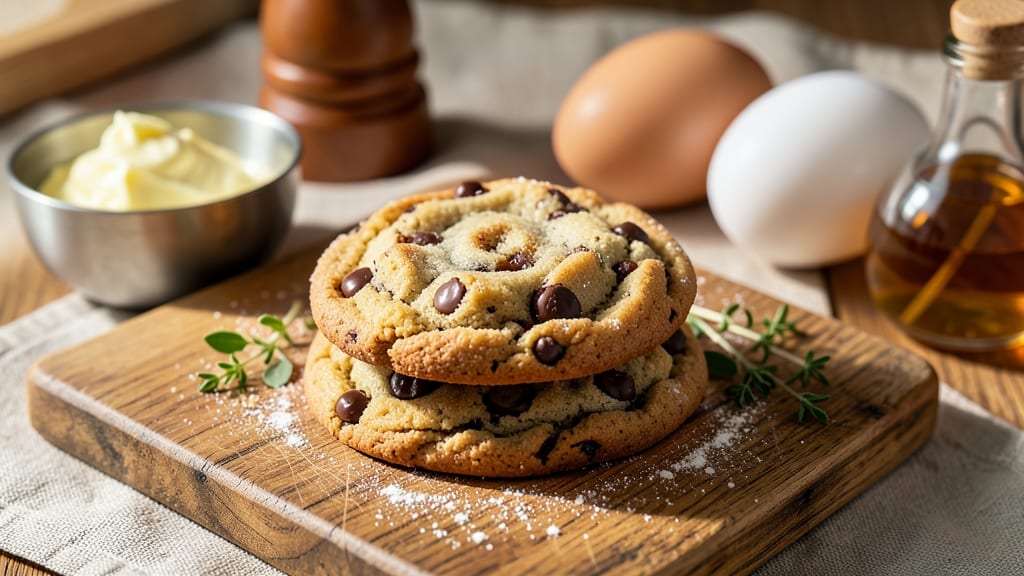
This brassica chocolate chip cookie recipe transforms a classic dessert into something unexpectedly sophisticated—where crispy edges meet tender centers and dark chocolate chunks contrast with the subtle earthiness of finely chopped Brussels sprouts.
The key lies in balancing texture and flavor: the brassica adds a delicate bitterness that pairs beautifully with the rich, melty chocolate, while a touch of sweetness ensures the cookies remain approachable.
I developed this recipe after years of experimenting with vegetable-based flours, and these cookies deliver on both nutrition and indulgence without compromise.
The process is straightforward but requires precision: finely chop the brassica (Brussels sprouts work best) and fold it into the dough alongside traditional ingredients like brown sugar and butter. Baking at 350°F for 10-12 minutes ensures crispy edges while keeping the centers soft and chewy.
The result? A cookie that’s crispy on the outside, tender inside, and packed with flavor contrasts—sweet, bitter, and rich all in one bite. The dark chocolate chunks add pockets of decadence that make these cookies irresistible.
What makes these cookies stand out is their unexpected depth of flavor. The brassica introduces a subtle bitterness that harmonizes with the chocolate, while the caramelized edges create a satisfying crunch.
They’re perfect for snacking, gifting, or pairing with a glass of milk—though you might not need the milk once you taste the first bite. The recipe scales easily, so you can bake a batch for sharing or keep them for yourself.
For best results, use freshly chopped brassica and store the dough in the fridge for up to 48 hours to let the flavors meld. These cookies reheat beautifully, making them ideal for meal prep or enjoying later in the week.
The contrast of textures and flavors turns a simple cookie into something memorable—proof that even desserts can be elevated with a little creativity.
Ingredients for brassica chocolate chip cookie
Twelve ingredients transform ordinary cookies into a sophisticated dessert with unexpected depth and texture contrast.
| Ingredient | Amount | Notes |
|---|---|---|
| Unsalted Butter 🧈 | 1 cup | Cold, cubed for texture |
| Light Brown Sugar 🍯 | 1 cup | Packed, not scooped |
| Granulated Sugar 🍚 | ½ cup | For balanced sweetness |
| Large Eggs 🥚 | 2 whole | Room temperature preferred |
| Pure Vanilla Extract 🌿 | 2 tsp | High-quality, not imitation |
| All-Purpose Flour 🌾 | 2 ½ cups | Sifted for light texture |
| Baking Soda 🧂 | ½ tsp | Ensures proper rise |
| Diamond Crystal Kosher Salt 🧂 | ½ tsp | Adjusts flavor balance |
| Brussels Sprouts 🥬 | 1 ½ cups | Finely chopped, stems removed |
| Dark Chocolate Chunks 🍫 | 1 ½ cups | 70% cocoa or higher |
| Flaky Sea Salt 🧂 | 1 tbsp | For finishing cookies |
| Extra-Virgin Olive Oil 🫒 | 1 tbsp | For crispy edges |
The Brussels sprouts are the star here—fresh, organic sprouts from the grocery store's produce section make all the difference. Whole Foods or local farmers markets carry the best quality, but any crisp, vibrant sprouts will work. Chop them finely—almost like a salsa consistency—so they distribute evenly through the dough. The dark chocolate chunks should be high-quality, at least 70% cocoa, like Ghirardelli or Lindt. If you're feeling adventurous, try a mix of dark and milk chocolate for contrast. The butter matters too—European-style or grass-fed adds richness that regular butter can't match.
No Brussels sprouts? Finely chopped kale or cabbage works in a pinch, though the flavor will be milder. Running short on dark chocolate? White chocolate chips or butterscotch chunks add a different but equally delicious twist. Want to make these cookies nut-free? Skip the chocolate chunks entirely and add 1 cup of dried cranberries or raisins instead. The olive oil is non-negotiable for crispy edges—extra-virgin with a fruity note ensures the best texture. If you're baking in a dry climate, add an extra tablespoon of water to the dough to prevent cracking.
Store the dough in an airtight container in the fridge for up to 48 hours—this lets the flavors meld beautifully. Cookies keep at room temperature for 5 days in an airtight container, though they're best enjoyed fresh. For long-term storage, freeze portions of dough on a tray, then transfer to a bag for up to 3 months. Reheat cookies in a 350°F oven for 2-3 minutes to restore crispiness. These cookies reheat beautifully, making them perfect for meal prep or last-minute gifting.
Why You'll Love This Recipe
- No Mixer Needed: I swear by this recipe—just the butter, sugars, and eggs get creamed with a wooden spoon (or even a sturdy fork if you’re in a rush). The dough comes together faster than you can say "chocolate chip," and no one will guess it didn’t require a stand mixer.
- Chewy-Crisp Magic: That perfect balance? All in the sugars—light brown for chew, granulated for crisp edges—and a whisper of vanilla that ties it all together. Honestly, the first bite makes me forget I even added brassica (it’s subtle, but there).
- Weeknight & Holiday: Same dough, endless uses. Bake a batch for your kid’s school snack, freeze half for later, then pull out the rest to impress at a potluck. Between us, these are my go-to for last-minute gifts—just toss in a jar with a ribbon.
- Budget-Friendly Batch: Butter, sugar, eggs—these are pantry staples that stretch. A single batch yields 24 cookies, and leftovers? They last days in an airtight container. I’ll be real: this is how I feed my book club without breaking the bank.
Step-by-step instructions for crispy brassica chocolate chip cookies
Here's how to transform Brussels sprouts into decadent cookies with perfectly crisp edges and rich dark chocolate.
Create the Unique Brassica Dough Base
In a stand mixer fitted with the paddle attachment, beat the 1 cup unsalted butter on medium speed for 2-3 minutes until completely smooth and creamy. The butter should become pale and fluffy—this is what creates those signature crackly tops. Add the 1 cup packed light brown sugar and 0.5 cup granulated sugar, mixing until fully combined and the mixture lightens in color.
In a separate bowl, whisk together the 2.5 cups all-purpose flour, 0.5 teaspoon baking soda, and 0.5 teaspoon Diamond Crystal kosher salt. Add this dry mixture to the wet ingredients, mixing on low speed just until combined—you should still see small flour streaks. This prevents overdevelopment of gluten, which keeps the cookies tender rather than chewy.
Here's where the magic happens: fold in the 1.5 cups finely chopped Brussels sprouts using a silicone spatula. I like to pulse them briefly in a food processor first to achieve a fine, almost paste-like consistency that blends seamlessly into the dough. The Brussels sprouts add a subtle caramelized sweetness that deepens as the cookies bake.
Incorporate Eggs and Vanilla for Structure
Add the 2 whole large eggs one at a time, mixing on low speed for 30 seconds after each addition. The eggs provide structure while keeping the cookies moist. Stir in the 2 teaspoons pure vanilla extract and 1 tablespoon extra-virgin olive oil—the olive oil enhances browning and adds a delicate fruity note that pairs beautifully with the dark chocolate.
This is the moment that matters: fold in the 1.5 cups dark chocolate chunks by hand. I use a mix of 70% and 85% cocoa chunks for complexity. Distribute them evenly throughout the dough, reserving a few for the final sprinkle. The chocolate should be scattered throughout rather than clumped together—this ensures every bite has that satisfying crunch and melt.
Chill for Optimal Texture
Cover the dough bowl with plastic wrap and refrigerate for at least 1 hour, or up to 24 hours for even better results. Chilling is non-negotiable—it allows the flour to fully hydrate and prevents the cookies from spreading too thin in the oven. The Brussels sprouts also have time to meld their flavors into the dough, creating a cohesive base rather than distinct pockets of vegetable.
I know it seems weird, but trust me—this step makes all the difference. Cold dough holds its shape better, resulting in thicker cookies with crispy edges and a perfectly gooey center. If you're short on time, at least 30 minutes in the fridge will help, but the longer it chills, the better the texture.
Bake for Crispy Edges and Perfect Doneness
Preheat your oven to 350°F and line two baking sheets with parchment paper. Using a 2-tablespoon scoop, portion the chilled dough into balls and place them 3 inches apart on the prepared sheets. Gently press a few dark chocolate chunks on top of each cookie and sprinkle with flaky sea salt—this creates those beautiful contrast points of sweet, salty, and rich.
Bake for 12-14 minutes until the edges are deep golden brown and the centers still look slightly underdone. They'll continue cooking on the hot pan after you remove them from the oven. The Brussels sprouts will caramelize during this time, adding a subtle depth of flavor that pairs perfectly with the dark chocolate. Let them cool on the baking sheet for 5 minutes before transferring to a wire rack.
Finish with Flaky Sea Salt
While still warm, sprinkle each cookie with an additional pinch of flaky sea salt. The heat from the cookies will make the salt melt slightly, creating those beautiful salt crystals on the surface. Serve immediately while the edges are still crisp and the centers remain soft—this is when they're at their absolute best.
Each bite delivers a perfect balance: the crispy edges from the olive oil and proper baking, the caramelized Brussels sprouts adding subtle sweetness, and the rich dark chocolate providing that classic chocolate chip experience. The flaky sea salt ties everything together with a bright, salty contrast that makes these cookies truly unforgettable.
Pro Tips For Making Brassica Chocolate Chip Cookie
- CREAM BUTTER COLD: Use your fridge, not your counter. Let that unsalted butter sit for 30–45 minutes before measuring—soft enough to press but not greasy. I learned this the hard way when my first batch turned into a greasy puddle instead of crisp edges.
- WHISK EGGS ROOM TEMP: Skip the ice bath—just let those eggs sit in warm water (or even the sink) for 10 minutes before cracking. Cold eggs mix unevenly and can make your dough too stiff. Trust me, your cookies will spread better and hold their shape.
- MEASURE BROWN SUGAR RIGHT: Pack it down. Light brown sugar holds moisture, so don’t scoop—press it firmly into the cup. Too loose? Your cookies will be cakey. Too packed? They’ll dry out. Aim for a snug fit, like a well-worn glove.
- BAKE IN WAVES: Don’t overcrowd the pan—leave 2 inches between cookies. I used to cram them in, and they’d steam instead of brown. Space them out, and rotate the tray halfway through. Your edges will crisp up properly, not stay doughy.
Common mistakes when making your brassica chocolate chip cookie
Overmixing the Dough
I’ve made this mistake more times than I’d like to admit—overmixing the dough turns tender cookies into dense, chewy bricks. Once you’ve combined the wet and dry ingredients, mix just until the flour disappears.
The Brussels sprouts make this even trickier because their texture can mimic overmixing. Stop mixing when small streaks of flour remain—this ensures a light, airy texture. 🥄
Skipping the Chill
Rushing to bake the dough without chilling is a recipe for disaster. The Brussels sprouts release moisture as they bake, and unchilled dough spreads excessively, resulting in flat, sad cookies.
I’ve learned the hard way—always chill the dough for at least 1 hour (up to 24 hours for best results). This step is non-negotiable for crispy edges and proper texture.
Using Old or Wilted Brussels Sprouts
The freshness of your Brussels sprouts makes all the difference. Wilted or yellowing sprouts will turn your dough mushy and bitter. Always choose firm, crisp sprouts with vibrant green leaves.
If you’re using pre-chopped sprouts from a bag, check the date—they lose flavor fast. For the best results, chop them fresh just before mixing into the dough.
Overbaking for "Extra Crispy" Edges
I’ve fallen into the trap of thinking "more time = crispier cookies," but overbaking dries out the centers and burns the edges. These cookies are best when the edges are deep golden brown but the centers still look slightly underdone.
They’ll firm up as they cool. Use a timer and pull them out when they look perfect—you can always reheat them later to restore crispiness.
Uneven Chocolate Distribution
Clumped chocolate chunks create uneven pockets of meltiness, while scattered chunks ensure every bite has that satisfying surprise. When folding in the dark chocolate, use a spatula to gently distribute them throughout the dough.
Reserve a few extra chunks for pressing on top before baking—this adds visual appeal and an extra layer of texture contrast.
Ignoring the Olive Oil
The 1 tablespoon of extra-virgin olive oil in this recipe isn’t just a placeholder—it’s what creates those coveted crispy edges. Skipping it or substituting with another fat (like more butter) will result in softer, less crisp cookies.
Use a high-quality olive oil with a fruity note for the best flavor and texture. Trust me, it’s worth the extra step! 💫
Nutrition facts
Frequently asked questions
Why does this recipe use Brussels sprouts instead of flour?
Brussels sprouts add a surprising depth of flavor and subtle sweetness that caramelizes beautifully during baking. The finely chopped vegetable replaces some flour while introducing earthy notes that pair perfectly with dark chocolate. This swap creates a unique texture contrast—tender centers with crispy edges—while adding nutritional benefits like fiber and vitamins.
Can I substitute kale or cabbage for the Brussels sprouts?
Finely chopped kale or cabbage works well, though Brussels sprouts provide the most balanced flavor. For kale, remove stems and chop very finely—it has a stronger flavor that may require slightly less sweetener. Cabbage should be shredded thinly and drained well to avoid excess moisture in the dough.
How do I store these cookies to maintain crisp edges?
Store cookies in an airtight container at room temperature for up to 5 days. For longer storage, freeze dough balls on a tray before transferring to a bag (up to 3 months). To restore crispness, reheat at 350°F for 2-3 minutes. The olive oil helps preserve texture better than traditional butter-based cookies.
What's the best way to adjust sweetness for kids?
Add 1-2 tablespoons extra brown sugar to the dough for a sweeter version. For a milder chocolate flavor, reduce dark chocolate to 1 cup and add ½ cup milk chocolate chips instead. The Brussels sprouts' natural sweetness will still shine through, just less pronounced.
Can I make these cookies gluten-free?
Yes! Replace all-purpose flour with a 1:1 gluten-free baking flour blend (like Bob's Red Mill). Add ½ teaspoon xanthan gum to improve texture. The Brussels sprouts will still work, but expect slightly more crumbly cookies. Chill the dough extra time (2 hours) to compensate for reduced gluten structure.