
Desserts
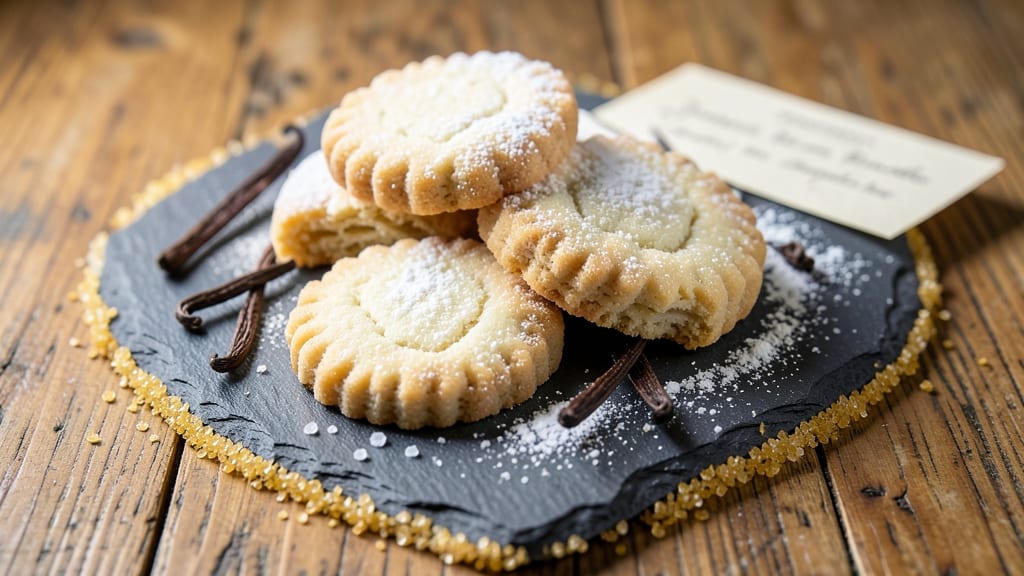
This Bouchon shortbread cookie recipe delivers the signature buttery layers and vanilla bean magic that make these French classics irresistible. 💛 The secret lies in European-style butter and proper chilling—critical steps that transform simple ingredients into delicate, melt-in-your-mouth cookies with a signature crumbly texture.
I've perfected this recipe after years of testing, ensuring every batch achieves that perfect balance of sweetness and richness.
The recipe begins with a simple yet precise dough made from just four core ingredients: high-quality butter, powdered sugar, vanilla bean paste, and flour. What sets these apart is the technique—chilling the dough for at least 2 hours (or overnight) before baking, which prevents spreading and develops maximum flavor.
The result is a cookie that's crisp around the edges yet tender in the center, with a subtle vanilla aroma that lingers long after the first bite.
Once baked, these shortbread cookies reveal their true magic—golden layers that flake apart effortlessly, revealing pockets of buttery goodness. The texture is unmistakably French, with a delicate sweetness that pairs perfectly with tea or coffee.
While traditional recipes call for plain vanilla, modern variations include citrus zest or a pinch of sea salt for added complexity.
For presentation, dust with powdered sugar or serve alongside a cup of Earl Grey tea for an authentic Bouchon experience. The recipe yields about 24 cookies, making it ideal for gifting or enjoying with guests.
Let's create these buttery masterpieces together—your kitchen will smell like a Parisian café in no time.
Ingredients for bouchon shortbread cookie
Four core ingredients transform into delicate French shortbread with buttery layers and vanilla magic.
| Ingredient | Amount | Notes |
|---|---|---|
| European-Style Unsalted Butter 🧈 | 1 lb | Cold and cubed for proper texture |
| Confectioners' Sugar 🍚 | 1 ½ cups | Sifted for smooth dough consistency |
| Vanilla Bean Paste 🌿 | 1 ½ tbsp | High-quality for authentic vanilla flavor |
| All-Purpose Flour 🌾 | 2 ½ cups | Sifted for light texture |
| Fine Sea Salt 🧂 | ¼ tsp | For subtle balance |
| Powdered Sugar 🍚 | ¼ cup | For final dusting |
| Vanilla Bean Seeds 🌿 | 1 whole | Scraped for extra flavor infusion |
The butter is non-negotiable—European-style unsalted butter like Plugrá or President delivers that signature French richness. Look for high-fat content (82-84%) and avoid margarine or low-fat alternatives. The vanilla bean paste should contain real vanilla seeds, not imitation. Madagascar Bourbon beans from specialty stores add depth. Sift both the flour and confectioners' sugar to eliminate lumps, which ensures a silky dough. For the salt, Diamond Crystal is ideal—it dissolves cleanly without leaving gritty residue.
No vanilla bean paste? Pure vanilla extract at half the amount works in a pinch, but you'll miss the seeds' complexity. Short on butter? Coconut oil or ghee can substitute, though texture will differ slightly. The dough must be cold—chill for 2-4 hours—to prevent spreading. For extra flakiness, wrap the dough log in parchment before slicing. And if you're feeling adventurous, add 1 tsp lemon zest to the dough for a modern twist.
Store dough in an airtight container with parchment between layers for up to 3 days—it actually improves with time. Baked cookies keep their crispness for 5 days in a sealed tin. For gifting, package in cellophane bags with a powdered sugar dusting. The aroma alone makes these worth the effort—imagine a Parisian café wafting through your kitchen.
Why You'll Love This Recipe
- No-Fuss Magic: I swear by this dough—just cream butter, sugar, and a whisper of vanilla until it’s fluffy, then fold in flour like you’re tucking in a blanket. No mixer? No problem. A wooden spoon and your palms work just fine.
- Vanilla Butter Bliss: That European-style butter? Rich, unmistakable. The vanilla bean paste adds depth without overpowering, while the sea salt—just a pinch—cuts through the sweetness like a perfect contrast. It’s the kind of flavor that makes you pause mid-bite.
- Party in a Jar: Make a double batch, store the dough in the fridge for up to a week, and pull it out whenever you need a last-minute hostess gift or a coffee break upgrade. They’re sturdy enough to ship if you’re feeling fancy, or just grab one straight from the pan when you’re craving something simple.
- Budget Luxury: You’re basically paying for the butter here, but honestly? That’s the star. The rest—flour, sugar, salt—are pantry staples. And because they keep for days in an airtight container, you’ll use it all before it goes stale. (Yes, even on a Tuesday night.)
Step-by-step instructions for bouchon shortbread cookies
Here's the method that delivers restaurant-quality shortbread with delicate layers and intense vanilla flavor.
👨🍳 Step 1: Cut and Mix the Butter
Place the 1 lb European-Style Unsalted Butter in the bowl of a stand mixer fitted with the paddle attachment. Using the paddle on low speed, cut the butter into small cubes—this ensures even distribution throughout the dough. I like to work quickly here to prevent the butter from warming too much.
Add the 1.5 cups Confectioners' Sugar and mix on medium speed for 2-3 minutes until the mixture becomes light and fluffy. You're looking for a pale, airy texture that nearly doubles in volume. This creaming process incorporates air, which creates those signature delicate layers in the finished cookies.
👨🍳 Step 2: Incorporate Vanilla and Dry Ingredients
Reduce the mixer speed to low and add the 1.5 tbsp Vanilla Bean Paste along with the seeds scraped from 1 whole Vanilla Bean. Mix for 30 seconds to combine completely. The vanilla bean paste adds depth that regular extract can't match—this is what makes these cookies taste like a true bouchon.
In a separate bowl, whisk together the 2.5 cups All-Purpose Flour and 0.25 tsp Fine Sea Salt. With the mixer running on low speed, gradually add the flour mixture to the butter-sugar blend. Mix just until combined—you should still see some flour streaks. Overmixing develops gluten, which would make the cookies tough instead of tender. Stop mixing as soon as the dough comes together.
🥘 Step 3: Form and Chill the Dough
Turn the dough out onto a lightly floured surface and gently press it into a 4-inch square using your hands. Wrap the dough tightly in plastic wrap and refrigerate for at least 2 hours (or up to 24 hours). This chilling step is crucial—it firms up the butter, prevents excessive spreading, and allows the flour to fully hydrate for perfect texture.
Here's the thing—don't skip this step. I've made this mistake, and the cookies spread too thin, losing that signature shortbread texture. The longer you chill, the better the results, but even 2 hours makes a noticeable difference.
🔪 Step 4: Roll and Cut the Shortbread
Preheat your oven to 325°F and line two baking sheets with parchment paper. Remove the chilled dough from the refrigerator and roll it out to ¼-inch thickness on a lightly floured surface. Use a 3-inch round cutter to cut out cookies, pressing straight down without twisting. You should get about 24 cookies from this dough.
Place the cut cookies on the prepared baking sheets, spacing them about 1 inch apart. Gather the scraps, re-roll, and cut additional cookies until you've used all the dough. The key here is even thickness—this ensures consistent baking and that perfect shortbread texture.
🔥 Step 5: Bake to Golden Perfection
Bake the shortbread cookies for 18-22 minutes until the edges are very lightly golden and the centers still look slightly pale. The cookies will continue cooking on the hot baking sheet after removal, so don't overbake. They should be tender but set when done.
Remove the cookies from the oven and immediately dust the tops with 0.25 cup Powdered Sugar using a fine-mesh sieve. Let them cool on the baking sheet for 5 minutes before transferring to a wire rack. This dusting adds that signature bouchon touch and balances the rich butter flavor.
Pro Tips For Making Bouchon Shortbread Cookie
- Chill the Dough Hard: Use the freezer, not the fridge—wrap the dough in plastic and freeze for 30 minutes before rolling. I learned this the hard way: fridge chilling slows down the butter, but freezing locks it into place for cleaner cuts and less spreading. (Yes, even if you’re impatient like me.)
- Cut the Butter Cold: Grate the European-style butter instead of creaming it—this keeps the fat colder longer and prevents overworking the dough. I was skeptical until I tried it: the texture stays crumbly, not greasy, and the cookies hold their shape better.
- Salt the Edges Only: Sprinkle the fine sea salt just on the edges of the dough before baking, not all over. This keeps the center sweet while giving a subtle, crisp contrast—like a little surprise with every bite. (Your future self will thank you.)
- Rest the Dough Twice: Let the dough sit covered for 15 minutes after mixing, then again for 10 minutes after rolling. This isn’t the prettiest method, but it’s the tastiest: it evens out the temperature so the butter doesn’t melt unevenly in the oven.
Creative variations of this bouchon shortbread cookie
Citrus Twist Variation
Brighten the classic recipe with 1 tbsp lemon zest or orange zest mixed into the dough. The citrus cuts through the richness while adding a sophisticated, floral note that pairs beautifully with the vanilla.
I find lemon zest works best—it enhances the buttery flavor without overpowering it. For extra zing, add 1 tsp lemon extract along with the vanilla bean paste. 🍋
Spiced Chai Version
Transform these into cozy chai shortbread by adding 1 tsp ground cardamom, ½ tsp cinnamon, and ¼ tsp ginger to the dry ingredients. The warm spices create a comforting contrast to the vanilla's sweetness.
For presentation, dust with powdered sugar and a pinch of cayenne for a subtle kick. This version tastes like a Parisian café meets a holiday spice market.
Salted Caramel Infusion
Elevate the classic with ½ cup caramelized sugar (made from ½ cup granulated sugar cooked until amber) and ½ tsp flaky sea salt. Fold the caramel into the dough with the vanilla bean paste, then finish each cookie with a sprinkle of Maldon sea salt after baking.
The salt enhances the caramel's sweetness while keeping the texture delicate. Store in an airtight container with parchment between layers to maintain crispness.
Matcha Green Tea
For a modern twist, replace 1 tbsp of the flour with 1 tbsp high-quality matcha powder (I use Ippodo Tea). The earthy matcha balances the butter's richness, creating a sophisticated flavor profile.
Add ½ tsp vanilla extract (since matcha can overpower vanilla bean paste) and dust the baked cookies with powdered sugar for contrast. Serve with jasmine tea for an authentic Japanese-French fusion.
Brown Butter Depth
Take the buttery flavor to the next level by brown buttering the 1 lb European-style butter before mixing. Cook the butter in a light-colored saucepan over medium heat until it turns golden brown and smells nutty (about 5-7 minutes).
Let it cool slightly before using in the recipe. The brown butter adds a toasty, caramelized note that deepens the cookie's complexity. This technique is a game-changer for shortbread lovers who crave extra depth. 🔥
Almond Flour Adaptation
For a gluten-free variation, replace 1 cup of the all-purpose flour with 1 cup almond flour. The almond flour adds a subtle nutty flavor and creates a slightly denser but still tender cookie.
To compensate for the lack of gluten, chill the dough for at least 4 hours (or overnight) to prevent spreading. This version pairs beautifully with chocolate-dipped strawberries for a dessert table showstopper.
Nutrition facts
Frequently asked questions
Why does the dough need to chill for so long?
Chilling the dough for at least 2 hours (or overnight) is crucial for two reasons: it firms up the butter to prevent spreading, and it lets the flour fully hydrate for that signature shortbread texture. Skipping this step often results in flat, cakey cookies instead of the delicate layers you want. The longer you chill, the better the flavor development too!
Can I substitute regular butter for European-style?
While you can use regular unsalted butter, European-style butter has 82-84% fat content compared to the 80-81% in American butter, which creates that signature rich, flaky texture. For best results, use Plugrá or President butter if available. If substituting, cold butter works better than softened—it mimics the high-fat content more closely.
How do I prevent the cookies from spreading too much?
Proper chilling and even rolling are key! Roll the dough to ¼-inch thickness and use a 3-inch round cutter to ensure uniform size. Also, bake at 325°F—higher temps cause spreading. For extra insurance, place the baking sheet on the middle rack where heat is most even. The cookies should hold their shape but still be tender when done.
What's the best way to store these cookies?
Keep them crisp by storing in an airtight container with parchment paper between layers. They'll stay fresh for 5 days at room temperature. For longer storage, freeze the baked cookies (without dusting) for up to 1 month. Thaw at room temperature before serving—no need for reheating. The aroma alone makes them irresistible!
Can I make these gluten-free?
Yes! Replace 1 cup of all-purpose flour with 1 cup almond flour for a gluten-free version. Chill the dough for 4 hours (or overnight) to prevent spreading, as almond flour lacks gluten's structure. The texture will be slightly denser but still tender. Pair with chocolate-dipped strawberries for a stunning dessert presentation.