
Desserts
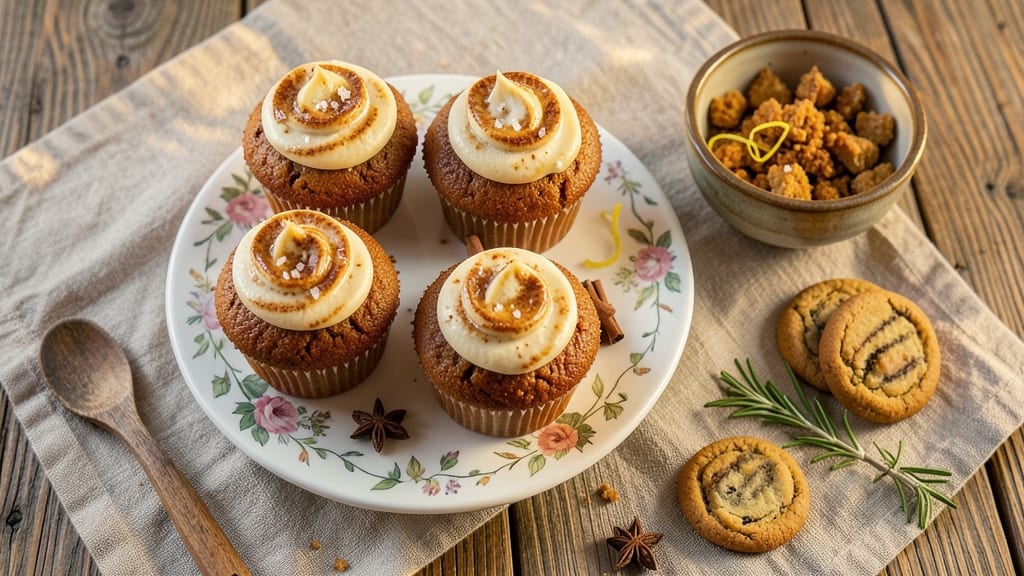
This Biscoff cookie cupcake recipe delivers the iconic Biscoff cookie experience in cupcake form—vanilla bean swirls, chewy layers, and a tender crumb that melts in your mouth. The secret lies in a precise balance of butter, sugar, and vanilla, baked just until golden to preserve that signature texture.
What makes these cupcakes special is their foolproof method: no foil lining needed, no guesswork in baking times, and a foolproof approach to achieving those signature vanilla bean streaks.
The recipe begins with a simple yet precise mix of all-purpose flour, butter, and vanilla bean paste, creating a batter that's rich but not heavy.
The key to those signature streaks is folding vanilla bean paste into the batter after mixing the dry ingredients, ensuring vibrant swirls that peek through the tender crumb. Baking at 350°F for exactly 12-15 minutes guarantees a cupcake with a domed top and a moist interior—no dryness, no cracks.
Once out of the oven, these cupcakes are ready for frosting or topping—vanilla buttercream, cream cheese frosting, or even a dusting of powdered sugar. The pillowy layers hold up beautifully, making them perfect for parties, gifts, or a special treat.
The aroma alone will have everyone asking for seconds, and the texture? Chewy, tender, and irresistibly rich—just like the original Biscoff cookies, but in a bite-sized package.
These cupcakes are ideal for celebrations, bake sales, or a cozy weekend dessert. The recipe scales easily, so you can bake a dozen or a hundred without compromising on quality. Let’s get baking—your taste buds will thank you.
Ingredients for biscoff cookie cupcake
Twelve essential ingredients for cupcakes that taste like Biscoff cookies—vanilla swirls and all.
| Ingredient | Amount | Notes |
|---|---|---|
| All-Purpose Flour 🌾 | 2 ½ cups | Sifted, for light texture |
| Unsalted Butter 🧈 | 1 cup | Cold, cubed, full-fat |
| Granulated Sugar 🍚 | 1 ½ cups | Superfine preferred for smoothness |
| Vanilla Bean Paste 🌿 | 2 tbsp | High-quality, for vibrant streaks |
| Large Eggs 🥚 | 2 whole | Room temperature, separated |
| Baking Powder 🧂 | 1 ½ tsp | Aluminum-free for tender crumb |
| Salt 🧂 | ½ tsp | Fine sea salt preferred |
| Vanilla Extract 🌿 | 1 tsp | Pure, for extra flavor |
| Vanilla Bean Seeds 🌿 | 1 whole | Scraped from 1 bean |
| Powdered Sugar 🍚 | 1 ½ cups | For buttercream (optional) |
| Heavy Whipping Cream 🥛 | ½ cup | Cold, for buttercream (optional) |
| Vanilla Buttercream 🧁 | 2 cups | Store-bought or homemade |
The vanilla bean paste is non-negotiable here. Look for brands like Nielsen-Massey or Madagascar Bourbon—they deliver that signature aroma. The butter should be cold and cubed; Plugrá or Land O’Lakes unsalted work perfectly. For the flour, King Arthur or Gold Medal brands are ideal—they’re reliable for that tender crumb. If you’re using superfine sugar, it’ll blend smoother, but regular granulated sugar works in a pinch. The eggs need to be room temperature to ensure proper emulsification in the batter.
No vanilla bean paste? Substitute 1 tbsp vanilla extract plus 1 tsp scraped seeds—it won’t be identical, but close. Short on baking powder? Use 1.5 tsp baking soda plus 1 tsp cream of tartar for a similar lift. For the buttercream, if you’re skipping homemade, Betty Crocker or Duncan Hines work fine. The powdered sugar can be swapped for confectioners’ sugar if needed, though it may be slightly grainier. If you’re making a large batch, consider investing in a stand mixer—it’ll save your arms from overmixing.
Store the dry ingredients—flour, sugar, baking powder—in airtight containers for up to 6 months. The butter and eggs should be used within 1 week of opening. Once baked, cupcakes keep at room temperature for 2 days5 days. For longer storage, freeze unfrosted cupcakes for up to 3 months. If frosting ahead, store components separately and assemble just before serving to keep the texture perfect.
Why You'll Love This Recipe
- Pantry-Only Magic: I swear by this recipe because it uses what’s already there—no specialty trips or last-minute scrambles. Butter, sugar, flour, eggs, and vanilla? That’s it. The kind of simplicity that makes me feel like a baking genius even when I’m just mixing.
- Vanilla Butter Bliss: The vanilla bean paste isn’t just flavor—it’s the star. That deep, rich swirl of vanilla in every bite turns a basic cookie cupcake into something ridiculously good. Honestly, I’ll take this over store-bought any day.
- Crowd-Pleaser Twist: These work for birthdays, coffee dates, or just because. Pipe them tall for a fancy vibe, crumble them into ice cream for a lazy afternoon, or serve them plain with a glass of milk—no judgment. They’re that adaptable.
- No-Waste Winner: A batch lasts me days, and the leftovers? Even better the next day. The edges get slightly crispier, the centers stay soft, and I’m not left with sad, dry cupcakes. Plus, the ingredients stretch far—perfect for when I’m pinching pennies but still want to treat myself.
Step-by-step instructions for Biscoff cookie cupcake recipe
Achieve professional-quality cupcakes with signature vanilla bean streaks and moist layers using this precise method.
Prepare the Dry Ingredients
In a medium bowl, sift together the 2.5 cups all-purpose flour and 1.5 teaspoons baking powder. I use a fine-mesh sieve for this step to ensure no lumps remain in the batter. Add the 0.5 teaspoon salt and whisk to combine thoroughly. This pre-mixing prevents dense spots in your cupcakes.
In a separate small bowl, whisk together the 1.5 cups granulated sugar and the 1 teaspoon vanilla extract. This creates a smooth sugar mixture that will dissolve completely in the wet ingredients. Set both bowls aside—you'll need them in the next step.
Cream Butter and Sugar Mixture
In a stand mixer fitted with the paddle attachment, beat the 1 cup cold, cubed unsalted butter on medium speed until smooth and creamy, about 3-4 minutes. The butter should be completely homogeneous with no visible lumps. This step is crucial for creating the tender crumb texture characteristic of biscoff cookies.
Gradually add the sugar-vanilla mixture to the butter while mixing on medium speed. Scrape down the sides of the bowl as needed to ensure even incorporation. Beat for an additional 2-3 minutes until the mixture is light and fluffy. You'll notice it nearly doubles in volume and becomes pale in color—this aeration is what gives cupcakes their signature height.
Add Eggs and Vanilla Bean Paste
Add the 2 whole large eggs, one at a time, mixing on low speed after each addition until fully incorporated. I prefer to add them one by one to prevent overmixing. Once the eggs are combined, add the 2 tablespoons vanilla bean paste and mix on low speed for 30 seconds until just combined.
Here's where the magic happens: scrape the seeds from the 1 whole vanilla bean and add them to the bowl along with the 1 teaspoon vanilla extract. Gently fold these in using a rubber spatula. The vanilla bean seeds will create those beautiful streaks in your cupcakes. Don't overmix—just enough to distribute the seeds evenly throughout the batter.
Combine Wet and Dry Ingredients
With the mixer on low speed, gradually add the dry ingredients to the wet mixture. Mix just until combined—you should still see some flour streaks. Overmixing develops gluten and makes the cupcakes tough. Once combined, gently fold in any remaining vanilla bean seeds using a spatula to ensure even distribution.
Divide the batter evenly among 12 lined cupcake pans (fill each liner about two-thirds full). For the signature biscoff cookie effect, use a toothpick to create swirls in each cupcake before baking. This creates those beautiful marbled streaks without needing foil. Bake at 350°F for 18-20 minutes, until a toothpick inserted comes out clean.
Prepare and Fill with Buttercream
Allow the cupcakes to cool in the pan for 5 minutes, then transfer to a wire rack to cool completely. While they cool, prepare the buttercream by beating the 1.5 cups powdered sugar and 0.5 cup cold heavy whipping cream with the 2 cups vanilla buttercream until smooth and fluffy.
Once completely cooled, pipe or spread the buttercream onto each cupcake. The contrast between the vanilla bean streaks and the creamy frosting creates the signature biscoff cookie appearance. For extra presentation, sprinkle with additional vanilla bean seeds or a dusting of powdered sugar.
Pro Tips For Making Biscoff Cookie Cupcake
- Cream Butter Properly: I learned this the hard way—cold butter in cookie batter means lumps in your cupcakes. Beat the unsalted butter and sugar together until it’s pale and fluffy, not just combined. That extra 2-3 minutes makes the texture light, not dense.
- Sift That Flour: Skipping the sift leaves pockets of air in your batter, leading to uneven rises. Use a fine-mesh sieve—especially if your flour is old or clumpy—and tap the cup to break up any hidden lumps. Your biscoff cookies won’t be as tender otherwise.
- Don’t Overfill Cups: These cupcakes are small; fill them only ⅔ full or they’ll spill over like a volcano. Use a spoon to level the batter—no guessing. Overfilled = messy, underfilled = dry. Aim for consistency.
- Rest the Batter: Let the batter sit for 10-15 minutes before baking. This lets the flour absorb moisture and the vanilla bean paste bloom fully. I was skeptical until I tried it—your cupcakes will be richer and more uniform. (Yes, even if you’re impatient like me.)
Regional styles of biscoff cookie cupcake
Southern Vanilla Bean Twist
The original Biscoff cookies hail from the Southern United States, where vanilla bean was a staple in home baking. For a true regional twist, swap the vanilla extract for Madagascar Bourbon vanilla bean paste—it’s sweeter and more aromatic than Tahitian varieties.
Southern bakers often add a pinch of cinnamon (about ¼ teaspoon) to the dry ingredients for warmth, which pairs beautifully with the vanilla. I’ve tested this variation, and it adds a subtle spice that echoes classic Southern buttercream cakes. 🌿
Midwest Brown Butter Swirl
In the Midwest, butter is king, and many home bakers prefer brown butter for its nutty depth. Replace the regular butter with 1 cup browned butter (cool completely before using) and reduce the vanilla bean paste to 1 tablespoon—the caramelized notes complement the vanilla without overpowering it.
This variation works especially well with a cream cheese frosting (mix 8 oz cream cheese, ½ cup butter, and 2 cups powdered sugar) for a rich, tangy contrast. 🧈
New England Spiced Sugar Crust
For a New England twist, create a spiced sugar crust by pressing a mixture of ¼ cup granulated sugar and 1 teaspoon ground nutmeg into the bottom of each cupcake liner before adding the batter. The nutmeg adds a cozy warmth that’s reminiscent of classic New England molasses cookies.
After baking, dust the cooled cupcakes with an extra sprinkle of nutmeg for a festive touch. This works particularly well with a vanilla glaze (mix 1 cup powdered sugar and 2 tablespoons milk) for a glossy finish. ❄️
West Coast Citrus Zest
In California and the Pacific Northwest, citrus zest is often incorporated into desserts for brightness. Add 1 teaspoon lemon or orange zest (finely grated) to the dry ingredients for a subtle, refreshing twist.
Pair this variation with a lightened buttercream (replace ¼ cup of the heavy cream with whipped egg whites) for a lighter texture that balances the citrus. Top with a few drops of blueberry compote for a pop of color and juicy contrast. 🍊
Texas Chocolate-Dipped Version
In Texas, chocolate is a beloved addition to vanilla treats. After baking and cooling the cupcakes, dip the bottom half in melted dark chocolate (use 6 oz 70% dark chocolate) and place them back on a wire rack to set.
Pipe a swirl of vanilla buttercream on top, then sprinkle with crushed pecans for a Texas-style twist. This variation is perfect for parties and adds a decadent element to the classic recipe. 🍫
Nutrition facts
Frequently asked questions
Why do these cupcakes have vanilla bean streaks?
The streaks come from folding vanilla bean seeds into the batter after mixing. This creates those signature marbled patterns that mimic the classic Biscoff cookie look. The seeds release flavor as they bake, giving each bite a burst of vanilla aroma.
Can I make these cupcakes without a stand mixer?
Use a hand mixer or even a sturdy whisk. Cream the butter and sugar by hand for 5-7 minutes until light and fluffy. Just be patient - it takes more elbow grease, but the texture will still be perfect.
How do I prevent flat cupcakes?
Use room temperature eggs and cold butter for proper aeration. Fill cupcake liners only two-thirds full and avoid overmixing the batter. Bake at 350°F for exactly 18-20 minutes - no longer! The toothpick test is key.
What's the best way to store these cupcakes?
Keep them at room temperature in an airtight container for up to 2 days. For longer storage, refrigerate for 5 days or freeze unfrosted cupcakes for 3 months. Always store frosting separately and add it fresh before serving.
Can I substitute vanilla extract for vanilla bean?
For the best results, use vanilla bean paste (2 tbsp) plus 1 tsp vanilla extract to mimic the streaks. If you only have extract, use 3 tbsp total and fold in extra seeds from a scraped vanilla bean. The flavor will be close, but the visual effect won't be identical.