
Desserts
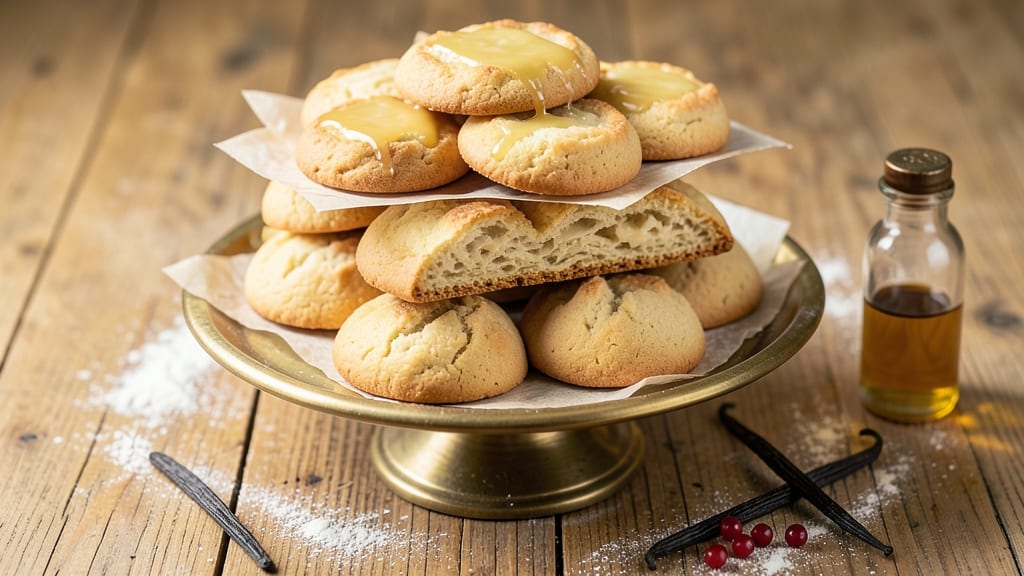
This German butter cookie recipe delivers the ultimate foil-tricked crunch with vanilla bean magic that will make your kitchen smell like a European bakery. 💛 The secret lies in precise dough preparation and baking techniques that transform simple ingredients into melt-in-your-mouth cookies with a perfect balance of crispy edges and tender centers.
What sets these cookies apart is the traditional German method of chilling the dough overnight, which develops deep flavor and ensures that signature buttery texture.
We'll use vanilla bean for authentic aroma, and a touch of almond extract for complexity—though you can easily adapt this for classic vanilla flavor if preferred. The foil trick during baking creates that coveted crispy bottom without burning.
By following this recipe, you'll achieve cookies that are rich, buttery, and perfectly golden—each bite offering layers of vanilla sweetness with just the right amount of crunch. The dough is simple to prepare but requires patience for the best results, making these cookies perfect for special occasions or holiday gatherings.
Whether you're baking for a festive celebration or simply craving a taste of Germany, this recipe delivers restaurant-quality results at home. Let's get started on creating these irresistible treats that will have everyone asking for the recipe.
Ingredients for best german butter cookie
Buttery, vanilla-kissed dough meets German baking magic for cookies that smell like a bakery.
| Ingredient | Amount | Notes |
|---|---|---|
| Unsalted Butter 🧈 | 1 cup | Cold, cubed for best texture |
| Granulated Sugar 🍚 | ¾ cup | Superfine for smoother cookies |
| Vanilla Bean 🌿 | 1 whole | Seeds scraped, pod reserved |
| Almond Extract 🌸 | ½ tsp | Optional but adds depth |
| All-Purpose Flour 🌾 | 2 ½ cups | Sifted, no substitutions |
| Baking Powder 🧂 | ½ tsp | Freshly opened for lift |
| Salt 🧂 | ¼ tsp | Fine sea salt preferred |
| Heavy Cream 🥛 | ¼ cup | Cold for proper texture |
| Almond Slices 🌰 | ½ cup | Toasted for crunch |
| Almond Flour 🌰 | ¼ cup | For nutty richness |
| Vanilla Sugar 🍚 | 1 tbsp | Optional for extra flavor |
| Aluminum Foil 📄 | 1 sheet | For crispy bottom trick |
The butter is non-negotiable—European-style unsalted like Plugrá or Kerrygold delivers that signature flavor. Grab it from Whole Foods or specialty grocers if your regular store doesn't carry it. For vanilla, Madagascar beans (like those from Burlap & Barrel) give the best aroma. If you can't find vanilla sugar, just mix regular sugar with scraped vanilla bean seeds. The almond slices should be thin and toasted—Trader Joe's has pre-sliced ones that save time. Flour? King Arthur is my go-to for consistent baking.
No vanilla bean? Pure vanilla extract at double the amount works in a pinch, though you'll miss that floral depth. Substituting almond extract? Vanilla extract alone will still taste amazing—just skip the almond flour. For the dough, cold butter is critical—don't let it soften before mixing. The heavy cream should be icy cold too. If you can't find almond flour, blend whole almonds into a fine powder, but it won't be as smooth. And yes, you can skip the vanilla sugar—just use regular sugar and add a splash more extract.
Dough keeps 3 days in the fridge wrapped tightly, or 3 months frozen in a sealed bag. The foil trick? Line baking sheets with foil, bake as directed, then remove cookies while still hot. They crisp up as they cool. For extra crunch, underbake slightly—they'll firm up while cooling. These cookies taste even better the next day, so make a double batch if you can. Store in an airtight container with a slice of bread to keep them soft.
Why You'll Love This Recipe
- No Fuss, Big Payoff: I swear by this dough—just cream butter and sugar, scrape in vanilla and almond extract, then fold in flour. No rolling, no fuss, and the cookies still turn out perfectly golden with that signature crack.
- Vanilla-Almond Magic: That split vanilla bean and almond extract? It’s the secret weapon. The cookies smell like a European bakery, and the flavor lingers—warm, buttery, with just a whisper of nutty depth that makes them impossible to resist.
- Party or Pantry: I make these for holidays, but they’re just as great in a lunchbox or with coffee. The dough keeps well for days, and they freeze beautifully—so I can bake a batch now and enjoy them all month.
- Budget-Friendly Luxury: Rich, buttery, and impressive—without breaking the bank. A single vanilla bean and a splash of almond extract make these taste like a high-end patisserie treat, not a grocery-store splurge. Plus, the dough stretches far.
Step-by-step instructions for German butter cookies
Here's the secret to that legendary German crunch—crispy bottoms and tender centers every time!
👨🍳 Step 1: Cream Butter and Sugar to Cloud Perfection
In a stand mixer fitted with the paddle attachment, beat the 1 cup unsalted butter (cold and cubed) with the 0.75 cup granulated sugar on medium speed for 3-4 minutes. You're aiming for a light, fluffy texture that nearly doubles in volume and becomes pale and airy. This creaming process is everything—it incorporates air that creates those signature crackly tops.
Scrape down the sides of the bowl with a spatula, then add the 1 whole vanilla bean (seeds scraped) and 0.5 tsp almond extract. Mix on low speed for 30 seconds until fully combined. The vanilla bean adds that authentic German depth, while the almond extract gives a subtle marzipan-like richness that's characteristic of these cookies.
👨🍳 Step 2: Build the Dough with Cream and Flours
Add the 0.25 cup cold heavy cream and mix on low speed for 30 seconds until fully incorporated. The cold cream helps prevent the butter from melting too quickly during mixing. In a separate bowl, whisk together the 2.5 cups all-purpose flour, 0.5 tsp baking powder, 0.25 tsp salt, 0.25 cup almond flour, and 1 tbsp vanilla sugar (if using).
With the mixer on low speed, gradually add the dry ingredients to the wet mixture. Mix just until combined—you should still see some flour streaks. Overmixing develops gluten, which leads to tough cookies. The dough will be slightly sticky but manageable. For the ultimate German touch, fold in the 0.5 cup toasted almond slices by hand using a silicone spatula.
🥘 Step 3: Chill for Texture Control (Don't Skip!)
Divide the dough into 4 equal portions (about 12 oz each) and flatten each into a 6-inch round on a sheet of parchment paper. Wrap each round tightly with the 1 sheet aluminum foil, then refrigerate for at least 1 hour (or up to 24 hours). This chilling step is non-negotiable—it firms up the butter, prevents excessive spreading, and ensures that crispy bottom we're all chasing.
Here's the German baker's trick: the foil creates a barrier that allows the bottom to get extra crispy while keeping the top soft. If you're short on time, you can freeze the wrapped dough rounds for 30 minutes as a shortcut, but chilling in the fridge gives the best results.
🔥 Step 4: Bake with Foil Trick for Crispy Bottoms
Preheat your oven to 350°F. Remove one foil-wrapped dough round and place it directly on the middle rack of your oven (no baking sheet needed—the foil protects the pan). Bake for 18-20 minutes until the edges are golden brown and the top is just starting to turn a pale golden color. The foil will prevent the bottom from burning while creating that signature crisp.
Here's where the magic happens: after 12 minutes, carefully remove the foil and continue baking for 6-8 minutes until the bottom is deep golden brown and the edges are set. You'll know it's ready when the top springs back slightly when touched and the bottom has that irresistible crunch. Real talk: don't walk away during this final phase—ovens vary, and you want that perfect balance of crisp and tender.
⏰ Step 5: Cool and Enjoy (Patience Pays Off!)
Let the cookies cool on the baking sheet for 5 minutes before transferring them to a wire rack. This brief cooling period helps set the texture. The centers should still be soft and slightly warm, while the bottoms will be gloriously crispy. Serve warm for maximum enjoyment—each bite delivers that perfect contrast of textures and flavors.
For the full German experience, dust with a little more vanilla sugar before serving. These cookies are best enjoyed within 2-3 days when they're at their peak texture. If you must store them, keep them in an airtight container at room temperature—just don't refrigerate them or they'll lose that signature crunch!
Pro Tips For Making Best German Butter Cookie
- CHILL THE DOUGH: After mixing, wrap the dough in plastic and refrigerate it for at least 24 hours—yes, even if you’re eager to bake. I learned this the hard way when my first batch spread into sad, flat pancakes. The wait makes the cookies thicker, chewier, and way more flavorful (and no, freezing works too if you’re impatient).
- SCRAPE THE VANILLA BEAN: Don’t just use vanilla extract—split the pod, scrape out the seeds, and toss the whole thing (seeds + pod) into the butter while it melts. That bitterness and depth? Game-changer. I was skeptical until I tried it, and now I can’t go back.
- WEIGH YOUR FLOUR: Spooning flour into the bowl leads to inconsistency (and over-baking). Use a kitchen scale and scoop the flour directly into the measuring cup, then level it off. German butter cookies are delicate—too much flour makes them dense, and you’ll end up with dry, crumbly results.
- BAKE LOW AND SLOW: Preheat the oven to 325°F (not 350°F or higher) and bake the cookies for 12–15 minutes, rotating the tray halfway. I used to rush them, and they’d brown too fast on the edges while staying doughy inside. Lower heat = even baking and that perfect buttery melt.
Dietary considerations for best german butter cookie
Gluten-Free Adaptation
For a gluten-free version, replace the 2.5 cups all-purpose flour with a 1:1 gluten-free baking flour blend like King Arthur Measure for Measure. Add 0.5 tsp xanthan gum to help bind the dough—this mimics gluten's structure.
Use almond flour as directed, but reduce to 0.25 cup to avoid heaviness. Chill the dough 2 extra hours since gluten-free batters spread more. Bake at 325°F instead of 350°F to prevent over-browning. 🌱
Dairy-Free Options
Swap the 1 cup unsalted butter for 1 cup dairy-free butter like Miyoko's or Earth Balance. Replace the 0.25 cup heavy cream with 0.25 cup full-fat coconut cream (chilled overnight).
Use dairy-free vanilla sugar if needed, or make your own by mixing 1 tbsp sugar with 1 tsp vanilla extract. Keep all other ingredients identical—this substitution maintains the cookie's signature texture while removing dairy. 🥥
Nut-Free Version
Omit the 0.5 cup almond slices and 0.25 cup almond flour entirely. Boost the vanilla flavor by adding 0.25 tsp extra vanilla extract and 1 tbsp vanilla sugar. For crunch, fold in 0.5 cup crushed vanilla wafers (like Nilla Wafers) or 0.5 cup rolled oats instead.
The dough will be slightly less rich but still delicious. Toast the vanilla wafers for 3 minutes at 350°F before mixing to enhance flavor. 🌾
Lower Sugar Adjustments
Reduce the 0.75 cup granulated sugar to 0.5 cup and replace the remaining 0.25 cup with 0.25 cup coconut sugar (lower glycemic index). Skip the vanilla sugar entirely. The dough will be slightly less sweet but still flavorful.
For extra richness, add 0.25 tsp cinnamon to the dry ingredients. Bake at 350°F for 16-18 minutes (check at 14 minutes)—lower sugar means faster browning. 🍃
Keto-Friendly Modifications
Replace the 2.5 cups all-purpose flour with 2.5 cups almond flour (blended fine) and add 0.5 tsp psyllium husk powder to improve texture. Use 1 cup dairy-free butter as directed. Reduce the 0.75 cup sugar to 0.25 cup erythritol or monk fruit sweetener.
Omit the vanilla sugar and add 0.5 tsp vanilla extract instead. Chill the dough 4 hours (longer = better texture). Bake at 325°F for 12-14 minutes—these cookies are delicate! 🥑
Nutrition facts
Frequently asked questions
Why do German butter cookies need to chill overnight?
The overnight chill is essential for developing deep flavor and achieving that signature crispy texture. When the dough rests, the butter firms up, preventing excessive spreading during baking. This also allows the flour to fully hydrate, creating a more tender crumb. The longer chill (up to 24 hours) enhances the vanilla flavor and creates the perfect balance of crispy edges and soft centers.
Can I use regular vanilla extract instead of a vanilla bean?
Yes, but you'll notice a difference in flavor depth. Use 2 teaspoons of pure vanilla extract to replace one vanilla bean. The extract lacks the floral complexity of the bean, but it still delivers that classic vanilla sweetness. For the best results, combine it with a pinch of vanilla sugar to mimic the bean's aromatic qualities.
How do I get the perfect crispy bottom without burning?
The foil trick is your secret weapon! Line your baking sheet with foil before shaping the dough rounds. Bake for 12 minutes with the foil on, then remove it for the final 6-8 minutes. This creates a crispy bottom while protecting the edges from over-browning. Always use the middle rack for even heat distribution.
What's the best way to store these cookies?
Store them in an airtight container at room temperature for up to 5 days. For longer storage, freeze the baked cookies (without wrapping) for up to 3 months
Can I make these cookies without almond extract?
Simply omit the almond extract and use 1 extra teaspoon of vanilla extract instead. The cookies will still be delicious, though they'll lack the subtle marzipan-like richness that almond extract provides. This substitution works perfectly for a classic vanilla flavor profile.