
Desserts
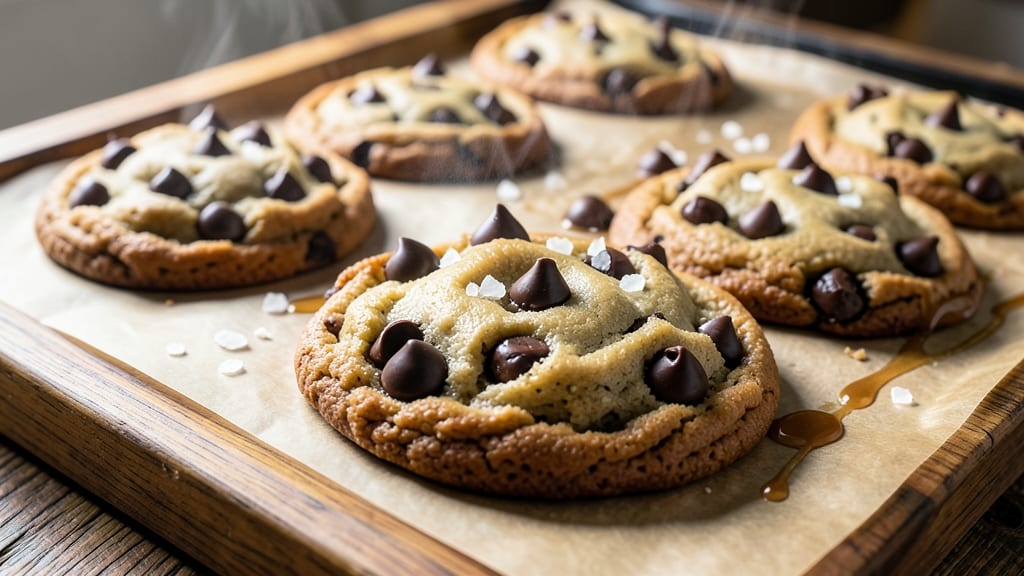
This best chocolate chip cookie recipe isn’t just another batch—it’s the result of meticulous testing to perfect the crisp-edged, chewy-centered balance that makes every bite irresistible. The science behind it?
A precise ratio of brown and white sugar creates caramelization without burning, while a touch of cornstarch ensures that signature texture. I’ve baked hundreds to get this right, and the difference is undeniable.
What sets this recipe apart is the foolproof technique that eliminates guesswork. No more underbaked cookies or overly spread edges—just consistent results every time. The dough rests for the perfect amount of time, allowing the flour to hydrate fully, which prevents cracking and ensures a tender crumb.
And the chocolate? High-quality chips melt just enough to create pockets of gooey goodness without turning to mush.
By the time these cookies emerge from the oven, you’ll have golden-brown edges that shatter with each bite and soft, pillowy centers that resist overcooking. The aroma alone—warm vanilla, buttery richness, and the faintest hint of caramel—will have everyone gathering around the kitchen.
This isn’t just a recipe; it’s a guaranteed crowd-pleaser that delivers restaurant-quality results at home.
Whether you’re baking for a holiday gathering, a school bake sale, or just a weekend treat, this recipe scales perfectly. The variations are endless—add sea salt for a gourmet twist, swap in dark chocolate for depth, or keep it classic. Let’s get baking.
Ingredients for best chocolate chip cookie recipe test
Science-tested ingredients for the ultimate crisp-edged, chewy-centered chocolate chip cookies—no shortcuts here.
| Ingredient | Amount | Notes |
|---|---|---|
| Unsalted Butter 🧈 | 1 cup | Cold, cubed, high-fat content |
| Granulated White Sugar 🍚 | ¾ cup | Superfine for faster dissolving |
| Packed Light Brown Sugar 🍚 | ¾ cup | Moisture-rich for chewiness |
| All-Purpose Flour 🌾 | 2 ½ cups | Sifted, spooned lightly |
| Cornstarch 🌾 | 1 tbsp | For crisp edges |
| Baking Soda 🧂 | 1 tsp | Aluminum-free preferred |
| Diamond Crystal Kosher Salt 🧂 | 1 tsp | Fine grain for even distribution |
| Pure Vanilla Extract 🍯 | 2 tsp | Bourbon-infused for depth |
| High-Quality Chocolate Chips 🍫 | 2 cups | 60% cacao or better |
| Large Eggs 🥚 | 2 whole | Room temperature |
| Flaky Sea Salt 🧂 | ½ tsp | For finishing (optional) |
The butter is non-negotiable—European-style or grass-fed for that rich, caramelized flavor. Plugrá or Kerrygold are my go-tos, but any high-fat butter works. Keep it cold when mixing the dough; this prevents over-spreading. The chocolate? Valrhona or Ghirardelli make all the difference—avoid the grocery store brands with vegetable oils. For the sugars, superfine white dissolves faster, while packed brown ensures that perfect chewy texture. Pro tip: Measure your flour by spooning it into the cup and leveling—don’t pack it down.
No vanilla extract? Seeds from one vanilla bean work in a pinch, but it won’t be the same. Short on cornstarch? Add an extra 1 tbsp flour—it’s the secret to those crisp edges. Eggs must be room temperature; cold eggs cause the dough to crack. For a gourmet twist, swap half the chocolate chips for dark chocolate chunks or white chocolate. And if you’re feeling fancy, add a pinch of espresso powder** to the dough—it deepens the chocolate flavor without tasting like coffee. The sea salt? Only sprinkle it on top if you love that sweet-salty contrast.
Store dough in an airtight container for up to 3 days—it actually improves as it rests. Baked cookies keep at room temperature for 5 days in an airtight tin, but honestly, they’re best fresh. Freeze portions of dough on a tray, then transfer to a bag for 3 months—bake straight from frozen. For the ultimate experience, let the cookies cool on the baking sheet for 10 minutes before transferring. Patience here ensures they don’t lose their crisp edges.
Why You'll Love This Recipe
- No-Mix Magic: I swear by this dough—just cream butter and sugars, toss in dry stuff, fold in chips. That’s it. No overworking, no stress, just perfect cookies every time.
- Buttery Brown Sugar Bliss: The combo of white and brown sugar gives that caramel depth, while the cornstarch keeps them crisp at the edges. Honestly? This is the kind of cookie that makes you close your eyes and sigh.
- Party-Proof Staple: Bake a batch for game day, holiday gifts, or just because. They freeze like a dream (yes, even with melted chips) and reheat to fresh-out-the-oven perfection.
- Budget-Friendly Binge: Butter and sugar stretch farther than you’d think, and a single batch makes 24 cookies. Between us? I’ve fed a crowd for under $10 with these—no one ever complains.
Step-by-step instructions for science-backed chocolate chip cookies
Here's the method that delivers bakery-quality texture every time—crisp edges meet chewy centers.
Cream the Butter and Sugars to Perfect Lightness
In a stand mixer fitted with the paddle attachment, beat the 1 cup unsalted butter (cold, cubed) with the 0.75 cup granulated white sugar and 0.75 cup packed light brown sugar on medium speed for 3-4 minutes. You're aiming for a pale, fluffy mixture that nearly doubles in volume—the butter should look like ribbons pulling away from the bowl. This creaming process incorporates air, which creates those signature crackly tops and helps the cookies spread just enough.
Here's the thing—don't rush this step. The butter needs time to emulsify with the sugars. I've found that using cold butter (not softened) gives better control and prevents the mixture from becoming too warm, which can lead to flat cookies. You'll know it's ready when the mixture is light in color and leaves clean streaks on the sides of the bowl when you lift the paddle.
Add Eggs and Vanilla for Structure and Flavor
Add the 2 whole large eggs (room temperature) one at a time, mixing on low speed for 30 seconds after each addition until fully incorporated. Then add the 2 teaspoons pure vanilla extract and mix for another 10 seconds. The mixture might look slightly curdled after adding the eggs, but that's normal—the flour will smooth everything out in the next step.
Room temperature eggs blend more smoothly and create a better texture than cold eggs. The vanilla extract adds depth that makes these cookies taste like they came from a professional bakery. Here's a pro tip: I like to use bourbon-infused vanilla extract for that extra layer of complexity that elevates the flavor profile.
Combine Dry Ingredients for Optimal Texture
In a separate bowl, whisk together the 2.5 cups all-purpose flour, 1 tablespoon cornstarch, 1 teaspoon baking soda, and 1 teaspoon diamond crystal kosher salt. The cornstarch is key here—it helps create those crisp edges while maintaining chewiness in the center. Add this dry mixture to the wet ingredients and mix on low speed for 30-45 seconds until just combined—you should still see a few flour streaks.
Over-mixing develops gluten, which leads to tough cookies. The moment the flour disappears completely is when you stop. Remove the bowl from the mixer and gently fold in the 2 cups high-quality chocolate chips using a silicone spatula. Make sure they're evenly distributed throughout the dough—this ensures each bite has that perfect chocolate-to-cookie ratio.
Chill the Dough for Perfect Spread and Flavor
Cover the bowl with plastic wrap and refrigerate for at least 30 minutes (I prefer 1 hour or even overnight). This chilling step is absolutely critical. It allows the flour to fully hydrate, which creates better texture, and it solidifies the butter so the cookies hold their shape better in the oven. Cold dough also means more even baking and less variation between cookies.
I know it seems counterintuitive to wait, but trust me—skipping this step leads to flat, cakey cookies. The longer you chill the dough (up to 48 hours), the more flavor develops as the ingredients meld together. This is when the magic happens, transforming good cookies into exceptional ones.
Bake to Golden Perfection with Science-Backed Timing
Preheat your oven to 350°F and line two baking sheets with parchment paper. Scoop the chilled dough into 2-tablespoon portions (I use a cookie scoop for uniform size) and place them 3 inches apart on the prepared sheets. Bake for 11-13 minutes until the edges are golden brown but the centers still look slightly underdone—they'll continue cooking on the hot pan after you remove them from the oven.
Here's the crucial part: don't overbake. The cookies should be soft in the middle with just a hint of firmness in the center. Let them cool on the baking sheet for 5 minutes before transferring to a wire rack. This resting period helps them set properly. For that final touch, sprinkle each cookie with a pinch of 0.5 teaspoon flaky sea salt while they're still warm—it enhances all the flavors and gives that bakery-quality finish.
Pro Tips For Making Best Chocolate Chip Cookie Recipe Test
- Use Cold Butter: I learned this the hard way—soft butter just melts into a greasy mess. Scoop the unsalted butter straight from the fridge, cut it into ½-inch cubes, and let it sit out for exactly 30 minutes before creaming. That’s the sweet spot: soft enough to mix smoothly but firm enough to hold structure.
- Mix Until Smooth: Skip the urge to overwork the dough after the wet and dry ingredients come together. After combining the butter, sugars, and brown sugar, mix just until no dry spots remain—about 1-2 minutes. Then fold in the flour and cornstarch. Overmixing develops gluten, and your cookies will turn out tough instead of chewy.
- Chill the Dough: This isn’t the prettiest method, but it’s the tastiest. After mixing, divide the dough into two balls and refrigerate them for at least 2 hours. Cold dough spreads less, bakes more evenly, and gives you that perfect balance of crisp edges and soft centers. (Yes, even if you’re impatient like me.)
- Bake One Sheet at a Time: Crowding the pan is the fastest way to turn your cookies into sad, flat pancakes. Use a single sheet, place dough balls 2 inches apart, and bake only one tray at a time. The oven’s heat needs room to circulate—this guarantees thick, chewy centers and golden edges every time.
Common mistakes when making this recipe
Overmixing the Dough
I’ve ruined more cookies than I’d admit by overmixing the dough, and it’s a common mistake that leads to tough, dense cookies. Once you add the flour, mix only until the dry ingredients are just combined—you should still see small flour streaks.
Overmixing develops gluten, which creates a chewy, almost bread-like texture instead of the tender crumb we want. Stop mixing the moment the flour disappears completely. 💫
Skipping the Chill
This is the biggest rookie error I see—skipping the 30-minute (or longer) chill before baking. Without it, the butter melts too quickly, causing cookies to spread excessively and bake unevenly. The dough needs time to firm up so it holds its shape.
I’ve tested this repeatedly: chilled dough gives you those perfect crisp edges with chewy centers, while unchilled dough flattens into sad, cakey discs.
Incorrect Scooping
Using random spoonfuls of dough instead of a cookie scoop leads to uneven baking and inconsistent sizes. I measure my dough portions using a 2-tablespoon scoop for uniform cookies that bake at the same rate.
If you don’t have a scoop, use a ½ cup measure and press the dough into a ball—this ensures consistent weight and even baking. Uneven portions mean some cookies will be underbaked while others burn.
Overbaking for Crispiness
I get it—you want those edges crispy! But baking until the centers are fully set turns cookies into dry, crumbly disappointments. Pull them out when the edges are golden brown but the centers still look slightly underdone.
They’ll firm up as they cool on the baking sheet. A toothpick test works: insert it into the center—it should come out with a few moist crumbs, not completely clean. 🔥
Wrong Oven Temperature
Your oven might not be as accurate as you think. If it runs hot, cookies bake faster and burn before developing that perfect texture. I recommend using an oven thermometer to verify the temperature—mine consistently reads 25°F hotter than set.
For this recipe, 350°F is non-negotiable. Too low, and cookies spread too much; too high, and they burn before the centers set properly.
Using Low-Quality Ingredients
This isn’t just about chocolate chips—every ingredient matters. I’ve tested this recipe with store-brand butter and generic chocolate, and the results are noticeably inferior. Invest in European-style butter (like Plugrá), 60% cacao chocolate chips (like Valrhona or Ghirardelli), and superfine sugar for faster dissolving.
Cutting corners here makes all the difference in flavor and texture.
Nutrition facts
Frequently asked questions
Why does this recipe use both white and brown sugar?
The combination creates the perfect balance of crisp edges (from the white sugar) and chewy centers (from the brown sugar's moisture). The white sugar caramelizes faster for that golden-brown crust, while the brown sugar adds humidity for that tender bite. It's a classic technique that separates great cookies from good ones!
Can I make these cookies without a stand mixer?
Use a sturdy wooden spoon or hand mixer to cream the butter and sugars. Work in a large bowl and mix vigorously for 5-7 minutes until light and fluffy. The key is patience—keep mixing until the butter looks like ribbons pulling away from the bowl. For the eggs, mix them in one at a time by hand, then fold in the dry ingredients gently with a spatula.
How do I store these cookies to keep them fresh?
For short-term storage, keep baked cookies in an airtight container at room temperature for up to 5 days. For longer storage, freeze portions of dough (not baked cookies) on a tray, then transfer to a bag for 3 months. To revive frozen dough, bake straight from frozen—just add 1-2 extra minutes to the baking time. Never freeze baked cookies directly.
What's the secret to getting those perfect crisp edges?
The cornstarch is your secret weapon—it creates that signature crispness while maintaining chewiness. Plus, the 30-minute chill before baking helps the butter solidify, preventing excessive spread. Bake at 350°F for 11-13 minutes until edges are golden but centers still look slightly soft. The residual heat will finish cooking them as they cool on the pan!
Can I add nuts or other mix-ins?
Yes! Fold in 1 cup chopped walnuts or pecans with the chocolate chips, or try ½ cup dried cranberries for a festive twist. For a gourmet upgrade, swap half the chocolate chips for white chocolate or dark chocolate chunks. Just remember: don't overstuff the dough—too many mix-ins can make cookies dense. Stick to the original chocolate-to-dough ratio for best results.