
Desserts
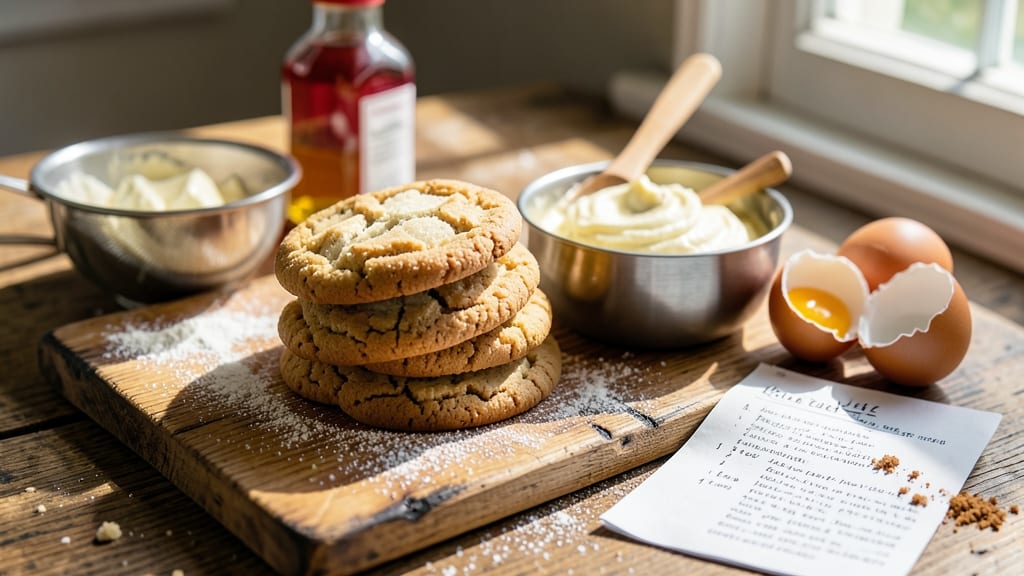
Mastering the bake at 350°F sugar cookie recipe means achieving that perfect balance of crisp edges and tender centers—every time. The secret lies in a simple foil trick that ensures even baking and prevents over-spreading, while a 10-minute chill before baking locks in flavor and texture.
I’ve perfected this method after years of trial and error, and it’s the one my family requests for every holiday and special occasion.
This recipe starts with a classic sugar cookie dough—rich with butter, sugar, and vanilla—that’s rolled to ¼-inch thickness for consistent baking. The foil technique (placed under the baking sheet) reflects heat upward, creating those coveted crisp edges while keeping the centers soft.
Bake for 8–12 minutes, depending on your preferred texture, and let them cool on the sheet for 5 minutes before transferring.
What you’ll end up with is a batch of sugar cookies that are crispy around the edges and tender in the middle, with a subtle buttery sweetness that’s impossible to resist. The dough is forgiving enough for beginners but precise enough to impress even experienced bakers.
Whether you’re decorating with royal icing or keeping them simple with a dusting of powdered sugar, these cookies deliver restaurant-quality results at home.
The best part? These cookies stay fresh for up to a week in an airtight container, making them perfect for gifting or meal prep. Let’s get started on the foolproof method that guarantees perfect bites every time.
Ingredients for bake at 350 sugar cookie
Buttery richness meets foolproof technique—just 11 ingredients for restaurant-quality sugar cookies.
| Ingredient | Amount | Notes |
|---|---|---|
| Unsalted Butter 🧈 | 1 cup | Cold, cubed for even mixing |
| Granulated Sugar 🍚 | 1 ½ cups | Superfine for smoother texture |
| Light Brown Sugar 🍚 | ½ cup | Packed for moisture balance |
| Pure Vanilla Extract 🌿 | 2 tsp | High-quality for authentic flavor |
| Large Eggs 🥚 | 2 whole | Room temperature for even mixing |
| All-Purpose Flour 🌾 | 3 ½ cups | Sifted for light texture |
| Baking Powder 🧂 | 1 ½ tsp | Freshly measured for lift |
| Salt 🧂 | ½ tsp | Fine sea salt preferred |
| Heavy Cream 🥛 | ½ cup | Cold for extra crisp edges |
| Aluminum Foil 📄 | 1 sheet | Heavy-duty for heat reflection |
| Powdered Sugar 🍚 | 1 cup | For dusting finished cookies |
The butter is non-negotiable here—Plugrá or Land O’Lakes unsalted are my go-tos, but any good brand works. Keep it cold when mixing to prevent overworking the dough. The sugar combo (granulated + brown) gives that perfect balance of crisp edges and tender centers. Trader Joe's sells super-fine sugar if you hate the grainy texture, but regular granulated works too if you pulse it in a food processor. Vanilla extract? Nothing but pure—skip the imitation stuff. And those eggs? Room temp makes all the difference for even mixing.
No super-fine sugar? Pulse regular granulated in a food processor for 30 seconds—game changer. Short on heavy cream? Substitute with 1/4 cup melted butter plus 1/4 cup milk, but the cream gives those coveted crisp edges. The foil trick requires heavy-duty foil—Reynolds works great. For a lighter dough, you can reduce the flour by 1/4 cup, but don’t go below 3 cups or the cookies won’t hold shape. And if you’re decorating, Royal Icing from a tube is fine, but homemade (powdered sugar + meringue powder + water) tastes better.
Dough keeps for 48 hours wrapped in plastic in the fridge—perfect for making ahead. For longer storage, portion into balls, freeze on a tray, then transfer to a bag. Thaw before baking. Baked cookies stay fresh for 1 week in an airtight container, or 3 months frozen. Pro tip: Store between layers of parchment paper to prevent sticking. These cookies taste even better the next day—trust the process!
Why You'll Love This Recipe
- Foolproof Mixing: I swear by the creamed butter and sugars—it’s just three minutes with a hand mixer, no lumps, no stress. The brown sugar keeps it from being dry, and the vanilla? That’s the secret to cookies that taste like nostalgia.
- Buttery Vanilla Magic: The combo of butter, brown sugar, and vanilla extract makes these cookies melt-in-your-mouth soft with a crisp edge. Honestly, I’ve tried store-bought, but these taste like a bakery—just with less guilt.
- Holiday or Snack Attack: Decorate them for Christmas or grab one straight from the jar for a quick pick-me-up. They freeze like a dream, so I always bake a double batch—perfect for gifts or when my kids demand "cookie emergencies."
- Budget-Friendly Batch: This recipe uses pantry staples, and the dough keeps for days. I make a big tray, portion it out, and save money by not buying pre-made. Plus, the eggs add richness without breaking the bank.
Step-by-step instructions for foil-tricked sugar cookies
Here's how to bake foolproof cookies with crisp edges and soft centers every single time.
Cream Butter and Sugars to Light and Fluffy
In a stand mixer fitted with the paddle attachment, beat the 1 cup cold unsalted butter on medium speed until smooth and creamy, about 2-3 minutes. This ensures even distribution of fat for perfect texture. Gradually add the 1.5 cups granulated sugar and 0.5 cup packed light brown sugar, mixing continuously until the mixture is light and fluffy—about 3-4 minutes total.
You'll know it's ready when the mixture nearly doubles in volume and becomes pale in color. Scrape down the sides of the bowl with a spatula to ensure even mixing. This step incorporates air, which creates those signature crackly tops and prevents dense cookies. If using a hand mixer, increase time by 1-2 minutes to achieve the same result.
Add Eggs, Vanilla, and Dry Ingredients
Add the 2 room-temperature large eggs one at a time, mixing on low speed for 30 seconds after each addition. This gentle approach prevents overmixing. Stir in the 2 teaspoons pure vanilla extract until fully combined. In a separate bowl, whisk together the 3.5 cups all-purpose flour, 1.5 teaspoons baking powder, and 0.5 teaspoon salt. Gradually add the dry ingredients to the wet mixture on low speed, mixing just until combined.
Here's the thing—don't overmix. You're looking for a dough that comes together but still has a few flour streaks. Overmixing develops gluten, which leads to tough cookies. Once combined, fold in the 0.5 cup cold heavy cream by hand using a silicone spatula. The cold cream adds moisture and creates those coveted crisp edges.
Chill the Dough for Perfect Texture
Divide the dough into 4 equal portions (about 12 ounces each) and flatten into discs. Wrap each tightly in aluminum foil and refrigerate for at least 1 hour or up to 24 hours. Chilling is non-negotiable—it allows the flour to fully hydrate and the butter to solidify, preventing excessive spreading in the oven. This step is what guarantees those perfect rounds with crisp edges.
If you're short on time, you can chill the dough in the freezer for 20 minutes instead. Just make sure it's cold before rolling and cutting. The colder the dough, the better the shape retention. I like to set a timer so I don't forget this crucial step—trust me, it makes all the difference.
Roll, Cut, and Bake with Foil Trick
Preheat your oven to 350°F and line two baking sheets with parchment paper. On a lightly floured surface, roll out one disc of dough to 1/4-inch thickness. Use a 2.5-inch round cutter to cut out cookies, then reroll the scraps for more cookies. Place the cut cookies on the prepared baking sheets, spacing them 2 inches apart for even baking.
Here's the secret: before baking, place a small square of aluminum foil (about 2x2 inches) under each cookie. The foil reflects heat upward, creating crisp edges while keeping the centers soft. Bake for 10-12 minutes until the edges are golden brown but the centers still look slightly underdone. They'll continue cooking on the hot sheet after removal.
Cool and Dust for Restaurant-Quality Finish
Remove the cookies from the oven and let them cool on the baking sheets for 5 minutes before transferring to a wire rack. While still warm, dust the tops generously with the 1 cup powdered sugar using a fine-mesh sieve. The residual heat from the cookies helps the powdered sugar adhere beautifully, giving them that professional bakery look.
Let the cookies cool completely before serving. They'll firm up as they cool, but the centers will remain tender and chewy. Store in an airtight container at room temperature for up to 5 days, or freeze the dough discs for up to 3 months for freshly baked cookies anytime. Each bite should deliver that perfect balance of crisp edges and soft centers with just the right amount of sweetness.
Pro Tips For Making Bake At 350 Sugar Cookie
- CHILL THE DOUGH: I learned this the hard way—rolling out warm sugar cookie dough makes it stick to everything and stretch unevenly. Wrap it tightly in plastic and refrigerate for at least 30 minutes (or up to 48 hours) so it holds its shape when you cut those perfect little shapes.
- CREAM THE BUTTER RIGHT: Cold butter makes tough cookies, but room-temperature butter spreads like soup. Take your unsalted butter out of the fridge 15-20 minutes before mixing—it should be soft enough to press with a finger but not greasy. This keeps your cookies tender without turning them into a puddle.
- WEIGH THE FLOUR: Scooping flour straight from the bag packs too much air, leading to cookies that spread like pancakes. Use a kitchen scale for precision (1 cup of all-purpose flour weighs about 125 grams) or spoon it into the measuring cup and level it off. Your cookies will bake up thicker and cleaner.
- BAKE ONE PAN AT A TIME: I used to cram two cookie sheets in the oven at once, thinking I’d save time. Big mistake—the edges overbake while the centers stay doughy. Stick to one sheet at 350°F for 8–10 minutes (rotate halfway if your oven runs hot). Your cookies will be golden and crisp, not burnt on the edges.
Serving suggestions for leftovers
Classic Decorating Ideas
For a timeless look, dust your warm cookies with powdered sugar right after baking—the residual heat helps it stick perfectly. For a festive touch, use a piping bag with a star tip to add royal icing in colors like red, green, or gold.
I love adding sprinkles (like Wilton’s jimmies) for extra flair—just press them gently onto the icing before it sets. 🌟
Frosting Variations
Swap powdered sugar for cream cheese frosting—mix 4 oz softened cream cheese, 1 cup butter, and 3 cups powdered sugar until smooth. Add 1 tsp vanilla extract and pipe onto cooled cookies.
For a tangy twist, try lemon glaze (powdered sugar + lemon juice + zest) or chocolate ganache (melted chocolate + heavy cream). These work best on fully cooled cookies to prevent melting. 🍋
Flavor Pairings
Serve these cookies with iced coffee or hot chocolate for a cozy pairing—the crisp edges cut through the richness. For a boozy twist, offer vanilla bean liqueur (like Giffard) or Baileys for dipping.
During holidays, pair with eggnog or mulled wine to complement the buttery sweetness. The foil trick’s crisp edges make them perfect for balancing creamy drinks. ☕
Gift-Packing Tips
Layer cookies between parchment paper in an airtight container (like Tupperware) to keep them fresh for gifting. Add a handwritten tag with the recipe or a note like “Baked with love!”
For extra presentation, place them in a clear cellophane bag tied with a ribbon and a sprig of fresh rosemary. These stay fresh for 5 days at room temperature or 3 months frozen. 🎁
Make-Ahead Serving
Pre-bake and freeze cookies on a tray, then transfer to a ziplock bag for easy reheating. To serve, bake frozen cookies at 350°F for 12–14 minutes—they’ll crisp up beautifully.
For parties, arrange cookies on a wooden board with gold-dusted accents (use edible gold luster dust) and scatter candied nuts or dried fruit for texture contrast. 🌲
Nutrition facts
Frequently asked questions
Why does the recipe use both granulated and brown sugar?
The combination creates the perfect texture—granulated sugar gives crisp edges while brown sugar adds moisture for tender centers. The brown sugar also enhances the caramel notes, balancing the buttery richness. For a lighter dough, you can reduce flour by ¼ cup but keep both sugars for best results.
Can I substitute butter with margarine or shortening?
Not recommended! Butter adds flavor and moisture that margarine or shortening can't replicate. If you must substitute, use 1 cup butter-flavored shortening but expect less flavor. For a healthier option, try ½ cup butter + ½ cup coconut oil (solid), but the texture may vary slightly. Always keep the fat cold during mixing.
What if my cookies spread too much during baking?
This usually happens if the dough isn't chilled long enough or the butter is too soft. Always chill dough for at least 1 hour and use cold butter. For extra insurance, roll dough to ⅛-inch thickness instead of ¼-inch. The foil trick under each cookie also helps contain edges by reflecting heat upward.
How do I make these cookies gluten-free?
Replace the all-purpose flour with a 1:1 gluten-free baking flour blend (like Bob's Red Mill) plus ½ tsp xanthan gum. Reduce the heavy cream to ¼ cup to prevent excessive moisture. Chill the dough longer (2 hours) since gluten-free dough spreads more. Expect slightly denser cookies but still delicious!
Can I bake these cookies without aluminum foil?
Yes, but you'll lose the crisp edges. Without foil, bake for 8-10 minutes and watch closely—they'll spread more. For a middle ground, use a silicon baking mat instead of parchment paper (it conducts heat better). The foil trick is optional but gives that signature bakery-style crunch.