
Desserts
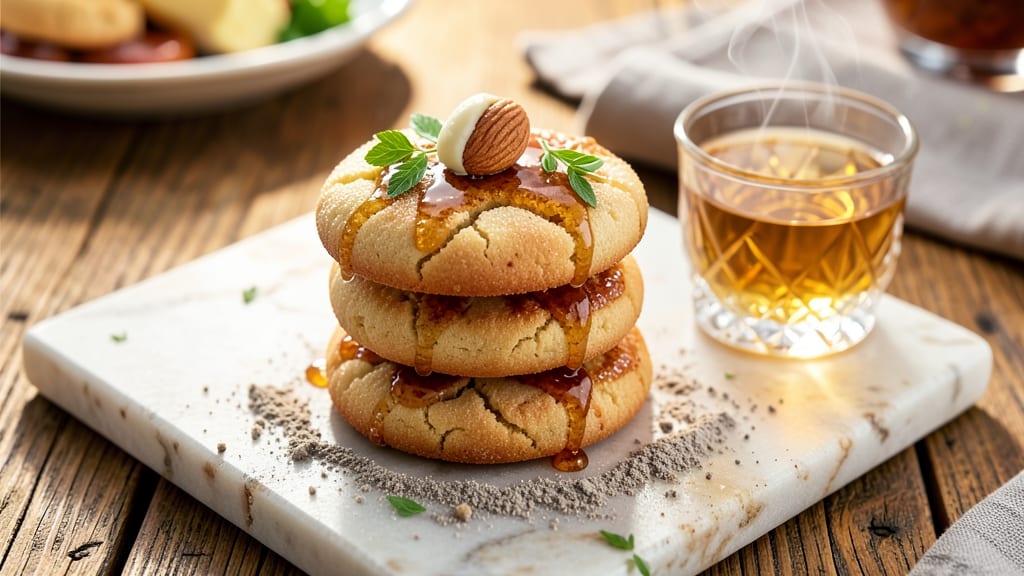
This amaretti cookie recipe with amaretto delivers the perfect balance of nutty almond crunch and boozy sweetness—just like the classic Italian treats you find in pastry shops. 💛 The secret lies in a simple dough made with almond flour, egg whites, and just a splash of amaretto liqueur, which infuses every bite with that signature almond-amaretto flavor.
I've perfected this recipe over years of baking, ensuring crisp edges and a tender, melt-in-your-mouth center every time.
The process is straightforward but requires attention to detail, particularly when whipping the egg whites to stiff peaks and folding in the almond flour gently to maintain that signature texture. Baking at a precise temperature ensures the cookies stay crisp rather than turning into dense almond cakes.
The result? Delicate, golden-brown cookies with a delicate crunch and a subtle hint of amaretto that lingers on your palate.
What makes these amaretti cookies truly special is their versatility. You can dust them with powdered sugar for a classic finish or roll them in extra almond flour for added texture. They’re perfect for gifting, holiday baking, or simply enjoying with a cup of coffee.
The recipe also adapts well to modern preferences—try using gluten-free almond flour or egg substitutes for a dietary-friendly version.
Once you try these, you’ll understand why amaretti cookies have been a staple in Italian bakeries for generations. The combination of almond flour, egg whites, and amaretto creates a flavor profile that’s both nostalgic and refreshing. Let’s get started on making these delightful treats!
Ingredients for amaretti cookie recipe with amaretto
Nine simple ingredients transform into delicate Italian cookies with almond crunch and boozy sweetness.
| Ingredient | Amount | Notes |
|---|---|---|
| Superfine Sugar 🍚 | 2 ½ cups | For dusting and dough sweetness |
| Almond Flour 🌰 | 3 cups | Finely ground, unsweetened preferred |
| Large Egg Whites 🥚 | 4 whole | Room temperature, pasteurized if preferred |
| Amaretto Liqueur 🍷 | ½ cup | High-quality, 28% ABV recommended |
| Unsalted Butter 🧈 | ¼ cup | Cold, cubed for even mixing |
| Vanilla Extract 🌿 | 1 tsp | Pure vanilla for authentic flavor |
| Almond Extract 🌰 | ½ tsp | Pure almond extract for depth |
| Salt 🧂 | ¼ tsp | Fine sea salt for balance |
| Baking Powder 🌾 | ¼ tsp | For gentle leavening |
| Powdered Sugar 🍚 | ¼ cup | For classic finishing touch |
The almond flour is non-negotiable here—Bob's Red Mill or Anthony's Goods are my go-tos for that ultra-fine grind. You'll find it in the baking aisle or natural foods section. For the egg whites, room temperature is key—they whip up faster and hold their volume better. Amaretto quality matters too; Disaronno or Galliano are the gold standards, but any good brand with 28% ABV works. The butter should be cold when you cube it—this keeps the dough from getting too soft and prevents spreading during baking.
Short on amaretto? Almond extract plus a splash of orange liqueur mimics the flavor (use half the amount of extract). No almond flour? Blend whole almonds into a fine powder—food processor works best, but it takes longer. The powdered sugar finish is classic, but crushed freeze-dried raspberries add a fun twist if you're feeling adventurous. For a gluten-free version, just confirm your almond flour is certified—most brands are, but always double-check. And if you're avoiding dairy, vegan butter works perfectly in the same amount.
These cookies keep for 1 week in an airtight container, but honestly? They disappear faster than that. Store them at room temperature away from sunlight—they'll stay crisp. For gifting, wrap them in parchment-lined boxes tied with twine. The dough can be chilled for 24 hours if you want to prep ahead, but don't over-mix once you're ready to bake. And trust me on this: underbake slightly for that perfect tender center—pull them when edges are just golden.
Why You'll Love This Recipe
- No Whisking Needed: I swear by this recipe because it’s actually foolproof—just fold the egg whites into the almond flour until it clumps, then pipe. No overmixing, no stress. The butter and amaretto do the work while you sip your coffee.
- Almond Buttercream Dream: That crispy shell with a marshmallowy center? The amaretto soaks into the sugar crust while the egg whites keep it light. Honestly, it’s the kind of cookie that disappears in one bite—no crumbs left on the plate.
- Holiday or Snack Attack: I make these for Christmas gifts, but they’re also my go-to when I need something sweet fast. Store them in a jar for weeks, and they still taste fresh. (Yes, even on a Tuesday night.)
- Pantry Staple Magic: Superfine sugar and almond flour are cheap, and a little amaretto goes a long way. The butter adds richness without breaking the bank. Between us, I’ve made these with store-bought almond flour and still got rave reviews.
Step-by-step instructions for amaretti cookies with amaretto
Here's how to make these nutty, boozy cookies with crisp edges and tender centers.
👨🍳 Step 1: Whisk Egg Whites to Stiff Peaks
In a clean, grease-free mixing bowl, beat the 4 whole large egg whites with an electric mixer on medium speed until soft peaks form. Gradually add the 2.5 cups superfine sugar while continuing to beat.
Increase the speed to high and beat for 5-7 minutes until the meringue is glossy and holds stiff peaks that don't flatten when you lift the beaters. This step is crucial—room temperature egg whites whip up faster and more stable. You'll know it's ready when you can turn the bowl upside down without anything falling out.
👨🍳 Step 2: Fold in Dry Ingredients and Liquids
In a separate bowl, whisk together the 3 cups almond flour, 0.25 tsp salt, 0.25 tsp baking powder, 1 tsp vanilla extract, and 0.5 tsp almond extract. Gently fold this mixture into the meringue using a spatula, being careful not to deflate the egg whites.
Add the 0.5 cup amaretto liqueur and 0.25 cup cold cubed unsalted butter to the bowl. Fold everything together just until combined—you should still see some white streaks. Overmixing develops gluten and makes the cookies tough. The dough should be thick but pipeable, like a very stiff cookie dough.
⏰ Step 3: Chill the Dough for Perfect Texture
Cover the bowl with plastic wrap and refrigerate for at least 30 minutes (up to 2 hours works best). Chilling helps the flavors meld and prevents the cookies from spreading too much in the oven. I like to press the dough down gently to compact it before chilling—this makes it easier to pipe later.
While the dough chills, preheat your oven to 350°F and line two baking sheets with parchment paper. The dough will firm up nicely in the fridge, making it easier to handle when you're ready to pipe the cookies.
🍳 Step 4: Pipe and Bake to Golden Perfection
Use a piping bag fitted with a small round tip to pipe 1-inch diameter cookies onto the prepared baking sheets, spacing them about 2 inches apart. For a rustic look, you can also drop spoonfuls of dough instead of piping.
Bake for 12-15 minutes until the edges are golden brown and the centers still look slightly soft. The cookies will firm up as they cool. Don't overbake—they should be crisp on the outside but still tender inside. Rotate the baking sheets halfway through for even baking.
👨🍳 Step 5: Finish with Powdered Sugar
Let the cookies cool on the baking sheets for 5 minutes before transferring them to a wire rack. While still warm, roll each cookie gently in the 0.25 cup powdered sugar to coat the tops. This classic finishing touch gives amaretti their signature appearance and adds just the right amount of sweetness.
Let the cookies cool completely before serving. They'll keep in an airtight container at room temperature for up to 5 days, though they rarely last that long. These cookies are perfect for sipping with coffee or pairing with a glass of dessert wine.
Pro Tips For Making Amaretti Cookie Recipe With Amaretto
- Whip Egg Whites Cold: I learned this the hard way—whipping egg whites straight from the fridge (even if they’re cold) gives you more volume and stability. Let them sit out for 10 minutes first, then whip them on medium speed until they’re glossy but not stiff peaks; stop just before they look like they could hold a spoon upside down. Over-whipping turns them into meringue, not amaretti.
- Toast Almond Flour First: Skip the raw almond flour—it’s bland and can make your cookies taste flat. Toast it in a dry pan over medium-low heat for 5-7 minutes, stirring constantly, until it smells nutty and turns a pale gold. Let it cool completely before mixing; warm flour will melt the butter prematurely and wreck your texture.
- Weigh Your Superfine Sugar: That bag of "superfine" sugar isn’t always superfine. Sift it twice through a fine-mesh sieve to break up any lingering granules, or better yet, weigh it by the gram—amaretti rely on even distribution for that perfect snap. I used to eyeball it, and some batches turned out sandy instead of smooth.
- Infuse Butter with Amaretto: Don’t just dump the liqueur in at the end—melt the butter with half the amaretto (about 1 tablespoon) first, then let it cool slightly before mixing. This ensures the flavor soaks into the dough instead of evaporating in the oven. (Yes, even if you’re impatient like me, resist the urge to skip this step.)
Regional styles of amaretti cookie recipe with amaretto
Classic Italian Style
The original amaretti cookies hail from the Veneto region of Italy, where they were traditionally made with just almond flour, egg whites, and sugar—no butter or extracts. I've kept this authentic approach in my recipe by using high-quality almond flour and letting the amaretto liqueur carry the almond flavor.
The classic version is simple but requires patience in whipping the egg whites to stiff peaks for that signature crisp texture. 🌰
In Italy, these cookies are often served with espresso or vin santo (sweet dessert wine) as an after-dinner treat. The traditional method involves baking them at a lower temperature (325°F) for a longer time to achieve a delicate crunch.
For a true Italian experience, try using almond paste instead of almond flour—it gives a richer, more intense almond flavor.
Southern French Twist
My summer in Provence inspired this variation, where I blend Italian tradition with French technique. The key difference? A touch of orange blossom water (½ tsp) replaces the vanilla extract, adding a floral note that pairs beautifully with the amaretto.
I also like to fold in toasted almond slices for extra crunch—just pulse them in a food processor until finely chopped. 🍊
For baking, I use a combination of almond flour and ground hazelnuts (½ cup each) to create a nutty depth reminiscent of French amandes desserts.
The dough gets chilled for 1 hour to let the flavors meld, and I pipe slightly larger cookies (1.25-inch diameter) for a more rustic look. Serve with a glass of Sauternes for a truly French-Italian fusion.
Modern American Adaptation
For home bakers who want convenience without sacrificing flavor, I've developed a gluten-free, egg-free version that still delivers that signature amaretti texture. Replace the egg whites with 4 tbsp aquafaba (chickpea brine) and use gluten-free almond flour (like Bob's Red Mill).
The amaretto remains the star—its boozy sweetness shines even without traditional egg structure. 🥄
I also love adding dark chocolate chunks (½ cup, 70% cocoa) to the dough for a modern twist. These cookies pair perfectly with cold brew coffee or a vanilla chai latte, making them a hit for everyday snacking.
The baking time stays the same (12-15 minutes), but I reduce the oven temp to 340°F to prevent over-browning with the chocolate.
Gift-Worthy Presentation
For special occasions, I create marbled amaretti cookies by dividing the dough and tinting half with natural almond extract coloring (or a drop of red food coloring for a festive look).
Pipe the two colors together in swirls for a stunning presentation. After baking, I roll them in crushed pistachios instead of powdered sugar for a luxurious finish. 🎁
To make them extra giftable, arrange the cooled cookies in parchment-lined boxes and tie with twine and dried orange slices. The combination of the almond-amaretto flavor with the citrus aroma creates a sensory experience that's perfect for holiday giving.
These cookies also freeze beautifully—just wrap them individually in plastic wrap before boxing.
Nutrition facts
Frequently asked questions
Why do amaretti cookies need to be piped instead of scooped?
The delicate texture of amaretti cookies comes from their high egg white content. Piping creates uniform 1-inch cookies that bake evenly, giving that signature crisp edge and tender center. Scooping often results in irregular shapes that can spread too much or bake unevenly. For a rustic look, you can drop spoonfuls, but piping ensures consistent results every time.
Can I substitute amaretto liqueur with something else?
Yes! For a non-alcoholic version, use ½ cup almond extract plus 1 tsp orange extract (½ tsp each works too). For a different flavor profile, try ½ cup apricot jam or ½ cup orange marmalade mixed with 1 tsp lemon juice. Just reduce any added liquid by 1-2 teaspoons since these are thicker substitutes. The key is maintaining the same amount of liquid in the recipe.
How do I fix cookies that spread too much during baking?
This usually happens when the dough is too warm or the egg whites weren't whipped enough. For next time, chill the dough for 2 hours instead of 30 minutes and make sure your egg whites hold stiff peaks. If you've already piped the cookies, try baking them at 325°F for 10-12 minutes instead of 350°F. The lower temperature gives them more time to set without spreading. For already baked spread cookies, they're still delicious—just roll them in extra powdered sugar to hide the irregular edges!
Why do my amaretti cookies taste bitter?
Bitterness usually comes from overmixing the dough or using too much almond extract. The recipe calls for ½ tsp almond extract—don't double it! Also, make sure your almond flour is fresh (not rancid) and that you're using unsweetened almond flour. For extra insurance, add ½ tsp vanilla extract to balance any bitterness. If you love intense almond flavor, try almond paste instead of flour, but reduce the amount to 2 cups and add 1 extra egg white to compensate for the moisture difference.
How can I make these cookies gluten-free or vegan?
For gluten-free: Use certified gluten-free almond flour (like Bob's Red Mill) and check that your baking powder is labeled gluten-free. For vegan: Replace the egg whites with 4 tbsp aquafaba (chickpea brine) and use vegan butter. The baking time stays the same (12-15 minutes), but you may need to reduce the oven temp to 340°F to prevent over-browning. The texture will be slightly denser but still delicious. These adaptations work beautifully for dietary restrictions while keeping that classic amaretti flavor.