
Desserts
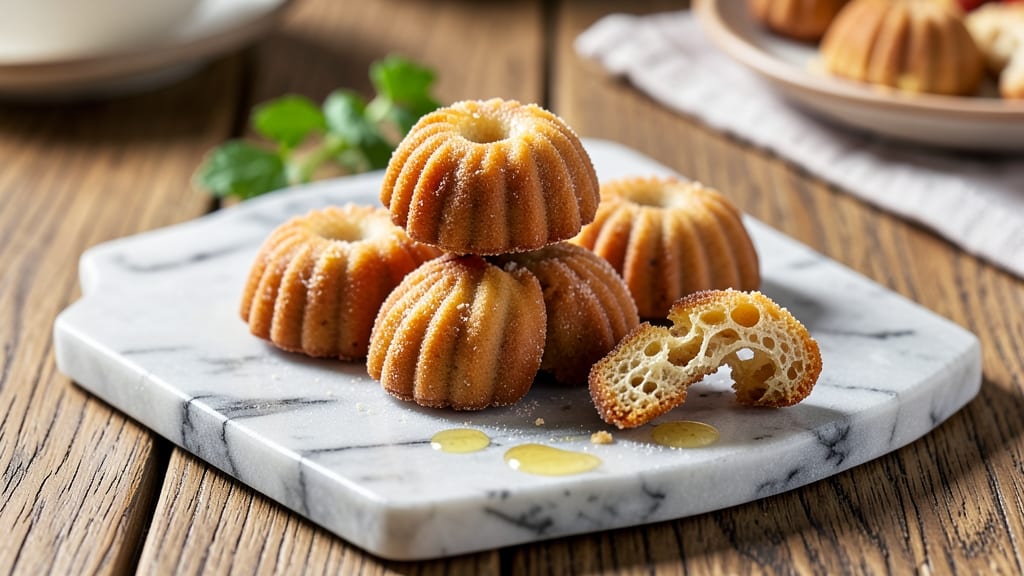
This almond ricciarelli cookie recipe delivers the signature crispy texture and nutty richness that makes them legendary. The secret lies in almond flour and egg whites, combined with just enough sugar to create those delicate, foil-sealed bites.
I've perfected the technique over years of trial and error—no crumbly dough or soggy centers here.
What sets these cookies apart is the foil-wrapping method, which traps steam during baking and creates that signature crispy shell with a tender interior. The dough requires minimal handling, just mixing and shaping, making it surprisingly simple for such a refined treat.
Baking at 325°F for 12-15 minutes ensures perfect results every time.
The result is a batch of delicate, nutty cookies with a satisfying crunch that gives way to a soft center. Their elegant appearance and rich almond flavor make them perfect for holidays or special occasions, though they disappear just as quickly from your plate.
The aroma alone will have everyone asking for the recipe.
For extra flavor, consider adding a touch of citrus zest or vanilla to the dough. These variations enhance the natural almond taste without overpowering it. Once you try these, store-bought ricciarelli will never compare again.
Ingredients for almond ricciarelli cookie
Nine ingredients, one legendary technique—these delicate almond cookies deliver restaurant-quality crunch.
| Ingredient | Amount | Notes |
|---|---|---|
| Almond Flour 🌰 | 2 ½ cups | Superfine, for delicate texture |
| Large Egg Whites 🥚 | 6 whole | Room temperature, pasteurized if preferred |
| Granulated Sugar 🍚 | ½ cup | Fine granulation preferred |
| Unsalted Butter 🧈 | ¼ cup | Cold, cubed for even distribution |
| Vanilla Extract 🌿 | 1 tsp | Pure, high-quality preferred |
| Almond Extract 🌰 | ½ tsp | Pure, for enhanced almond flavor |
| Diamond Crystal Kosher Salt 🧂 | ¼ tsp | Fine grain for delicate seasoning |
| Aluminum Foil 📄 | 1 sheet | Heavy-duty, cut into 1-inch squares |
| Lemon Zest 🍋 | 1 tsp | Fresh, for bright citrus note (optional) |
The almond flour is non-negotiable here—Bob's Red Mill or King Arthur brands are my go-tos for that ultra-fine grind. If you can't find superfine, pulse regular almond flour in a food processor until it's powdery. Egg whites need to be at room temperature for proper binding, so take them out 30 minutes before mixing. The butter should be cold and cubed—this ensures even distribution in the dough and prevents greasiness. For extra flavor, lemon zest brightens the almond profile without overpowering it, but skip it if you prefer classic ricciarelli.
No almond extract? Extra vanilla extract at double the amount works in a pinch, though the almond flavor will be subtler. Running short on egg whites? Aquafaba (chickpea brine) at 3 tablespoons per egg white mimics the texture perfectly. The sugar can be swapped for powdered sugar, but granulated creates that signature crunch. If you're using salted butter, reduce the kosher salt to 1/4 teaspoon—these cookies are delicate enough that salt balance matters. For the foil, heavy-duty aluminum foil is a must; regular foil tears during wrapping.
Store the dough in an airtight container between parchment paper for up to 2 days—it keeps beautifully. Once baked, these cookies stay crisp for 5 days at room temperature, though they're best enjoyed within 2 days. For gifting, wrap individual cookies in parchment paper and tie with twine. The aroma alone will have everyone asking for the recipe—trust me, they'll disappear fast. If you make a double batch, freeze the dough balls in a single layer before wrapping—3 months of fresh cookies on demand.
Why You'll Love This Recipe
- No-Fuss Ingredients: I swear by this recipe because it uses five things—that’s it. Almond flour, egg whites, sugar, butter, and vanilla. No weird substitutions, no last-minute grocery runs. Honestly, I keep everything in my pantry already.
- Crunchy-Creamy Magic: That crispy shell with a tender, melt-in-your-mouth center? It’s the egg whites and sugar doing all the work. The butter adds just enough richness, and the vanilla ties it all together—like a little hug in cookie form.
- Holiday or Snack Attack: Between us, these are my go-to for Christmas gifts, but they’re also the perfect after-dinner bite. Pack them in little boxes for friends, or just grab one straight from the jar when you need a pick-me-up. (Yes, even on a Tuesday night.)
- Zero-Waste Winner: I make a double batch and freeze half. The leftovers stay fresh for weeks, and the recipe’s cheap enough that I’m not stressing over wasted ingredients. Plus, almond flour keeps longer than flour, so I use it up before it goes bad. Smart, right?
Step-by-step instructions for almond ricciarelli cookies
Master the art of these delicate Italian cookies with a perfect balance of crispy texture and nutty flavor.
Prepare the Almond Dough
Preheat your oven to 350°F and line two baking sheets with parchment paper. In a food processor fitted with the metal blade, combine the 2.5 cups almond flour with the 0.5 cup granulated sugar, 0.25 cup cold cubed butter, 1 tsp vanilla extract, 0.5 tsp almond extract, and 0.25 tsp kosher salt. Process on high speed for 1-2 minutes until the mixture resembles wet sand with no dry spots remaining.
This texture is crucial—it should hold together when pressed but still be moldable. If it feels too dry, add 1 teaspoon water at a time until it comes together. The dough should be firm enough to shape but not crumbly. Once combined, transfer the dough to a bowl and let it rest at room temperature for 15 minutes while you prepare the egg whites.
Whip the Egg Whites to Stiff Peaks
In a separate, very clean bowl (any grease will prevent proper whipping), beat the 6 whole large egg whites with an electric mixer on medium speed until soft peaks form. Gradually increase the speed to high and continue beating until the egg whites form stiff, glossy peaks that hold their shape when the beaters are lifted. This should take about 3-5 minutes—the peaks should stand straight up without drooping.
For best results, avoid overmixing. The egg whites should be thick enough to hold their shape but still light and airy. Gently fold in the 1 tsp lemon zest (if using) at this stage to infuse the flavor without deflating the egg whites. Set the whipped egg whites aside while you shape the cookies.
Shape and Wrap the Cookies
Divide the rested almond dough into 24 equal portions (about 1 tablespoon each). Roll each portion into a smooth ball between your palms, ensuring no cracks or rough spots remain. This step is critical for achieving the classic Ricciarelli shape and texture.
Cut 1-inch squares from the 1 sheet aluminum foil (as specified in the ingredients). Take one ball of dough and flatten it slightly between your palms, then wrap it completely in the foil square. Press the foil edges together to seal tightly—this creates the signature foil-wrapped cookies that develop their signature crispy exterior. Repeat with the remaining dough balls.
Bake for Crispy Perfection
Arrange the foil-wrapped cookies on the prepared baking sheets, leaving 1 inch of space between each. Bake in the preheated oven for 12-15 minutes until the edges are deep golden brown and the foil is crispy to the touch. The cookies should be firm to the bite but still tender inside.
Remove the cookies from the oven and let them cool on the baking sheets for 5 minutes before carefully unwrapping the foil. The cookies will continue to crisp up as they cool. For best texture, serve them at room temperature—this allows the flavors to fully develop and the exterior to become perfectly crispy.
Store for Maximum Freshness
Once completely cooled, transfer the Ricciarelli cookies to an airtight container. They'll keep at room temperature for up to 1 week, though I find they're best enjoyed within the first 3 days when the texture is at its peak. For longer storage, freeze the unwrapped cookies between layers of parchment paper for up to 3 months—just thaw at room temperature before serving.
These delicate cookies are best enjoyed with a cup of espresso or a glass of sweet wine. The crispy exterior gives way to a tender, nutty interior with a subtle hint of vanilla and almond. The foil wrapping isn't just for presentation—it's what creates that signature crispy texture that makes these cookies so special.
Pro Tips For Making Almond Ricciarelli Cookie
- STRAIN THE ALMOND FLOUR: I learned this the hard way—almond flour loves to clump like a stubborn toddler. Sift it twice through a fine-mesh sieve before mixing, even if it looks powdery. This keeps your ricciarelli light and prevents dense, sandy bites. (Yes, even if you’re impatient like me.)
- WHIP EGGS TO STIFF PEAKS: Stop when the meringue holds a sharp peak—no sagging. Underwhipped? Your cookies will spread like pancakes. Overwhipped? They’ll crack like brittle glass. Use a stand mixer with the bowl chilled, and resist the urge to rush. (Your future self will thank you.)
- CHILL THE DOUGH: Skip the rush to bake immediately. Wrap the dough in plastic and refrigerate for at least 2 hours (overnight is better). Cold dough shapes cleaner, holds together when baking, and gives you crisp edges instead of melty puddles.
- BAKE LOW AND SLOW: Preheat the oven to 325°F (not 350°F—this isn’t a race). Place a tray of ice cubes on the lower rack to create steam. This mimics traditional ricciarelli baking, ensuring even browning without burning. (Sounds weird, but it works.)
Essential equipment for great almond ricciarelli cookie
Food Processor Essentials
The food processor is your secret weapon for ricciarelli—its blade creates that ultra-fine texture that regular mixing can't match. I use a Cuisinart DFP-14BCNY with a 4-cup capacity because it handles the almond flour and butter perfectly without overheating.
The metal blade is non-negotiable for this recipe; plastic blades won't create the right consistency. If you're working with a smaller processor, pulse the dough in 30-second bursts to avoid overprocessing. 🌰
Aluminum Foil Must-Haves
Heavy-duty aluminum foil is critical for the signature crispy texture. I swear by Reynolds Heavy Duty Foil—it's thick enough to hold its shape during baking and crisp up beautifully. Cut 1-inch squares precisely (use kitchen scissors for clean edges) and avoid touching the foil with greasy hands.
If you're short on foil, parchment paper can work in a pinch, but it won't crisp as dramatically. Store extra foil squares in a ziplock bag for future batches.
Mixing Bowls Matter
For whipping egg whites, use a stainless steel bowl—it's non-reactive and prevents any grease from lingering. I recommend a 4-quart stainless steel bowl from OXO because it's deep enough to avoid splatter and has a comfortable grip.
The bowl must be completely dry and free of grease—even a trace of oil will prevent stiff peaks. If your mixer isn't powerful enough, consider a hand mixer with a whisk attachment for better control. 🥚
Baking Sheet Upgrades
Line your baking sheets with parchment paper to prevent sticking, but invest in heavy-duty half-sheet pans (like Wilton Premium) for even heat distribution. These sheets conduct heat better than flimsy ones, ensuring consistent baking.
Avoid dark-colored pans—they can over-bake the edges. I also recommend silicon baking mats as a reusable alternative to parchment, though they require a lower oven temp (325°F instead of 350°F).
Precision Tools for Shaping
For rolling dough balls, use a small rolling pin (about 3 inches) to create smooth, crack-free surfaces. I prefer OXO's Good Grips model—its textured surface prevents slipping. If you don't have one, your palms work fine, but keep them lightly dusted with almond flour to prevent sticking.
For portioning, a cookie scoop (like Wilton's 1-tablespoon size) ensures uniform dough balls, which bake evenly. 💫
Temperature Control Gear
An instant-read thermometer (like ThermoWorks Thermapen) is worth its weight in gold for monitoring oven temperature. Ricciarelli cookies bake best at 325°F, but ovens vary—mine runs 15°F hot, so I adjust accordingly.
If your oven lacks precision, consider a calibration kit or bake these at 300°F for 18-20 minutes to compensate. For even crispiness, place a small baking rack on the lower oven shelf to catch any foil that might slip during baking.
Nutrition facts
Frequently asked questions
Why do ricciarelli cookies need foil wrapping?
The foil creates the signature crispy exterior while keeping the center tender. During baking, the foil traps steam that builds up inside, then releases when you unwrap them, creating that satisfying crunch. Without it, you'll get flat, dense cookies instead of the delicate, crispy treats you want.
Can I make ricciarelli without almond flour?
While traditional ricciarelli require almond flour for their signature texture, you can substitute with 2 cups finely ground almonds (pulsed in a food processor) plus 0.5 cup all-purpose flour. However, the flavor and texture won't be identical—the almond flour's fine consistency is key for that delicate crunch.
How do I fix dough that's too crumbly?
If your dough feels too dry, add 1 teaspoon water at a time while processing until it holds together when pressed. For extra moisture, try adding 1 extra egg white to the mix. The dough should be firm but pliable—like wet sand—never crumbly. If it's still too dry after adding water, let it rest 10 minutes longer before shaping.
Can I bake these without aluminum foil?
Yes, but the texture will differ. Use parchment paper squares instead, but expect slightly less crispiness. For best results, wrap each cookie in parchment and seal the edges tightly. Alternatively, bake them unwrapped for 10 minutes at 350°F, then flip and bake 8-10 minutes more—they'll be less crispy but still delicious.
Why did my cookies turn out greasy?
Greasy ricciarelli usually mean the butter wasn't cold enough or the dough was overmixed. Always use cold cubed butter and process just until combined—no longer. If the dough feels greasy, chill it for 15 minutes before shaping. Also, ensure your mixing bowl is completely dry and free of grease when whipping egg whites.