
Desserts
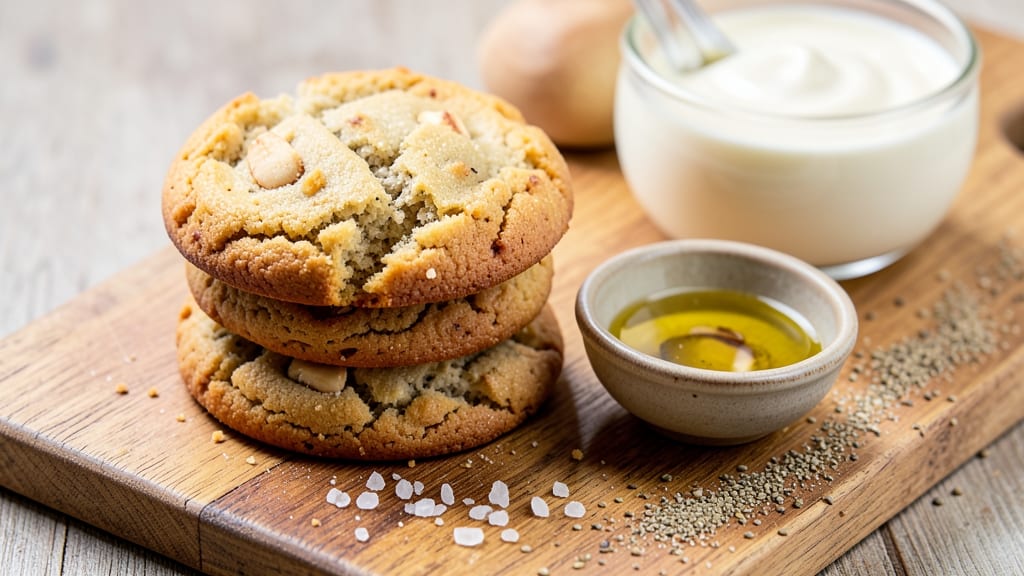
This almond cookie recipe using almond flour delivers the perfect balance of nutty crunch and tender texture—gluten-free without sacrificing flavor. 💛 I developed this recipe after years of perfecting the art of gluten-free baking, ensuring every bite has that satisfying chew and rich almond taste.
The secret lies in the right ratio of almond flour to other ingredients, which keeps the cookies stable yet delicate.
What makes these cookies special is their versatility. You can adapt them to be vegan by using flax eggs and coconut oil, or keep them classic with butter and regular eggs. The dough is simple to mix—just a handful of ingredients—and shapes beautifully for those classic cookie shapes.
Baking at 350°F for 10–15 minutes ensures they stay crisp around the edges while remaining tender inside.
Once out of the oven, you’ll have cookies that are rich, nutty, and satisfyingly crunchy—perfect for snacking or sharing. A light glaze or sprinkle of flaky salt can elevate them further, but they’re delicious just as they are.
These cookies are foolproof, adaptable, and perfect for anyone looking for a gluten-free treat that doesn’t compromise on taste.
Whether you’re baking for a dietary need or simply love almond flour’s unique flavor, this recipe delivers. Let’s get baking!
Ingredients for almond cookie recipe using almond flour
Just 10 ingredients transform almond flour into gluten-free cookies with perfect crunch and chew!
| Ingredient | Amount | Notes |
|---|---|---|
| Almond Flour 🌰 | 2 cups | Finely ground for texture |
| Coconut Oil 🫒 | ½ cup | Solid at room temperature |
| Brown Sugar 🍯 | ½ cup | Packed for sweetness |
| Granulated Sugar 🍚 | ¼ cup | For caramel notes |
| Ground Flaxseed 🌾 | 2 tbsp | Mixed with water for eggs |
| Vanilla Extract 🌸 | 1 tsp | Pure for authentic flavor |
| Salt 🧂 | ½ tsp | Fine sea salt preferred |
| Baking Powder 🍞 | ¼ tsp | Aluminum-free |
| Flaky Sea Salt 🧂 | 1 tbsp | For finishing |
| Water 💧 | 6 tbsp | For flax eggs |
Almond flour is the star—Bob's Red Mill or King Arthur brands are my go-tos for consistent texture. Look for fine grind, not coarse. The coconut oil needs to be solid (like butter) when mixing, so pull it from the fridge 15 minutes before starting. Trader Joe's has the best price on organic coconut oil in blocks. For flax eggs, mix ground flaxseed with water and let sit for 5 minutes to thicken—this replaces eggs perfectly in vegan baking. The flaky sea salt? Maldon is worth it, but any gourmet brand works.
No coconut oil? Vegan butter at the same amount works in a pinch. Short on almond flour? Substitute half with oat flour—just know the texture will be slightly softer. The vanilla extract should be pure, not imitation. If you only have imitation, double the amount. For a more caramel flavor, add 1 tsp maple syrup to the sugars. Brown sugar can be swapped for white, but the cookies will be less chewy. The baking powder is non-negotiable—it's what gives these cookies that satisfying rise.
Store dough in an airtight container for up to 3 days in the fridge. Baked cookies keep for 5 days at room temperature or 1 month in the freezer. For extra crunch, bake at 325°F instead of 350°F—they'll spread less and stay crisp. I always freeze half the batch right after baking so I have perfect cookies ready whenever cravings hit.
Why You'll Love This Recipe
- No Mixer Needed: I swear by this recipe because it’s one of those rare doughs that doesn’t demand a food processor or mixer—just your hands. The almond flour and coconut oil blend together like butter, and the flaxseed egg (yes, really) holds it all just right without any fuss.
- Rich Without Guilt: Between us, these cookies taste like a bakery’s secret—crisp edges, chewy centers, and that caramelized sugar bite—but they’re packed with protein and none of the refined flour. The brown sugar adds depth, while the almond flour keeps them moist without being heavy.
- Lasts All Week: I’ve got a jar of these in my freezer right now, and they’re still perfect after three days. Toss them in lunchboxes, pair them with coffee, or just snack straight from the bag—no one will guess they’re not from a bakery case.
- Budget-Friendly Luxury: Honestly, almond flour might seem pricey at first, but a bag lasts forever, and you use way less than regular flour. The coconut oil and sugars stretch further than you’d think, so you’re basically making gourmet cookies for half the cost of store-bought. (Yes, even on a Tuesday night.)
Step-by-step instructions for almond flour cookies
Let's create these nutty, gluten-free cookies with perfect texture and crunch!
👨🍳 Step 1: Make the Flax Eggs
In a small bowl, combine the 6 tablespoons water and 2 tablespoons ground flaxseed. Stir well and let sit for 5 minutes until it thickens into a gel-like consistency. This is your egg substitute, and it's the secret to binding our gluten-free dough. You'll know it's ready when it looks like raw egg whites and holds its shape when you lift the spoon.
I always use this method for flax eggs—they're my go-to for gluten-free baking. The mixture should be smooth with no visible seeds. If it's too thick after 5 minutes, add 1 teaspoon water to loosen it slightly. This step is crucial for the cookies to hold together properly when baking.
👨🍳 Step 2: Cream the Coconut Oil and Sugars
In a large mixing bowl, combine the ½ cup coconut oil (solid at room temperature), ½ cup brown sugar, and ¼ cup granulated sugar. Use a hand mixer or stand mixer with the paddle attachment to cream everything together on medium speed for 2-3 minutes until light and fluffy. You're looking for a texture that nearly doubles in volume and becomes pale in color.
This creaming process incorporates air into the dough, which creates those beautiful crackly tops and helps the cookies spread just enough. I like to press down on the mixture with my finger—if it leaves a slight indentation that slowly fills back in, you're ready for the next step. The coconut oil should be fully incorporated without any visible lumps.
👨🍳 Step 3: Mix in Wet Ingredients and Dry Components
Add the flax egg mixture, 1 teaspoon vanilla extract, ½ teaspoon salt, and ¼ teaspoon baking powder to the creamed mixture. Mix on low speed for 30 seconds until just combined. Then gradually add the 2 cups almond flour, mixing on low speed until the dough comes together.
Here's where it gets fun—use a silicone spatula to fold in any remaining dry bits. The dough should be thick but manageable, almost like a thick cookie dough. If it's too crumbly, add 1 tablespoon water at a time until it holds together when pressed. Don't overmix—just until everything is incorporated. The dough will be slightly sticky, which is normal with almond flour.
⏰ Step 4: Chill and Shape the Dough
Transfer the dough to a bowl, cover with plastic wrap, and refrigerate for at least 1 hour (I prefer 2 hours for best results). Chilling firms up the dough so it's easier to handle and prevents excessive spreading in the oven. This step is especially important with almond flour—it doesn't behave like wheat flour, so we need to give it time to set.
While the dough chills, preheat your oven to 350°F. Line two baking sheets with parchment paper. When ready to bake, scoop the dough into 1-tablespoon portions (about 12-14 cookies) and roll them into balls. Place them 2 inches apart on the prepared baking sheets—they won't spread much, but we want room for them to puff up slightly.
🔥 Step 5: Bake to Golden Perfection
Bake the cookies for 12-14 minutes until the edges are golden brown and the centers look slightly underdone. The almond flour cookies will firm up as they cool, so they should be soft but set when you remove them from the oven. Don't overbake—they should still feel slightly warm in the center when you take them out.
Let the cookies cool on the baking sheets for 5 minutes before transferring to a wire rack. While still warm, sprinkle each cookie with a pinch of flaky sea salt for that perfect sweet-salty balance. These cookies will keep well in an airtight container for up to 5 days, though I doubt they'll last that long in your house!
Pro Tips For Making Almond Cookie Recipe Using Almond Flour
- MEASURE ALMOND FLOUR BY WEIGHT: Almond flour lies—scooping it straight from the bag packs it too tightly, and you’ll end up with dense, brick-like cookies. Use a kitchen scale for accuracy (about 120g for a standard batch) or spoon it lightly into your measuring cup, then level it off with a knife. I learned this the hard way after making a batch that looked like they were made from cement.
- CHILL THE DOUGH FOR 30 MINUTES: Skipping this step means your cookies will spread like pancakes on a griddle. After mixing, pop the dough in the fridge while you preheat the oven—just enough time to firm up. (Yes, even if you’re impatient like me.) The edges will hold their shape, and you’ll get that perfect chewy center without burning the edges.
- USE ROOM-TEMPERATURE COCONUT OIL: Cold coconut oil behaves like butter—it won’t mix smoothly, and your dough will turn out lumpy. Let the jar sit out for 10-15 minutes before measuring, or microwave it for 10 seconds if you’re in a rush. The dough should come together like a thick, workable paste, not a dry crumble.
- UNDERBAKE BY 1 MINUTE: Almond flour cookies finish cooking after they come out of the oven, so pull them when the edges are just set but the centers still look slightly underdone. They’ll firm up as they cool—overbaking turns them dry and crumbly. I was skeptical until I tried it; now I set a timer for 1 minute early every time.
Common mistakes when making perfect results
Skipping Chill Time
Almond flour dough behaves very differently from wheat flour—it needs that 1-2 hour chill to firm up properly. I’ve seen home bakers rush this step, and the result? Flat, greasy cookies that spread like pancakes.
The chill time allows the almond flour to hydrate and set, giving you those perfect rounded shapes. Trust me, 10 minutes won’t cut it—your cookies will thank you for the patience. 🥹
Overmixing the Dough
Once you add the almond flour, resist the urge to mix like you’re kneading bread dough. Overmixing develops gluten (even though we’re gluten-free), which makes the cookies tough instead of tender. Mix just until the dough comes together—about 30 seconds on low speed.
I like to use a silicone spatula to gently fold in any dry bits by hand. The dough should be thick and slightly sticky, not smooth like traditional cookie dough. 🌰
Using Warm Coconut Oil
If your coconut oil is melted or warm when you start mixing, you’ll end up with cookies that spread too much and lack that beautiful crackly top. Always use coconut oil that’s solid at room temperature—take it out of the fridge 15 minutes before mixing.
If you’re in a hurry, chill the mixing bowl in the freezer for 5 minutes to help firm it up faster. Warm oil = sad, flat cookies. ❄️
Overbaking for Crispiness
Almond flour cookies firm up as they cool, so they’ll look underdone when you pull them from the oven at 12-14 minutes. Resist the temptation to bake them longer for extra crispiness—they’ll dry out and taste stale.
The edges should be golden brown, but the centers should still feel slightly warm. Let them cool completely before storing—they’ll crisp up naturally as they sit. Patience here is key! 🕒
Ignoring the Flax Egg Rest
That 5-minute rest for your flax eggs isn’t optional—it’s what transforms them from a watery mixture into a proper binding agent. If you skip it, your cookies will be crumbly and won’t hold their shape. Stir well, let it sit, then check the consistency before adding to the dough.
Pro tip: If you’re in a rush, make the flax eggs 10 minutes ahead of time so they’re ready when you need them. 💡
Wrong Scoop Size
Using a spoon instead of a 1-tablespoon cookie scoop leads to uneven cookies—some too big, some too small. Big cookies bake longer and risk drying out, while tiny ones burn before they’re done.
I use a 1-tablespoon ice cream scoop for perfect portions every time. If you don’t have one, a 1-tablespoon measuring spoon works in a pinch. Consistency is everything! 🥄
Nutrition facts
Frequently asked questions
Can I make these almond flour cookies without flax eggs? Yes! For a non-vegan version, replace the flax eggs with 2 large eggs (room temperature). If you're avoiding eggs entirely, try ¼ cup aquafaba (chickpea brine) whipped to stiff peaks as a substitute. The texture will be slightly different but still delicious. Just
Why do my almond flour cookies spread so much?
This usually happens when the coconut oil is too warm or you skipped the chill time. Always use solid coconut oil (take it out of the fridge 15 minutes before mixing) and chill the dough for at least 1 hour. If you're in a hurry, try baking at 325°F instead of 350°F—this helps prevent excessive spreading. The cookies will firm up as they cool!
How can I make these cookies more festive for holidays?
Add ½ teaspoon cinnamon or ¼ teaspoon cardamom to the dough for warm spice notes. For Christmas, mix in chopped crystallized ginger or white chocolate chips. For Valentine's Day, fold in 1 tablespoon freeze-dried strawberry powder (available at baking stores) for a fruity twist. Always keep portions to 1 tablespoon to maintain texture.
Can I use almond butter instead of almond flour?
Not directly—almond butter has a different texture and moisture content. However, you can make a simple swap: replace ½ cup almond flour with ¼ cup almond butter plus ¼ cup additional almond flour. The cookies will be slightly denser but still delicious. For best results, reduce the coconut oil by 1 tablespoon since almond butter adds moisture. Test with 1-2 cookies first!
How do I store these cookies for maximum freshness?
For short-term storage, keep baked cookies in an airtight container at room temperature for up to 5 days. For longer storage, freeze portions on a tray first (to prevent sticking), then transfer to a freezer bag for up to 3 months. To refresh, warm in a 300°F oven for 3-5 minutes. The flaky salt adds extra flavor, so I always sprinkle it fresh after baking—not before storing!