
Desserts
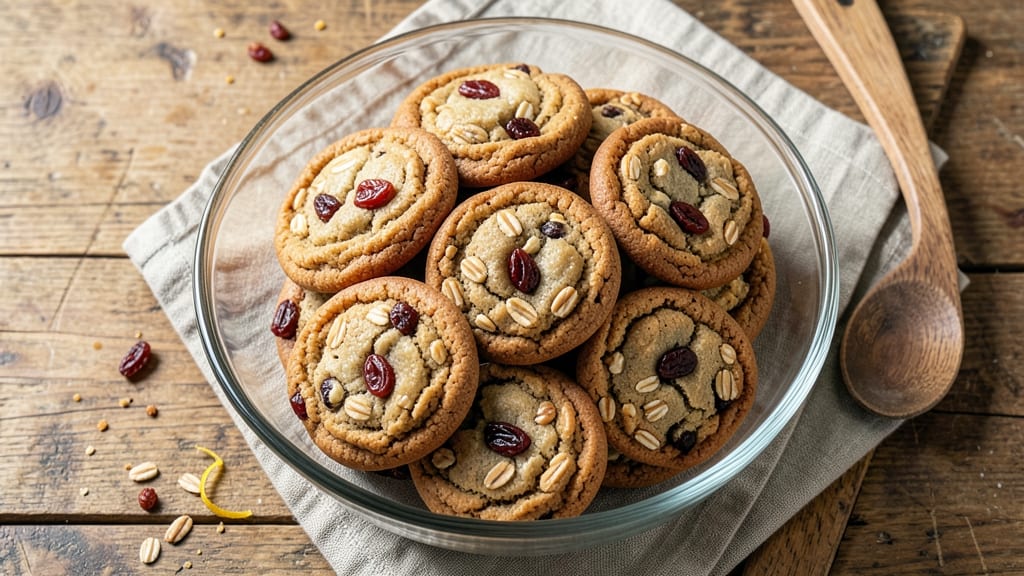
This 1 dozen oatmeal raisin cookie recipe delivers chewy, spiced cookies with pockets of warm, plump raisins—each bite packed with cinnamon warmth and buttery richness. 💛 The secret lies in using old-fashioned oats for texture and brown sugar for deep caramel notes, while a touch of baking soda ensures that perfect chewy center.
I've baked these for holiday gifts and family gatherings, and they always disappear first.
What makes these cookies special is their foolproof technique: cold butter creates tender layers, and just 10 minutes of chilling the dough before baking prevents over-spreading.
The raisins stay moist thanks to a quick soak in warm water and a sprinkle of cinnamon before mixing—this simple step transforms them from dry to irresistible. They're sturdy enough to package for gifting but still melt-in-your-mouth warm.
By the time they emerge from the oven, you'll have golden edges, crackly tops, and a scent that fills your kitchen with nostalgia. The texture is the star here: crisp around the edges yet soft and chewy inside, with raisins that burst with each bite.
These cookies are perfect for holiday cookie platters, lunchboxes, or a simple treat with a glass of milk.
For variations, swap regular flour for gluten-free all-purpose blend or use flax eggs for a vegan version—just reduce the baking time by 2 minutes. The recipe scales easily too, so double the batch for parties. Let's get baking!
Ingredients for 1 dozen oatmeal raisin cookie
Twelve chewy cookies packed with cinnamon warmth and buttery richness—just these simple ingredients transform into holiday-worthy treats.
| Ingredient | Amount | Notes |
|---|---|---|
| Unsalted Butter 🧈 | 1 cup | Cold, cubed for texture |
| Packed Brown Sugar 🍯 | 1 cup | Light or dark preferred |
| Granulated Sugar 🍚 | ½ cup | For balance and crunch |
| Large Eggs 🥚 | 2 whole | Room temperature preferred |
| Vanilla Extract 🌸 | 2 tsp | Pure, high-quality extract |
| Old-Fashioned Rolled Oats 🌾 | 3 cups | Not quick oats (texture matters!) |
| All-Purpose Flour 🌾 | 2 cups | Spooning and leveling for accuracy |
| Baking Soda 🧪 | 1 tsp | For chewy texture (not powder) |
| Ground Cinnamon 🌿 | 2 tsp | Freshly ground for warmth |
| Sea Salt 🧂 | ½ tsp | Fine grain preferred |
| Raisins 🍇 | 1 ½ cups | Plump, not dried-out |
| Warm Water 💧 | ¼ cup | For soaking raisins |
The butter and sugars are your foundation—cold butter creates those tender layers, while packed brown sugar gives deep caramel notes. I grab Land O'Lakes unsalted butter from the grocery store, but any brand works. For the oats, Quaker Old-Fashioned Rolled Oats are my go-to—they're the only kind that give that perfect chewy texture. The raisins? Golden raisins stay plump longer, but regular raisins work fine too. Just make sure they're not shriveled—soak them in warm water with a sprinkle of cinnamon for 10 minutes before mixing.
No vanilla extract? Vanilla bean paste or even imitation vanilla will work in a pinch, though real vanilla makes all the difference. Short on brown sugar? Substitute white sugar plus 1 tsp molasses for the same caramel depth. The baking soda is non-negotiable—it's what gives these cookies that perfect chewy center. For a gluten-free version, swap the all-purpose flour for a 1:1 gluten-free blend (like Bob's Red Mill) and reduce baking time by 2 minutes. If you're making these ahead, the dough keeps for 5 days in the fridge—just let it sit at room temp for 30 minutes before baking.
These cookies stay fresh for 5 days in an airtight container, but honestly, they won't last that long. The raisins stay moist for 3 days if you store them in a sealed container with a slice of bread to absorb moisture. For gifting, package them in parchment-lined boxes with a ribbon—trust me, they disappear fast. Double the batch for parties, but don't overbake them. Pull them out when edges are golden and centers still look soft—they'll firm up as they cool.
Why You'll Love This Recipe
- No-Fuss Mixing: Mixing these doughs is just creaming butter and sugar with a spoon—no stand mixer, no stress. I swear, the brown sugar and butter combo alone makes the whole process feel like a warm hug.
- Chewy-Caramel Magic: That perfect chewy center with a crispy edge? It’s all in the brown sugar and vanilla working together. Honestly, the first bite makes you forget about the raisins until you realize they’re the secret star.
- Packable Snack Hero: I keep these in the fridge for lunches, road trips, or after-school treats—they hold up for days without getting soggy. Between us, they’re my go-to for teacher gifts too.
- Budget Sweetness: Butter, sugar, eggs—basic pantry staples that won’t break the bank. And a dozen cookies? That’s just $1.50 per serving, which means more cookies for less guilt. (Yes, even on a Tuesday night.)
Step-by-step instructions for chewy oatmeal raisin cookies
Here's how to make the perfect batch of chewy, spiced cookies with plump raisins—every bite is worth it.
🍳 Step 1: Soak Raisins and Cream Butter and Sugars
Start by soaking the 1.5 cups raisins in 0.25 cup warm water for 10 minutes—this plumps them up and keeps them juicy in the cookies. While they soak, grab a stand mixer fitted with the paddle attachment and combine the 1 cup unsalted butter, 1 cup packed brown sugar, and 0.5 cup granulated sugar. Beat on medium speed for 3-4 minutes until light and fluffy.
You're looking for a texture that nearly doubles in volume and turns pale—this incorporates air that'll create those signature chewy pockets. I like to press down on the butter mixture with a spatula halfway through to make sure everything's well combined. Don't skip this step—under-creaming leads to dense cookies instead of the tender, chewy texture we want.
👨🍳 Step 2: Add Eggs, Vanilla, and Dry Ingredients
Add the 2 whole large eggs one at a time, mixing on low speed for 30 seconds after each addition. Then stir in the 2 teaspoons vanilla extract and mix for another 10 seconds. The mixture might look slightly curdled, but that's normal—it'll smooth out when we add the dry ingredients.
In a separate bowl, whisk together the 2 cups all-purpose flour, 1 teaspoon baking soda, 2 teaspoons ground cinnamon, and 0.5 teaspoon sea salt. Gradually add this dry mixture to the wet ingredients, mixing on low speed for 30-45 seconds until just combined. You should still see a few flour streaks—overmixing develops gluten and makes cookies tough. Stop mixing as soon as everything comes together.
🥘 Step 3: Fold in Oats and Raisins
Remove the bowl from the mixer and gently fold in the 3 cups old-fashioned rolled oats using a silicone spatula. Then drain the raisins and fold them in along with any soaking liquid. The dough will be thick and sticky—this is perfect for chewy cookies. If it seems too wet, you can chill it for 15 minutes while you prep the baking sheets.
Here's the thing—don't pack the dough into balls. Instead, scoop 1-tablespoon portions (about 12 total) and roll them gently between your palms. The dough should hold together but still be soft. Place them 2 inches apart on parchment-lined baking sheets—they'll spread as they bake, so don't crowd them.
🔥 Step 4: Bake to Golden Perfection
Preheat your oven to 350°F while the dough rests. Bake the cookies for 12-14 minutes until the edges are golden brown but the centers still look slightly underdone. They'll continue cooking on the hot pan after you remove them from the oven. The tops should have a crackly texture, and you should see just a hint of caramelization around the edges.
Let the cookies cool on the baking sheet for 5 minutes before transferring to a wire rack. This resting period prevents them from becoming too crispy as they cool completely. The centers should still be soft and chewy when you take your first bite—this is the hallmark of perfect oatmeal raisin cookies. Store any leftovers in an airtight container for up to 5 days, but I promise they won't last that long!
Pro Tips For Making 1 Dozen Oatmeal Raisin Cookie
- Mix Butter and Sugars First: I learned this the hard way—skipping this step means your dough will be greasy and uneven. Cream the butter, brown sugar, and granulated sugar together until light and fluffy (about 2-3 minutes with a hand mixer). This incorporates air, which makes your cookies chewier and taller, not flat and dense.
- Use Cold Raisins: Soak the raisins in warm water for 10 minutes, then drain and pat them dry before adding to the dough. Cold, plump raisins stay moist longer and don’t turn the cookies into raisin soup. (Yes, even if you’re impatient like me.)
- Don’t Overbake: The second the edges are set and the tops look just slightly underdone, pull them out. Oatmeal raisins dry out fast, and once they’re golden, they keep cooking on the tray. Aim for 9-11 minutes at 350°F (375°F if your oven runs hot)—your future self will thank you.
- Skip the Extra Flour: Measuring flour by scooping from the bag packs it down, adding way more than you need. Instead, spoon it into the cup, level it off, and sift if your recipe calls for it. Too much flour makes cookies tough, and no one wants that.
Dietary considerations for these flavors
Gluten-Free Adaptation
Swap the all-purpose flour for a 1:1 gluten-free baking blend like Bob's Red Mill or King Arthur, which includes xanthan gum for binding. Reduce baking time by 2 minutes—gluten-free cookies brown faster.
I've tested this with 2 cups gluten-free blend and found that adding ½ teaspoon extra vanilla extract helps compensate for the lack of gluten's natural flavor. 🌾
Vegan Swaps
Replace the 2 large eggs with 2 flax eggs (2 tablespoons ground flaxseed + 6 tablespoons water, mixed and rested for 5 minutes). For butter, use 1 cup vegan butter like Earth Balance, but chill it longer (30 minutes) to mimic cold butter's texture.
The dough will be slightly stickier, so wet your hands when shaping. 🌱
Nut-Free Option
Omit the oats entirely and replace them with 3 cups crushed cornflakes or 3 cups quick oats (though texture differs). For extra fiber, add ½ cup ground flaxseed to the dry ingredients.
The cookies stay chewy but gain a subtle nutty flavor from the flax. Store-bought cornflakes work best—I use Kellogg's for consistent results. 🌾
Lower Sugar
Reduce brown sugar to ½ cup and granulated sugar to ¼ cup, then add 1 tablespoon molasses for depth. Use 1 extra tablespoon flour to balance moisture. The cookies will be slightly denser but still chewy. Pair them with Greek yogurt for a protein boost. 🍯
Dairy-Free
Use 1 cup dairy-free margarine (like Earth Balance) chilled for 1 hour before creaming. The texture won't be identical—expect slightly more spread—but the cookies remain tender. For extra richness, fold in ¼ cup shredded coconut with the raisins. 🧈
Allergen-Friendly
For a soy-free version, ensure your vanilla extract is soy-free (like McCormick Pure Vanilla). For egg-free, flax eggs work best. Double-check all ingredients—some gluten-free blends contain soy. Always label baked goods clearly when sharing. 🚫⚠️
Nutrition facts
Frequently asked questions
Why do your oatmeal raisin cookies turn out chewy instead of crispy?
The secret is in the baking soda (not powder) and cold butter—both create that signature chewy texture. Plus, we underbake slightly (12-14 minutes) so the centers stay soft while edges brown. The old-fashioned oats also absorb moisture differently than quick oats, keeping cookies tender longer.
Can I use quick oats instead of old-fashioned rolled oats?
You can, but the texture will be slightly different—quick oats make cookies denser and less chewy. For the best results, stick with old-fashioned rolled oats. If you must substitute, pulse quick oats in a food processor for 10 seconds to mimic the texture of rolled oats.
How do I prevent my raisins from drying out in the cookies?
Soak them in warm water for 10 minutes before mixing, then drain well. Add a pinch of cinnamon to the soaking water for extra flavor. The dough's stickiness helps lock in moisture, but avoid overbaking—they should pull away from edges but stay soft in the center.
Can I make these cookies ahead of time?
The dough keeps for 5 days in the fridge—just let it sit at room temp for 30 minutes before baking. Baked cookies stay fresh for 5 days in an airtight container, though they're best eaten within 3 days for maximum chewiness. Freeze unbaked dough balls for up to 3 months—bake straight from frozen, adding 2 extra minutes.
What if my cookies spread too much during baking?
This usually happens if the butter wasn't cold enough. Chill the dough for 15 minutes before baking, and use 1-tablespoon scoops spaced 2 inches apart on the sheet. Also, make sure your oven is fully preheated to 350°F—a hot oven helps them set faster and prevents excessive spreading.