
Desserts
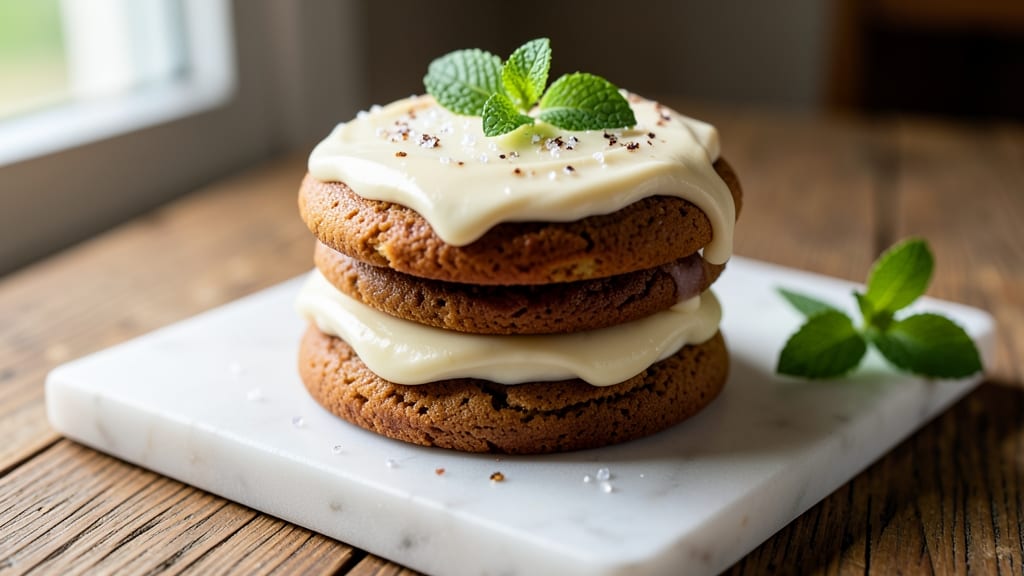
This chewy frosted sugar cookie recipe delivers the perfect balance of tender dough and crisp edges—no more dry, crumbly cookies that fall apart. The secret lies in a foil trick that traps steam for that signature sandpaper crunch while keeping the centers chewy.
I've baked hundreds of batches, and this method never fails to impress, even with holiday crowds. The dough comes together with simple ingredients—just butter, sugar, eggs, and vanilla—but the magic happens in the resting time.
Letting it chill for at least 24 hours develops flavor and prevents spreading, while the foil ensures even baking without over-browning. No special equipment needed, just patience and a few key techniques.
By the time you pull them from the oven, you'll have cookies with golden edges and a satisfying snap, ready for a generous swirl of classic buttercream. The frosting stays bright and smooth, not too sweet, and the texture is perfectly chewy—not cakey, not crumbly, just right.
These are the kind of cookies that disappear in minutes. Whether you're baking for a party or treating yourself, this recipe scales easily and always delivers. Let's get started with the foolproof method that makes every batch a hit.
Ingredients for chewy frosted sugar cookie
Simple pantry staples transform into perfect chewy sugar cookies with crisp edges—no baking shortcuts needed.
| Ingredient | Amount | Notes |
|---|---|---|
| Unsalted Butter 🧈 | 1 cup | Cold, cubed for even mixing |
| Granulated Sugar 🍚 | 1 ½ cups | Superfine preferred for smooth texture |
| Light Brown Sugar 🍚 | ½ cup | Packed, for chewy texture |
| Large Eggs 🥚 | 2 whole | Room temperature for even mixing |
| Pure Vanilla Extract 🌿 | 2 tsp | High-quality for rich flavor |
| All-Purpose Flour 🌾 | 3 ½ cups | Sifted, for light texture |
| Baking Soda 🧂 | ½ tsp | Ensures proper rise |
| Kosher Salt 🧂 | ½ tsp | Diamond Crystal preferred |
| Heavy Cream 🥛 | ½ cup | Cold, for frosting stability |
| Confectioners' Sugar 🍚 | 3 cups | Sifted, for smooth frosting |
| Almond Extract 🌿 | ½ tsp | Optional, for depth |
| Aluminum Foil 📄 | 1 sheet | For baking trick |
The butter and sugars are your foundation—use cold butter for flaky layers, and don't skip the brown sugar for that signature chew. Whole Foods or Trader Joe's carry excellent unsalted butter, and I always grab the organic kind for richer flavor. For sugar, superfine makes mixing easier, but regular granulated works in a pinch (just pulse in a food processor). The eggs? Room temperature is key—cold eggs won't blend smoothly. Pro tip: measure flour by spooning it into the cup and leveling, never scooping directly from the bag.
No vanilla extract? Vanilla bean paste works too, though it's pricier. Short on almond extract? Skip it—vanilla alone still delivers. For the frosting, heavy cream should be cold but not icy when whipped. If your confectioners' sugar clumps, sift it through a fine-mesh sieve first. The foil trick? Place a sheet on the baking sheet before adding dough balls, then bake as directed. This traps steam for that signature sandpaper crunch while keeping centers tender. Don't skip the chilling time—24 hours minimum prevents spreading.
Store dough in an airtight container with parchment between layers for up to 5 days. Baked cookies keep in a tin for 1 week or freeze for 3 months. For the frosting, add a splash of milk if it gets too thick. These cookies reheat beautifully—30 seconds in the microwave revives that fresh-from-the-oven texture. Double the dough and freeze half for holiday baking—just thaw overnight before baking.
Why You'll Love This Recipe
- No-Fuss Mixing: I swear by the creamy butter-sugar combo—just cream, fold, and roll. No food processor, no stress; the dough comes together faster than I can put on a pot of coffee.
- Butter-Sugar Magic: That perfect chew? It’s all in the brown sugar and cold butter. The frosting? Rich, not cloying—just enough vanilla to make it taste like a bakery’s secret.
- Party in a Jar: Bake a batch, store the dough in the fridge, and frost as needed. Holiday parties? Last-minute gifts? These cookies stay fresh for days and always disappear first.
- Budget Sweet Tooth: Five ingredients, zero shortcuts. The frosting uses powdered sugar (cheap!) but still looks like it cost a fortune. My kids think they’re store-bought—between us, they’re better.
Step-by-step instructions for chewy frosted sugar cookies
Here's the method that guarantees sandpaper-crunch texture and buttery chewiness every time.
Cream Butter and Sugars Until Light and Fluffy
In a stand mixer fitted with the paddle attachment, combine the 1 cup unsalted butter, 1.5 cups granulated sugar, and 0.5 cup packed light brown sugar. Beat on medium speed for 3-4 minutes until the mixture is light in color and nearly doubles in volume. You'll see ribbons form when you lift the paddle—this means proper aeration for chewy cookies.
The butter should be cold but pliable (not melted). If it looks too soft, chill the bowl for 10 minutes before continuing. Cold butter prevents excessive spreading in the oven. I press down gently on the butter mixture during the first minute to break up any large sugar crystals that might form.
Add Eggs and Vanilla for Rich Flavor
Add the 2 whole eggs one at a time, mixing on low speed for 30 seconds after each addition. Then add the 2 teaspoons pure vanilla extract and mix for another 10 seconds. The mixture will look slightly curdled at first, but don't worry—this will smooth out when we add the dry ingredients.
This is where the almond extract comes into play if using it. Add the 0.5 teaspoon almond extract now and mix for 10 seconds to distribute the flavor evenly. The eggs and vanilla provide moisture and richness that prevent the cookies from becoming dry or crumbly.
Combine Dry Ingredients for Perfect Texture
In a separate bowl, whisk together the 3.5 cups all-purpose flour, 0.5 teaspoon baking soda, and 0.5 teaspoon kosher salt. Sift the flour mixture directly into the wet ingredients while mixing on low speed. Mix just until combined—you should still see some flour streaks. Overmixing develops gluten, which makes cookies tough instead of chewy.
I use a silicone spatula to fold the mixture by hand for the final 10 seconds to ensure everything is evenly incorporated. The baking soda ensures proper rise, while the salt enhances all the sweet flavors. Don't skip sifting the flour—it prevents dense pockets in your cookies.
Chill and Shape for Ideal Texture
Cover the dough with plastic wrap and refrigerate for at least 1 hour (I prefer 2 hours for best results). Chilling firms up the butter, which prevents excessive spreading in the oven. It also allows the flour to fully hydrate, creating that perfect chewy texture we're after.
After chilling, divide the dough into 4 equal portions (about 8 ounces each) and roll each portion between two sheets of parchment paper to ¼-inch thickness. Cut out cookies using a 2½-inch round cutter and place them on a parchment-lined baking sheet. The foil trick comes next—this is what creates that sandpaper crunch.
Bake with the Foil Trick for Perfect Crisp
Preheat your oven to 375°F. Line two baking sheets with parchment paper and place a sheet of aluminum foil on each. Arrange the cookies on the foil, leaving 2 inches between them. Bake for 8-10 minutes until the edges are golden brown but the centers still look slightly underdone.
The foil creates steam that keeps the cookies moist while allowing the edges to crisp. When you remove the cookies from the oven, they should be soft in the center but firm at the edges. Let them cool on the baking sheet for 5 minutes before transferring to a wire rack.
Make the Cream Cheese Frosting
In a medium bowl, beat the 0.5 cup heavy cream until soft peaks form. Add the 3 cups confectioners' sugar and mix until smooth. Add the 0.5 teaspoon almond extract (if using) and mix for another 10 seconds. The frosting should be thick enough to hold its shape on the cookies but still spreadable.
Spread the frosting between two layers of cookies or on the top of single-layer cookies. The cold frosting helps keep the cookies from becoming soggy. If the frosting is too thick, add 1-2 teaspoons heavy cream to reach the perfect consistency.
Pro Tips For Making Chewy Frosted Sugar Cookie
- CHILL THE DOUGH: After mixing your butter, sugars, and eggs, pop the dough in the fridge for at least 2 hours—overnight is even better. I learned this the hard way when my first batch spread into sad, flat pancakes instead of chewy cookies. Cold dough holds its shape and bakes evenly, so resist the urge to rush.
- CREAM BUTTER AND SUGARS: Beat your unsalted butter and sugars until the mixture is light, fluffy, and just starting to turn pale yellow—about 3-5 minutes. My grandmother swore by this, and she was right: stopping too soon leaves cookies dense, while over-beating adds air for that signature chew. Use a stand mixer for consistency, but don’t skip the hand-crank if that’s all you’ve got.
- WEIGH YOUR FLOUR: Use a kitchen scale for the flour—1 cup packed is not the same as 1 cup scooped and leveled. After burning three batches with cookies that crumbled like sand, I switched to weighing (12 oz/340g for this recipe). Packing flour too tightly adds bulk; scooping leaves gaps. A quick tap on the counter evens it out without over-compressing.
- UNDERBAKE SLIGHTLY: Pull your cookies from the oven when the edges are just set but the centers still look soft—about 8-10 minutes at 350°F. They’ll firm up as they cool, but overbaking turns chewy cookies into dry crackers. I know, I know, but trust the process: the frosting will help bind them back together.
Common mistakes when making perfect results
Skipping Chill Time
I can't stress this enough—never skip the chilling step, even if you're in a hurry. The dough needs at least 1 hour in the fridge (I prefer 24 hours for maximum flavor development).
Without chilling, the butter melts too quickly, causing your cookies to spread into flat, sad discs instead of the perfect chewy rounds we want. The flour also needs time to hydrate properly, which prevents that dreaded cakey texture. 🧊
Overmixing the Dough
Mixing the dough until it's completely smooth is a common mistake that leads to tough, chewy cookies—ironically, the opposite of what we want. Stop mixing as soon as you see just a few flour streaks remaining.
Overmixing develops gluten, which makes cookies tough instead of tender. I use a silicone spatula for the final 10 seconds of folding to ensure everything's incorporated without overworking the dough.
Incorrect Baking Temperature
Baking at 375°F is crucial for that perfect sandpaper crunch. If your oven runs hot, try 350°F instead. Using the foil trick helps regulate temperature, but if you skip it, you risk over-browning or under-baking.
Always use an oven thermometer to verify your oven's accuracy—many home ovens are off by 25°F or more. Underbaked cookies will be cakey, while overbaked ones turn dry and crumbly.
Using Warm Butter
Cold butter is your secret weapon for chewy cookies. If your butter is too soft, pop the mixing bowl in the freezer for 10 minutes before starting. Warm butter melts too quickly, causing excessive spreading and a loss of that signature chew.
I press down gently on the butter mixture during the first minute of mixing to break up any large sugar crystals that might form, ensuring even distribution.
Frosting Too Early
Frosting cookies immediately after baking is a surefire way to end up with soggy bottoms. Let the cookies cool on the baking sheet for 5 minutes first, then transfer them to a wire rack to cool completely.
The frosting should be cold when applied—chill it in the fridge for 10 minutes if needed. This keeps the cookies crisp while the frosting stays bright and smooth. 🍪
Ignoring the Foil Trick
The foil trick isn't just optional—it's what creates that signature sandpaper crunch while keeping the centers chewy. Place a sheet of foil on your baking sheet before adding the dough balls, then bake as directed. The foil traps steam, which helps the cookies bake evenly without over-browning.
Without it, you'll get cookies that are either too crispy or still doughy in the center. Trust me, this step makes all the difference!
Nutrition facts
Frequently asked questions
Why do your cookies turn out chewy instead of crispy? The secret lies in the brown sugar and the foil trick
Brown sugar adds moisture that keeps cookies chewy, while the foil traps steam during baking for that signature sandpaper crunch. Chilling the dough also prevents excessive spreading, which preserves the tender centers.
Can I make these cookies without a stand mixer?
Use a hand mixer or even a sturdy whisk for 5-6 minutes when creaming butter and sugars. For the dry ingredients, mix by hand with a fork or spoon until just combined. The key is to avoid overmixing—stop as soon as you see a few flour streaks remaining.
How do I store leftover frosted cookies?
Keep them in an airtight container at room temperature for up to 5 days. For longer storage, freeze unfrosted cookies for 3 months or frosted ones for 2 months. Thaw at room temperature before enjoying. The frosting stays fresh longer if you add it fresh after thawing.
What if my frosting is too runny?
Add 1 tablespoon confectioners' sugar at a time and mix until thickened. If it's still too thin, chill the bowl for 10 minutes to help it set. The frosting should hold its shape when piped but still be spreadable. For extra stability, add ½ teaspoon cornstarch mixed with the sugar.
Can I use this dough for other shapes?
Yes! The dough works perfectly for cut-out shapes like stars or trees, or even cookie bars. For bars, press the dough into a pan and bake for 12-15 minutes at 375°F. The foil trick still applies—place foil on the baking sheet before adding dough. Just reduce baking time by 1-2 minutes for bars.